
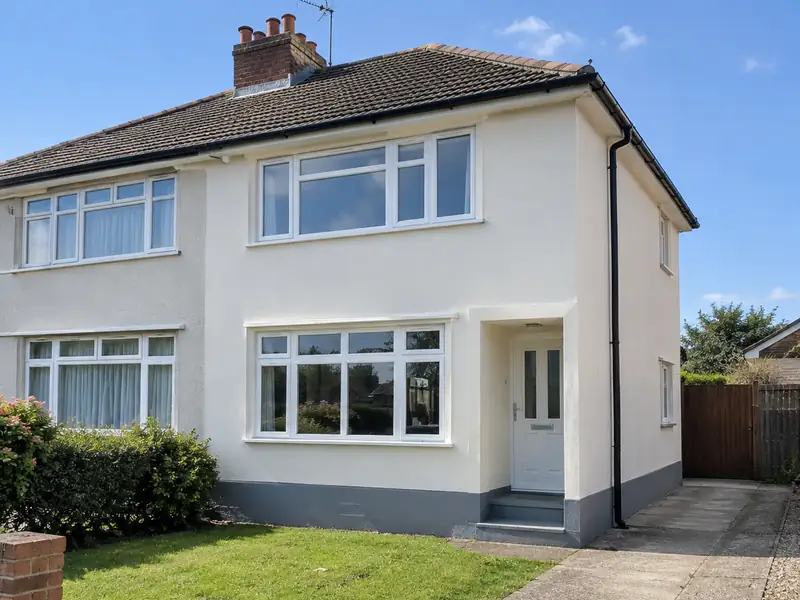
External rendering is applying a protective, weather-resistant coating to the outside walls of a house, using sand and cement, monocouche or thin-coat silicone render, to give a smooth or textured finish that protects the masonry and improves appearance.
If you are planning external rendering anywhere in Lancashire, including Preston, Burnley, Blackburn and Blackpool, we can visit, measure up and talk through the options. The planning and building regulations we work to are those for England, and we check them for your address before quoting. Prices remain guide figures for the North West, at £6,600–£15,000 including VAT, until the survey is done.
- Guide price
- £6,600–£15,000 inc VAT
- Time on site
- 1–3 weeks on site, depending on weather
- Planning rules
- England
- Price level
- About 5% below the national guide
- Towns listed
- 19
- Survey
- Free, with a written quote
How much does external rendering cost in Lancashire?
Below is a breakdown of typical costs for external rendering in Lancashire. Because rates in the North West are about 5% below the national guide, the overall guide comes to £6,600–£15,000, including VAT. Size, materials and access move the figure, and a free-of-charge survey settles it.
| Type of job | What it usually involves | Guide in Lancashire |
|---|---|---|
| Front elevation or small terrace | One elevation or a small terraced house, including scaffolding and preparation. | £2,800–£6,600 |
| Typical semi-detached | All rendered walls of a 3-bed semi in monocouche or silicone, with scaffolding. | £6,600–£15,000 |
| Detached or full strip and re-render | Larger houses, or homes needing old render removed and walls repaired first. | £14,000–£28,500 |
What moves the price up or down:
- Wall area to be rendered and the height of the house
- Render system: sand and cement, monocouche or silicone
- Removing old render or pebbledash and repairing the walls
- Scaffolding, access and protection of neighbouring property
What’s included?
- Survey of walls, existing render, cracks and damp-proof course
- Scaffolding erected and removed, with neighbours' access agreed
- Removal of loose or failed render and pebbledash where needed
- Windows, doors and surfaces masked and protected
- Mesh reinforcement and base coats to suit the chosen system
- Making good around pipes, vents and fixings, and a site clean-up
Housing across Lancashire
East Lancashire mill towns such as Burnley, Blackburn and Accrington have long rows of stone and brick terraces, while Preston is mostly red brick. Lancaster uses sandstone for its Georgian centre, Blackpool and the Fylde coast have guest-house terraces and many bungalows, and interwar and newer estates surround most towns.
Mill-town terraces commonly suit attic conversions, kitchen extensions and repointing. Bungalows on the coast often take loft rooms and porches, and stone properties may need lime pointing and roof repairs.
Westerly winds and high rainfall are the norm, with gales on the Fylde coast and wetter, colder conditions on the Pennine side.
Do you need permission in Lancashire?
Because Lancashire falls under England's rules, the guidance below is the version relevant to you. Before sending a price, we check your property's position with the council.
In England, re-rendering or cladding a house is often allowed without planning permission, but stone, render, timber, plastic or tile cladding is not permitted development in conservation areas, and listed buildings need consent.
If you render or re-clad more than 25% of an external wall, Building Regulations usually require the wall’s insulation to be improved where that is practical, and building control should be notified.
Rules change and every property is different, so we check the planning history and constraints for your address before we quote.
How does the job run?
We look at the job
A free survey comes first. It gives us what we need to price external rendering properly, including dimensions, existing materials and access for deliveries, and gives you the chance to ask anything you like.
Your fixed price
After the survey we send a quote for external rendering that fixes the price for the scope we've agreed. If you want to change materials or scope, we revise it in writing before anything is booked.
Getting ready
Before anyone starts, we confirm the programme in writing, check whether consents are required and arrange deliveries. If a skip or scaffolding on the road needs a permit, we apply for it.
Finish and handover
The work is carried out to the agreed specification, with floors and furniture protected and the site kept tidy. At the end we clean up, walk through the finished job with you and hand over any certificates.
What you can expect from us
Frequently asked questions
Will rendering stop damp?
Render protects walls from driving rain, so it can help where rain penetration is the cause of damp. It will not cure rising damp, condensation or leaks from gutters, and on older solid walls the wrong render can trap moisture and make damp worse. We look for the cause of any damp at the survey and recommend fixing that first.
Can you combine external rendering with other work?
Yes. Because we manage several trades under one contract, we can plan external rendering alongside other work on your Lancashire home, such as new windows with rendering, or a kitchen refit with an extension. Combining jobs can reduce repeat set-up such as scaffolding, skips and access, and every element is listed and priced in the same written quote.
How much does it cost to render a house?
Rendering a typical 3-bed semi costs £6,600–£15,000, including scaffolding and preparation. As a guide, allow around £60–£120 per square metre of wall plus fixed costs for scaffolding and set-up. Sand and cement is the lowest-cost system, while silicone thin-coat costs more but needs no painting. Removing old render or pebbledash first adds noticeably to the price. We confirm a fixed figure after the survey.
Who do I deal with during the job?
One point of contact manages your project from survey to handover. They schedule the trades working under our contract, keep you updated on progress, and are the person to call with any question. You don't need to coordinate builders, electricians or decorators separately, because that is part of what we do.
What time of year should rendering be done?
Render needs mild, dry conditions to cure properly, so spring to early autumn is ideal. Most render systems should not be applied when frost is likely, in heavy rain or in strong direct sun, which can dry it too quickly and cause cracking. We plan the programme around the forecast and may pause work if the weather turns, which protects the finish.
Towns in Lancashire
Looking for external rendering somewhere in Lancashire? Start with the towns below; each links to a page with pricing for your region and coverage details.