
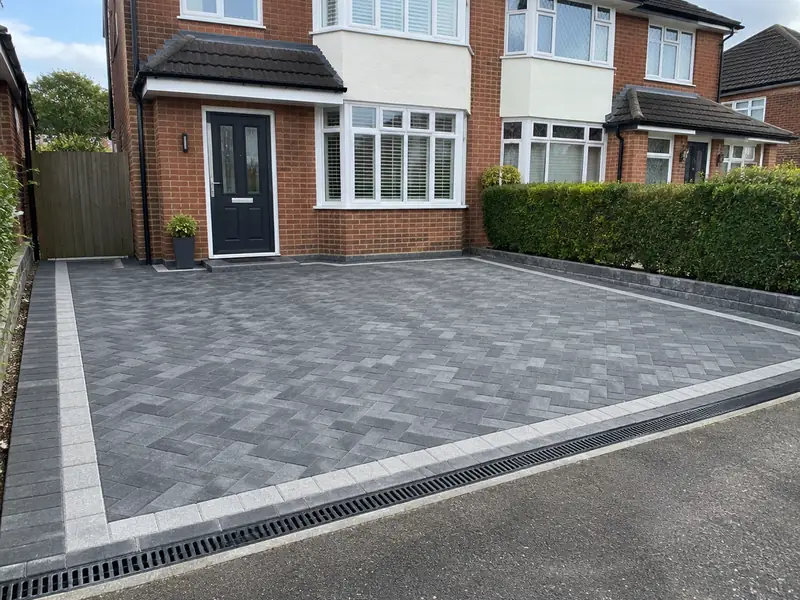
A new driveway is a hard-wearing surface for parking, such as block paving, resin bound gravel, tarmac or gravel, laid on an excavated and compacted sub-base with edging and drainage designed to carry vehicle loads and handle rainwater.
If you are planning a new driveway anywhere in Wiltshire, including Swindon, Salisbury, Trowbridge and Chippenham, we can visit, measure up and talk through the options. The planning and building regulations we work to are those for England, and we check them for your address before quoting. Prices remain guide figures for the South West, at £4,100–£9,200 including VAT, until the survey is done.
- Guide price
- £4,100–£9,200 inc VAT
- Time on site
- 3–7 days on site
- Planning rules
- England
- Price level
- About 2% above the national guide
- Towns listed
- 5
- Survey
- Free, with a written quote
How much does a new driveway cost in Wiltshire?
What will a new driveway cost in Wiltshire? Our guide range is £4,100–£9,200 including VAT. That figure is adjusted for the South West, about 2% above the national guide, and is intended for planning a budget. A firm written price for your chosen specification follows a free survey at your home.
| Type of job | What it usually involves | Guide in Wiltshire |
|---|---|---|
| Gravel or tarmac | A typical 40–50m² drive in gravel on a grid, or tarmac with block edging. | £2,000–£5,100 |
| Block paving or resin bound | A typical 40–50m² drive with sub-base, edging and drainage. | £4,100–£9,200 |
| Large or premium driveway | Larger drives, natural stone, walls, steps or a new dropped kerb. | £8,200–£16,500 |
Your price depends mostly on:
- Driveway area and the depth of excavation needed
- Surface: gravel, tarmac, block paving, resin or stone
- Drainage, soakaways and changes in level
- Edging, steps, walls and manhole adjustments
What’s included?
- Survey of levels, drainage, manholes and access
- Edging kerbs or restraints to hold the surface in place
- Drainage channels or soakaway where needed
- Manhole covers raised or replaced to new levels
- New surface laid, compacted and finished
- Site cleared and waste removed
Homes in Wiltshire
Salisbury has medieval and Georgian streets, the north-west around Corsham and Bradford on Avon uses Bath stone, and chalk and flint appear on the downland. Swindon has railway-village terraces and very large post-war and modern estates, and many Wiltshire villages have thatched cottages, some with chalk cob walls.
Cob and Bath stone walls need breathable, lime-based repairs, and thatched cottages may need careful roof work. Swindon's railway terraces suit loft rooms and rear extensions, while its large estates often add garage conversions, driveways and landscaping.
Salisbury Plain and the downs are exposed to wind and frost, while river valleys around Salisbury and the Avon can flood.
Do you need permission in Wiltshire?
England, Wales, Scotland and Northern Ireland each handle planning a little differently. Wiltshire comes under England, covered below, and we raise any questions with the council before your quote is finalised.
In England, a new or replacement front-garden surface over 5 m² needs planning permission unless it is permeable or drains to a lawn or border within your property. A new dropped kerb needs consent from the council’s highways team, and access onto a classified road may need planning permission.
Building Regulations do not usually apply to driveways, but drainage must not discharge onto the road or a neighbour’s land.
Rules change and every property is different, so we check the planning history and constraints for your address before we quote.
The four stages
A visit to your home
First, someone visits your home in Wiltshire to see the space, take measurements and note anything that could affect the work, such as access or the condition of what is there. There is no charge for this visit.
Price and scope agreed
Next you receive a written quote with a fixed price for the agreed specification. It lists what is included, what is not, and how payments are staged, so you can compare it properly.
Booking the work
Before anyone starts, we confirm the programme in writing, check whether consents are required and arrange deliveries. If a skip or scaffolding on the road needs a permit, we apply for it.
Finish and handover
During the work we protect the areas around it and tidy up at the end of each day. Once complete, we check the finish, remove our materials and hand over paperwork such as building control sign-off where it applies.
How we work
Questions about a new driveway in Wiltshire
Do I need permission for a dropped kerb?
A dropped kerb lets vehicles cross the pavement onto your drive, and creating or widening one needs consent from your local highways authority. They usually check visibility, the distance from junctions and trees, and whether there is enough space to park off the road. Many councils carry out the kerb work themselves or use approved contractors. We can help with the application.
Who do I deal with during the job?
One point of contact manages your project from survey to handover. They schedule the trades working under our contract, keep you updated on progress, and are the person to call with any question. You don't need to coordinate builders, electricians or decorators separately, because that is part of what we do.
How much will a new driveway cost in Wiltshire?
As a guide, expect to pay £4,100–£9,200 including VAT for a new driveway in Wiltshire. That range is adjusted for the South West, which runs about 2% above the national guide. Where your project lands depends on size, materials, access and the condition of what is already there. We confirm a fixed price in writing after a free survey of your home.
How much does a new driveway cost?
A typical 40–50m² block paved or resin bound driveway costs £4,100–£9,200, including excavation, sub-base, edging and drainage. As a guide, allow roughly £70–£150 per square metre plus fixed costs for machinery and waste. Gravel and tarmac cost less, while natural stone, steps and walls cost more. A new dropped kerb is a separate cost. We confirm a fixed price after measuring.
Which driveway surface is easiest to maintain?
Resin bound gravel is one of the easiest surfaces to maintain, because it is smooth, porous and resists weeds, needing only an occasional sweep and wash. Block paving needs re-sanding joints and occasional weed control. Tarmac needs little upkeep but can soften in heat. Gravel needs raking and topping up. We explain the upkeep of each surface before you choose.
Towns in Wiltshire
Our coverage for a new driveway in Wiltshire includes the towns listed here. Each page explains guide costs, typical timings and the neighbouring places we also serve.