
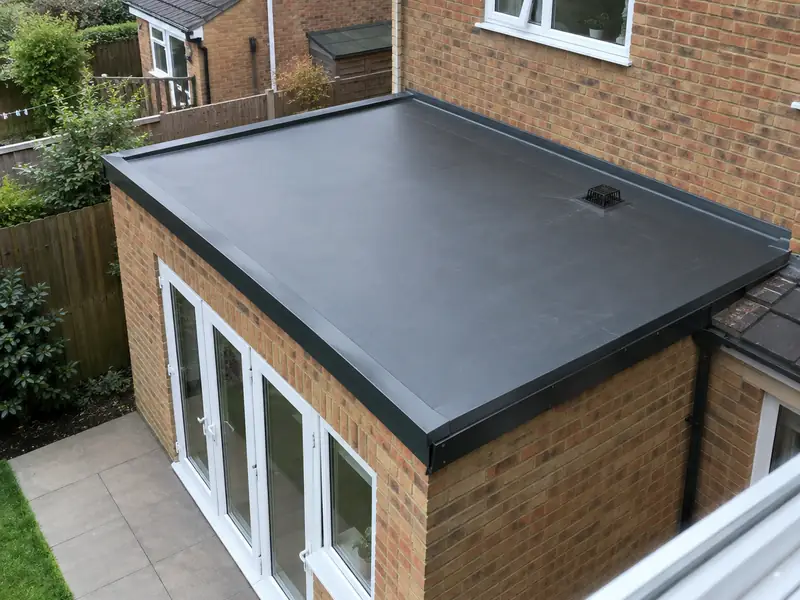
A flat roof replacement strips the old covering from a low-pitched roof and lays a new waterproof system, usually EPDM rubber, GRP fibreglass or torch-on felt, over a sound deck with correct falls, upstands, trims and outlets so rainwater drains away.
Across Moray, people look into a new flat roof to replace something worn out, to make the house work better for them, or to get it ready for a sale. We cover Elgin, Forres, Buckie and Lossiemouth and the smaller towns around them, working to the rules that apply in Scotland. Expect a guide of £1,900–£4,300, VAT included, in Scotland, and every quote follows a free visit.
- Guide price
- £1,900–£4,300 inc VAT
- Time on site
- 1–3 days for most roofs
- Planning rules
- Scotland
- Price level
- About 4% below the national guide
- Towns listed
- 4
- Survey
- Free, with a written quote
Flat roofs prices in Moray
Prices for a new flat roof vary from house to house, but in Moray most projects fall within £1,900–£4,300 including VAT. That reflects costs in Scotland, about 4% below the national guide. Treat the table as a budgeting aid; the written figure follows a survey we carry out for free.
| Type of job | What it usually involves | Guide in Moray |
|---|---|---|
| Small roof (up to 8m²) | A dormer, bay, porch or small garage roof re-covered in EPDM or GRP. | £750–£1,900 |
| Extension or garage (15–25m²) | A typical extension or single garage roof stripped and re-covered. | £1,900–£4,300 |
| Large or new warm roof | Larger roofs, or roofs needing a new deck and insulation build-up. | £3,800–£8,600 |
The main things that change the figure:
- Roof area and access to the roof
- Covering system: EPDM, GRP or torch-on felt
- Insulation upgrades and changes to roof height at edges
- Number of rooflights, pipes and upstands to detail
What’s included?
- Survey of the covering, deck, falls, upstands and drainage
- Stripping and disposal of the old roof covering
- Insulation upgrade to a warm roof build-up where agreed
- Upstands, flashings and drip edges finished neatly
- New trims, outlets and gutter connections
- Rooflights refitted or replaced where required
Homes in Moray
Elgin and Forres have historic sandstone centres, fishing towns such as Buckie and Lossiemouth have stone cottages and terraces, and Speyside villages have grown around their distilleries. Harled cottages, farmhouses and modern estates on the edges of the main towns make up much of the remaining housing.
Stone and harled homes need breathable repairs, repointing and slate roof work. Bungalows commonly suit loft conversions and extensions, and rural properties often add porches, fencing and driveways.
Moray is sunnier and drier than much of Scotland, but winters are cold and the Moray Firth coast is exposed.
Do you need permission in Moray?
Which rules apply depends on where you live. For Moray, the answer is Scotland, and the points below reflect that; we verify them with the council before quoting.
In Scotland, like-for-like re-roofing does not usually need planning permission, except on listed buildings or in conservation areas.
Like-for-like re-covering does not usually need a building warrant, but structural changes or new roof windows can. Bats are protected across the UK; if they roost under roof tiles, soffits or fascias, work stops and a licensed ecologist advises before it restarts.
Rules change and every property is different, so we check the planning history and constraints for your address before we quote.
From survey to handover
We look at the job
Book a visit and we'll come to you. The survey covers measurements, the state of what's there now and any obvious constraints, so the price that follows is based on your actual home, not an average.
Written quote
We turn the survey notes into a written quote. The price is fixed for the specification we agree, and the document sets out materials, scope and payment stages in plain language.
Dates and permissions
Once you accept, we agree start dates, order materials and deal with any planning, building control or neighbour notices the job needs. You'll know who is coming and when before work begins.
The work itself
During the work we protect the areas around it and tidy up at the end of each day. Once complete, we check the finish, remove our materials and hand over paperwork such as building control sign-off where it applies.
How we work
Frequently asked questions
Which is better, EPDM rubber or GRP fibreglass?
EPDM rubber and GRP fibreglass are both reliable modern flat roof systems. EPDM is a single flexible sheet with very few joints, which copes well with movement and suits most extensions and garages. GRP is a hard, seamless finish that copes better with foot traffic and complex shapes, but needs dry weather to apply. Felt costs less but usually lasts less long. We recommend a system after seeing your roof.
Which postcodes in Moray do you cover?
We cover IV30, IV36, AB56 and IV31, along with the rest of Moray. If your postcode is not listed, get in touch anyway: our coverage is UK-wide, and we can usually arrange a survey wherever you live. Enter your postcode in the guide-price tool or contact form and we will confirm.
Why does water sit on my flat roof?
Ponding water on a flat roof is usually caused by inadequate falls, sagging joists, a deck that has dipped or blocked outlets. Small puddles that dry within a day or two are not always a problem, but standing water speeds up wear and finds any weakness. A new roof can be laid on firring strips or tapered insulation to create proper falls. We check falls during the survey.
What happens at the survey?
We visit your home at a time that suits you, look at the area involved, take measurements and check access, condition and any services that might be affected. We talk through what you want from a new flat roof, explain the options and answer questions. There is no charge and no obligation; afterwards we send a written quote.
Can you repair my flat roof instead of replacing it?
A flat roof can often be repaired if the damage is limited to a small split, a failed joint or a loose upstand and the rest of the covering is sound. If the deck is soft, the covering is blistered or cracked across the roof, or leaks keep returning, replacement is usually better value. We assess the whole roof and give you an honest recommendation.
Towns in Moray
These are the towns in Moray where you can book a free survey for a new flat roof. Each has its own page with guide prices and coverage details.