
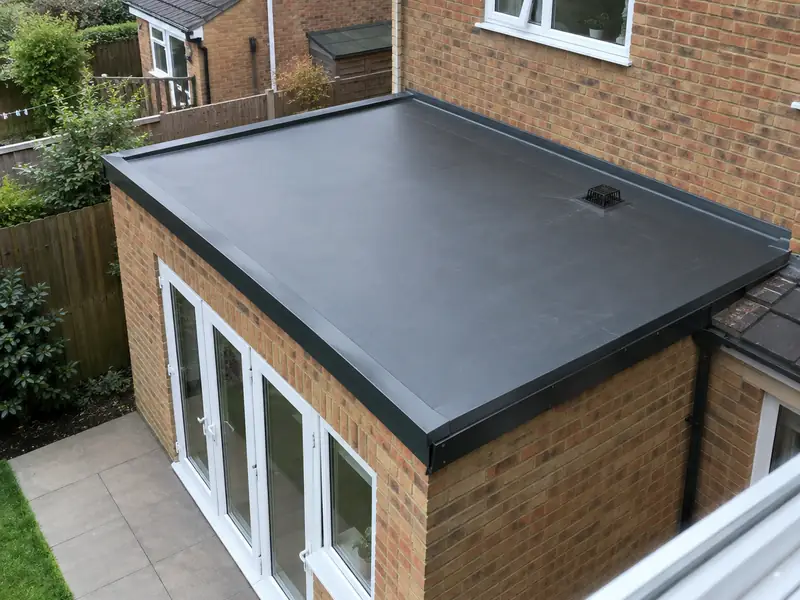
A flat roof replacement strips the old covering from a low-pitched roof and lays a new waterproof system, usually EPDM rubber, GRP fibreglass or torch-on felt, over a sound deck with correct falls, upstands, trims and outlets so rainwater drains away.
Derbyshire is part of our UK-wide coverage for a new flat roof. Places we cover include Derby, Chesterfield, Long Eaton and Ilkeston, and we travel to smaller communities across the area as well. Since your property is in England, the relevant planning and building rules are the ones set there. In the East Midlands, budget around £1,900–£4,300 with VAT; the figure is confirmed after a survey that costs you nothing.
- Guide price
- £1,900–£4,300 inc VAT
- Time on site
- 1–3 days for most roofs
- Planning rules
- England
- Price level
- About 4% below the national guide
- Towns listed
- 12
- Survey
- Free, with a written quote
How much does a new flat roof cost in Derbyshire?
To help you plan, we show what a new flat roof typically costs in Derbyshire instead of holding figures back for a sales call. The range is £1,900–£4,300 with VAT, using rates in the East Midlands that are about 4% below the national guide. A free survey then fixes your actual price.
| Type of job | What it usually involves | Guide in Derbyshire |
|---|---|---|
| Small roof (up to 8m²) | A dormer, bay, porch or small garage roof re-covered in EPDM or GRP. | £750–£1,900 |
| Extension or garage (15–25m²) | A typical extension or single garage roof stripped and re-covered. | £1,900–£4,300 |
| Large or new warm roof | Larger roofs, or roofs needing a new deck and insulation build-up. | £3,800–£8,600 |
The main things that change the figure:
- Roof area and access to the roof
- Covering system: EPDM, GRP or torch-on felt
- Condition of the deck and joists underneath
- Number of rooflights, pipes and upstands to detail
What do you get?
- Replacement of rotten or soft deck boards
- Insulation upgrade to a warm roof build-up where agreed
- New EPDM, GRP or torch-on felt membrane laid to falls
- Upstands, flashings and drip edges finished neatly
- New trims, outlets and gutter connections
- Rooflights refitted or replaced where required
Housing across Derbyshire
Derby has wide areas of Victorian red-brick terraces and interwar semis, while Peak District villages use gritstone and limestone under stone-slate or Welsh slate roofs. Former mining towns in the north-east of the county have brick terraces and post-war housing built for mining communities, and modern estates have grown around Derby, Chesterfield and the M1 corridor.
Brick terraces frequently suit loft conversions and rear extensions, and many need repointing. Stone properties in the Peak may call for lime work and planning-sensitive windows, while interwar and estate homes commonly take side extensions and garage conversions.
The High Peak gets heavy rain, snow and frequent frost, while the lower Trent valley is milder; old mine workings can also affect ground conditions in places.
Do you need permission in Derbyshire?
Which rules apply depends on where you live. For Derbyshire, the answer is England, and the points below reflect that; we verify them with the council before quoting.
Re-roofing a house with similar materials does not usually need planning permission in England. Listed buildings and conservation areas may need consent if the covering changes.
Replacing more than a quarter of a roof’s covering counts as renovation under Building Regulations, so the work is notified and the roof insulation may need upgrading. Bats are protected across the UK; if they roost under roof tiles, soffits or fascias, work stops and a licensed ecologist advises before it restarts.
Rules change and every property is different, so we check the planning history and constraints for your address before we quote.
How does the job run?
A visit to your home
Book a visit and we'll come to you. The survey covers measurements, the state of what's there now and any obvious constraints, so the price that follows is based on your actual home, not an average.
Written quote
We put everything into a written, fixed-price quote: the specification, what's excluded, staged payments and the expected time on site. Take whatever time you need to decide; there's no pressure to commit.
Plan and prepare
Preparation matters as much as the build. We agree access, parking and working hours with you, order materials in good time, and confirm any permissions so the job isn't held up once it starts.
On site to finish
Work goes ahead as scheduled and you deal with one contact throughout. When the last trade leaves, we clear and clean the site, talk you through what has been done and pass on any certificates and care instructions.
How we work
Frequently asked questions
How long does a flat roof last?
A well-installed EPDM or GRP flat roof can last 25 years or more, while torch-on felt systems typically last around 15–25 years, depending on quality and exposure. Lifespan depends on correct falls, good detailing at edges and upstands, and keeping outlets clear. Foot traffic, ponding and poor ventilation shorten it. Annual checks help catch small problems early.
Is a flat roof suitable for a roof terrace?
A flat roof can only be used as a terrace if it is designed for it, with joists strong enough for people and furniture, a hard-wearing surface, safe edge protection and correct drainage. Using a standard extension roof as a terrace can damage it and may need planning permission and building regulations approval. We can advise on what a conversion would involve.
Which is better, EPDM rubber or GRP fibreglass?
EPDM rubber and GRP fibreglass are both reliable modern flat roof systems. EPDM is a single flexible sheet with very few joints, which copes well with movement and suits most extensions and garages. GRP is a hard, seamless finish that copes better with foot traffic and complex shapes, but needs dry weather to apply. Felt costs less but usually lasts less long. We recommend a system after seeing your roof.
Can I stay at home during the work?
In most cases, yes. Most people can live at home throughout, and we plan the work to keep disruption down by protecting floors, agreeing working hours and keeping access routes clear. Bigger jobs affecting kitchens, bathrooms or heating may mean a short spell with reduced facilities, and we talk this through with you at the survey.
Who do I deal with during the job?
One point of contact manages your project from survey to handover. They schedule the trades working under our contract, keep you updated on progress, and are the person to call with any question. You don't need to coordinate builders, electricians or decorators separately, because that is part of what we do.
Towns in Derbyshire
Find your town below. Every place listed in Derbyshire is covered for a new flat roof, with the same survey, written quote and fixed-price process.