
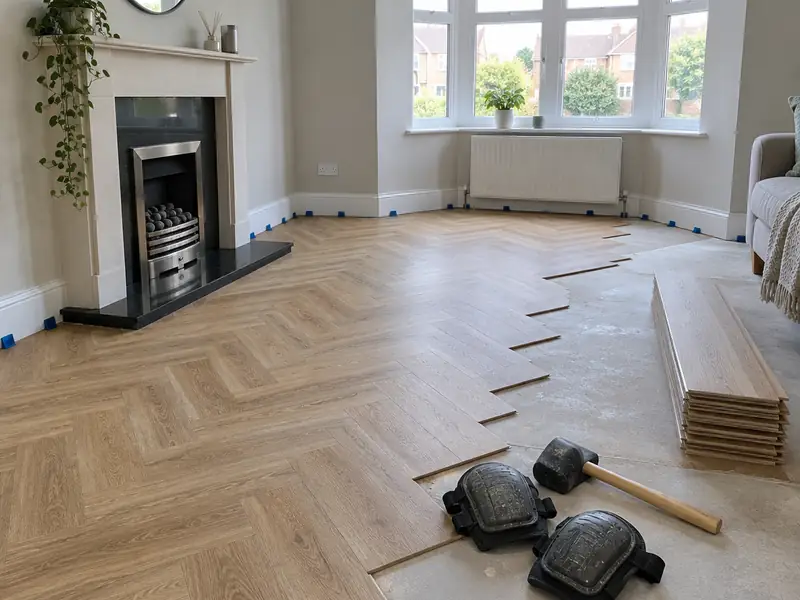
Flooring installation is the supply and fitting of a new floor finish, such as laminate, luxury vinyl tile, engineered wood or solid wood, over a properly levelled and prepared subfloor, with underlay, trims and thresholds finished neatly.
Derbyshire is part of our UK-wide coverage for new flooring. Places we cover include Derby, Chesterfield, Long Eaton and Ilkeston, and we travel to smaller communities across the area as well. Since your property is in England, the relevant planning and building rules are the ones set there. In the East Midlands, budget around £1,150–£3,800 with VAT; the figure is confirmed after a survey that costs you nothing.
- Guide price
- £1,150–£3,800 inc VAT
- Time on site
- 1–2 days per room, longer if levelling is needed
- Planning rules
- England
- Price level
- About 4% below the national guide
- Towns listed
- 12
- Survey
- Free, with a written quote
How much does new flooring cost in Derbyshire?
Every figure below is a guide for new flooring in Derbyshire, inclusive of VAT. Regional pricing for the East Midlands works out about 4% below the national guide, and the overall span is £1,150–£3,800. The survey costs you nothing, and after it we commit to a firm price for your specification in writing.
| Type of job | What it usually involves | Guide in Derbyshire |
|---|---|---|
| Laminate in one room | Around 15–20m² of laminate with underlay, trims and door trimming. | £600–£1,750 |
| LVT or engineered wood | Around 20–25m² of LVT or engineered wood, with levelling and moisture protection. | £1,150–£3,400 |
| Whole floor or solid wood | An open-plan ground floor, solid wood or herringbone, with extensive preparation. | £3,400–£8,600 |
What moves the price up or down:
- Floor area and the number of rooms, stairs and doorways
- Flooring type, plank size and laying pattern
- Condition of the subfloor and any levelling needed
- Underfloor heating, moisture barriers and acoustic underlay
Scope of the work
- Measured survey of each room and checks on the subfloor
- Lifting and disposal of old carpet, laminate or vinyl
- Supply and fitting of your chosen flooring
- Door trimming so doors clear the new floor
- Threshold strips, scotia or skirting finished neatly
- Furniture moved within the room where agreed
Housing across Derbyshire
Derby has wide areas of Victorian red-brick terraces and interwar semis, while Peak District villages use gritstone and limestone under stone-slate or Welsh slate roofs. Former mining towns in the north-east of the county have brick terraces and post-war housing built for mining communities, and modern estates have grown around Derby, Chesterfield and the M1 corridor.
Brick terraces frequently suit loft conversions and rear extensions, and many need repointing. Stone properties in the Peak may call for lime work and planning-sensitive windows, while interwar and estate homes commonly take side extensions and garage conversions.
The High Peak gets heavy rain, snow and frequent frost, while the lower Trent valley is milder; old mine workings can also affect ground conditions in places.
Do you need permission in Derbyshire?
Planning law differs across the UK. For a home in Derbyshire, it is the England rules below that count, and we check them with the council ahead of any quote.
Internal work such as a new kitchen, bathroom, flooring, plastering or decorating does not need planning permission in England, unless the house is listed, when listed building consent may be needed even for internal changes.
Some internal work is covered by Building Regulations: new electrical circuits and work in bathrooms (Part P), new drainage, structural changes, extractor ventilation and any new window. Notifiable work is certified by a registered installer or by building control.
Rules change and every property is different, so we check the planning history and constraints for your address before we quote.
How does the job run?
Free site survey
A free survey comes first. It gives us what we need to price new flooring properly, including dimensions, existing materials and access for deliveries, and gives you the chance to ask anything you like.
Price and scope agreed
Next you receive a written quote with a fixed price for the agreed specification. It lists what is included, what is not, and how payments are staged, so you can compare it properly.
Plan and prepare
We handle the paperwork side: checking whether planning permission or building control approval is needed, submitting applications where they are, and scheduling the trades and materials around your dates.
On site to finish
The work is carried out to the agreed specification, with floors and furniture protected and the site kept tidy. At the end we clean up, walk through the finished job with you and hand over any certificates.
How we work
Questions about new flooring in Derbyshire
Can I have wood flooring with underfloor heating?
Engineered wood and LVT both work well with underfloor heating, because they are stable and transfer heat efficiently. Solid wood is less suitable, as it can move and gap as temperatures change. The flooring and underlay must be approved for use with the heating system, and floor temperatures need limiting. We check the manufacturer's guidance before recommending a product.
How long does it take to lay a floor?
Laying a floor in an average room usually takes one to two days. Open-plan spaces, herringbone patterns and floors needing levelling compound take longer, because the compound must dry before the floor goes down. Some products also need to acclimatise in the room for a day or two before fitting. We confirm timings for your rooms with the written quote.
Do I need planning permission in Derbyshire?
It depends on the work, the size of the project, your property type and whether the building is listed or in a conservation area. Derbyshire is in England, so England's rules apply. Many smaller jobs need no planning application, but some still need building control approval. We check what applies to your address before quoting.
How much will new flooring cost in Derbyshire?
As a guide, expect to pay £1,150–£3,800 including VAT for new flooring in Derbyshire. That range is adjusted for the East Midlands, which runs about 4% below the national guide. Where your project lands depends on size, materials, access and the condition of what is already there. We confirm a fixed price in writing after a free survey of your home.
Will my doors need trimming?
Doors often need trimming after new flooring is fitted, because the combined height of the underlay and floor is usually greater than old carpet or vinyl. We take each door off, trim the bottom by the right amount and rehang it so it clears the new floor. Threshold strips are then fitted where the new floor meets another surface.
Towns in Derbyshire
Find your town below. Every place listed in Derbyshire is covered for new flooring, with the same survey, written quote and fixed-price process.