
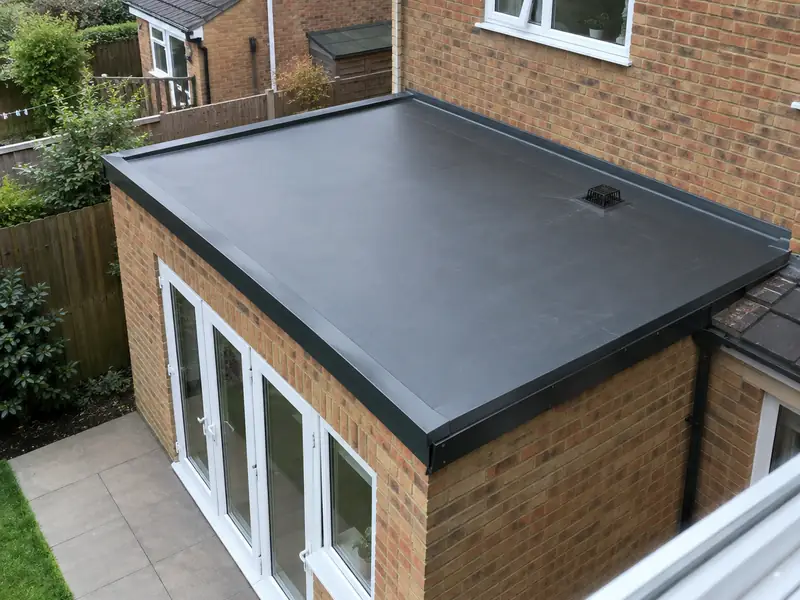
A flat roof replacement strips the old covering from a low-pitched roof and lays a new waterproof system, usually EPDM rubber, GRP fibreglass or torch-on felt, over a sound deck with correct falls, upstands, trims and outlets so rainwater drains away.
Dorset is part of our UK-wide coverage for a new flat roof. Places we cover include Bournemouth, Poole, Weymouth and Christchurch, and we travel to smaller communities across the area as well. Since your property is in England, the relevant planning and building rules are the ones set there. In the South West, budget around £2,000–£4,600 with VAT; the figure is confirmed after a survey that costs you nothing.
- Guide price
- £2,000–£4,600 inc VAT
- Time on site
- 1–3 days for most roofs
- Planning rules
- England
- Price level
- About 2% above the national guide
- Towns listed
- 4
- Survey
- Free, with a written quote
How much does a new flat roof cost in Dorset?
These are guide costs, not quotes. For a new flat roof in Dorset the range is £2,000–£4,600, VAT included, reflecting prices in the South West that are about 2% above the national guide. Once we have visited for a free survey, you get a firm figure for the scope you approve.
| Type of job | What it usually involves | Guide in Dorset |
|---|---|---|
| Small roof (up to 8m²) | A dormer, bay, porch or small garage roof re-covered in EPDM or GRP. | £800–£2,000 |
| Extension or garage (15–25m²) | A typical extension or single garage roof stripped and re-covered. | £2,000–£4,600 |
| Large or new warm roof | Larger roofs, or roofs needing a new deck and insulation build-up. | £4,100–£9,200 |
What moves the price up or down:
- Covering system: EPDM, GRP or torch-on felt
- Condition of the deck and joists underneath
- Insulation upgrades and changes to roof height at edges
- Number of rooflights, pipes and upstands to detail
What do you get?
- Survey of the covering, deck, falls, upstands and drainage
- Stripping and disposal of the old roof covering
- Insulation upgrade to a warm roof build-up where agreed
- New EPDM, GRP or torch-on felt membrane laid to falls
- Upstands, flashings and drip edges finished neatly
- Rooflights refitted or replaced where required
Homes in Dorset
Dorset's older villages use Purbeck and Portland stone, chalk and flint, and thatch on cob or brick cottages. Bournemouth and Poole have Victorian and Edwardian villas, large interwar suburbs and plenty of bungalows and flats, while Weymouth, Dorchester and Bridport mix Georgian and Victorian streets with newer estates.
Stone and thatched cottages may need lime repairs and conservation-area window choices. Bungalows around Bournemouth and Poole commonly suit loft conversions, and coastal homes often need roofline, rendering and window renewal.
Salt spray and south-westerly winds affect coastal homes, so external finishes and fixings need to cope with marine exposure.
Do you need permission in Dorset?
Homes in Dorset come under the regulations for England, summarised below. We don't rely on general rules alone: we confirm the position for your address with the council before a quote goes out.
Re-roofing a house with similar materials does not usually need planning permission in England. Listed buildings and conservation areas may need consent if the covering changes.
Replacing more than a quarter of a roof’s covering counts as renovation under Building Regulations, so the work is notified and the roof insulation may need upgrading. Bats are protected across the UK; if they roost under roof tiles, soffits or fascias, work stops and a licensed ecologist advises before it restarts.
Rules change and every property is different, so we check the planning history and constraints for your address before we quote.
From survey to handover
Free site survey
A free survey comes first. It gives us what we need to price a new flat roof properly, including dimensions, existing materials and access for deliveries, and gives you the chance to ask anything you like.
Written quote
The quote arrives in writing, not over the phone. It covers the full scope, the finishes you've chosen, any exclusions and the payment schedule, with a fixed price tied to that specification.
Plan and prepare
Once you accept, we agree start dates, order materials and deal with any planning, building control or neighbour notices the job needs. You'll know who is coming and when before work begins.
Finish and handover
Our trades complete a new flat roof while your point of contact keeps you updated. When everything is finished, we clear the site, take away waste and go through the result with you before handover.
What you can expect from us
Frequently asked questions
Is a flat roof suitable for a roof terrace?
A flat roof can only be used as a terrace if it is designed for it, with joists strong enough for people and furniture, a hard-wearing surface, safe edge protection and correct drainage. Using a standard extension roof as a terrace can damage it and may need planning permission and building regulations approval. We can advise on what a conversion would involve.
What happens at the survey?
We visit your home at a time that suits you, look at the area involved, take measurements and check access, condition and any services that might be affected. We talk through what you want from a new flat roof, explain the options and answer questions. There is no charge and no obligation; afterwards we send a written quote.
Do you cover Bournemouth, Poole and Weymouth?
Yes. As well as Dorset, we cover Bournemouth, Poole and Weymouth and the rest of Dorset. Our coverage is UK-wide, so the process is the same wherever you are: a free site survey, a quote in writing that fixes the price for the agreed scope, and one point of contact while the work is planned and carried out.
How long does a flat roof last?
A well-installed EPDM or GRP flat roof can last 25 years or more, while torch-on felt systems typically last around 15–25 years, depending on quality and exposure. Lifespan depends on correct falls, good detailing at edges and upstands, and keeping outlets clear. Foot traffic, ponding and poor ventilation shorten it. Annual checks help catch small problems early.
Why does water sit on my flat roof?
Ponding water on a flat roof is usually caused by inadequate falls, sagging joists, a deck that has dipped or blocked outlets. Small puddles that dry within a day or two are not always a problem, but standing water speeds up wear and finds any weakness. A new roof can be laid on firring strips or tapered insulation to create proper falls. We check falls during the survey.
Towns in Dorset
Find your town below. Every place listed in Dorset is covered for a new flat roof, with the same survey, written quote and fixed-price process.