
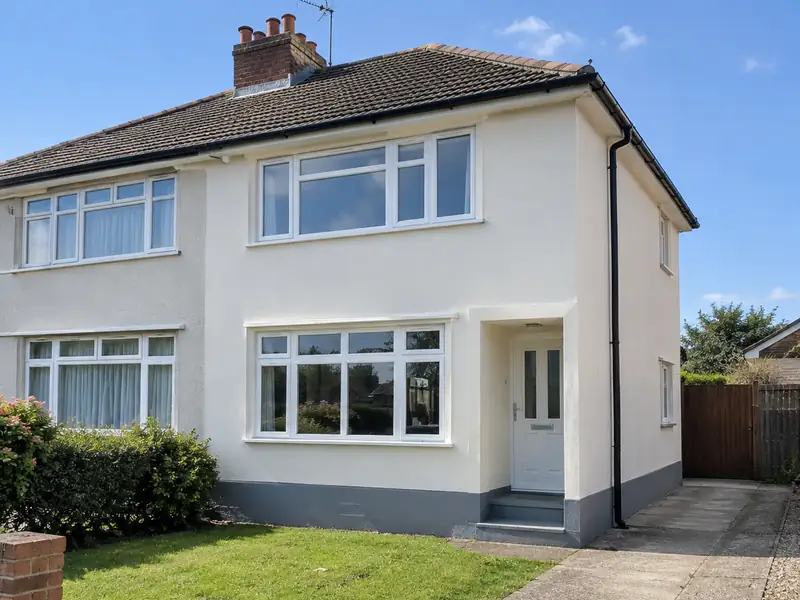
External rendering is applying a protective, weather-resistant coating to the outside walls of a house, using sand and cement, monocouche or thin-coat silicone render, to give a smooth or textured finish that protects the masonry and improves appearance.
We offer external rendering throughout East Riding of Yorkshire, from Hull, Bridlington, Beverley and Goole to the smaller places in between. Each project starts with a free survey at your home and ends with a written figure, fixed for the work you choose. Because East Riding of Yorkshire is in England, we work to the planning system and building standards used there, and guide prices for Yorkshire and the Humber run at £6,600–£15,000 including VAT.
- Guide price
- £6,600–£15,000 inc VAT
- Time on site
- 1–3 weeks on site, depending on weather
- Planning rules
- England
- Price level
- About 6% below the national guide
- Towns listed
- 5
- Survey
- Free, with a written quote
How much does external rendering cost in East Riding of Yorkshire?
These are guide costs, not quotes. For external rendering in East Riding of Yorkshire the range is £6,600–£15,000, VAT included, reflecting prices in Yorkshire and the Humber that are about 6% below the national guide. Once we have visited for a free survey, you get a firm figure for the scope you approve.
| Type of job | What it usually involves | Guide in East Riding of Yorkshire |
|---|---|---|
| Front elevation or small terrace | One elevation or a small terraced house, including scaffolding and preparation. | £2,800–£6,600 |
| Typical semi-detached | All rendered walls of a 3-bed semi in monocouche or silicone, with scaffolding. | £6,600–£15,000 |
| Detached or full strip and re-render | Larger houses, or homes needing old render removed and walls repaired first. | £14,000–£28,000 |
The main things that change the figure:
- Wall area to be rendered and the height of the house
- Removing old render or pebbledash and repairing the walls
- Scaffolding, access and protection of neighbouring property
- Detailing around windows, bays, sills and pipes
What do you get?
- Survey of walls, existing render, cracks and damp-proof course
- Scaffolding erected and removed, with neighbours' access agreed
- Windows, doors and surfaces masked and protected
- Beads at corners, edges and above the damp-proof course
- Mesh reinforcement and base coats to suit the chosen system
- Finish coat in your chosen colour and texture
Housing across East Riding of Yorkshire
Hull has large areas of Victorian and Edwardian terraces, many arranged in the city's distinctive short cul-de-sac terraces running off the main streets, plus extensive interwar and post-war estates. Beverley keeps Georgian brick houses, Wolds villages use chalk and brick, and red clay pantile roofs are common across the area. Coastal towns such as Bridlington mix guest-house terraces with bungalows.
Terraced homes often suit loft rooms and rear extensions; pantile roofs may need re-roofing with matching tiles. Bungalows commonly benefit from loft conversions, and older brick houses need repointing with a suitable mortar.
Much of the area is low-lying near the Humber and coast, with flood risk, cold easterly winds and an eroding Holderness coastline.
Planning and building rules in East Riding of Yorkshire
The notes below cover England, which is where East Riding of Yorkshire sits. Rules change and every property is different, so we speak to the council before pricing your job.
In England, re-rendering or cladding a house is often allowed without planning permission, but stone, render, timber, plastic or tile cladding is not permitted development in conservation areas, and listed buildings need consent.
If you render or re-clad more than 25% of an external wall, Building Regulations usually require the wall’s insulation to be improved where that is practical, and building control should be notified.
Rules change and every property is different, so we check the planning history and constraints for your address before we quote.
From survey to handover
Free site survey
We begin by looking at the job in person. During the free survey we discuss options, materials and budget for external rendering, and photograph or measure anything the quote needs to reflect.
Your fixed price
Next you receive a written quote with a fixed price for the agreed specification. It lists what is included, what is not, and how payments are staged, so you can compare it properly.
Booking the work
Before anyone starts, we confirm the programme in writing, check whether consents are required and arrange deliveries. If a skip or scaffolding on the road needs a permit, we apply for it.
Finish and handover
Work goes ahead as scheduled and you deal with one contact throughout. When the last trade leaves, we clear and clean the site, talk you through what has been done and pass on any certificates and care instructions.
How we work
Frequently asked questions
Which render system should I choose?
The right render depends on your walls and how much upkeep you want. Sand and cement is the lowest-cost option but needs repainting every few years. Monocouche is coloured through, so it needs no painting, and suits block and brick walls. Silicone thin-coat is flexible, water-repellent and stays cleaner, but costs more. Lime render suits older solid walls. We recommend a system after inspecting your walls.
Which postcodes in East Riding of Yorkshire do you cover?
We cover HU1, YO15, HU17 and DN14, along with the rest of East Riding of Yorkshire. If your postcode is not listed, get in touch anyway: our coverage is UK-wide, and we can usually arrange a survey wherever you live. Enter your postcode in the guide-price tool or contact form and we will confirm.
How long will external rendering take?
On a typical home, allow 1–3 weeks on site, depending on weather. Larger projects, older buildings and extra work found once things are opened up can extend that, while simpler jobs may be shorter. Your quote includes an estimate of time on site, and your point of contact keeps you updated on the programme as the work progresses.
How do I look after silicone or monocouche render?
Through-coloured render needs little upkeep. Check it once a year for cracks or damage, especially around windows and pipes, and keep gutters clear so water does not run down the walls. If green algae appears on shaded walls, a specialist render cleaner applied with a soft brush or low-pressure wash removes it. Avoid high-pressure jet washing, which can damage the surface.
Will rendering stop damp?
Render protects walls from driving rain, so it can help where rain penetration is the cause of damp. It will not cure rising damp, condensation or leaks from gutters, and on older solid walls the wrong render can trap moisture and make damp worse. We look for the cause of any damp at the survey and recommend fixing that first.
Towns in East Riding of Yorkshire
Below is our list of East Riding of Yorkshire towns for external rendering. If yours isn't shown, we may still cover it, so it is worth asking us directly.