
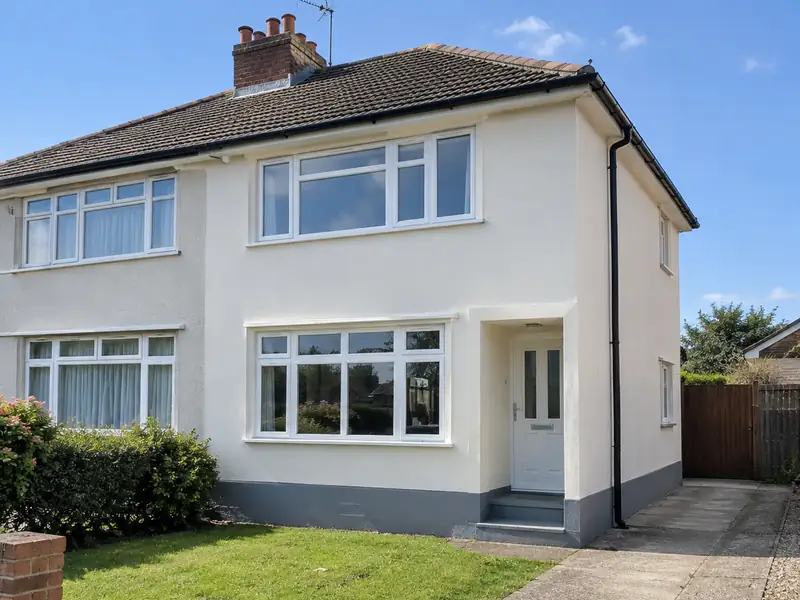
External rendering is applying a protective, weather-resistant coating to the outside walls of a house, using sand and cement, monocouche or thin-coat silicone render, to give a smooth or textured finish that protects the masonry and improves appearance.
In Northumberland, we price external rendering against our guide for the North East, £6,300–£14,500 including VAT, then adjust it once we have surveyed your home. We work across Blyth, Cramlington, Ashington and Bedlington and the rest of the county or region. Planning and building control requirements follow the rules for England, and we look into your property's position before a written quote is sent.
- Guide price
- £6,300–£14,500 inc VAT
- Time on site
- 1–3 weeks on site, depending on weather
- Planning rules
- England
- Price level
- About 10% below the national guide
- Towns listed
- 4
- Survey
- Free, with a written quote
External rendering prices in Northumberland
Every figure below is a guide for external rendering in Northumberland, inclusive of VAT. Regional pricing for the North East works out about 10% below the national guide, and the overall span is £6,300–£14,500. The survey costs you nothing, and after it we commit to a firm price for your specification in writing.
| Type of job | What it usually involves | Guide in Northumberland |
|---|---|---|
| Front elevation or small terrace | One elevation or a small terraced house, including scaffolding and preparation. | £2,700–£6,300 |
| Typical semi-detached | All rendered walls of a 3-bed semi in monocouche or silicone, with scaffolding. | £6,300–£14,500 |
| Detached or full strip and re-render | Larger houses, or homes needing old render removed and walls repaired first. | £13,500–£27,000 |
Your price depends mostly on:
- Wall area to be rendered and the height of the house
- Removing old render or pebbledash and repairing the walls
- Scaffolding, access and protection of neighbouring property
- Detailing around windows, bays, sills and pipes
What’s included?
- Scaffolding erected and removed, with neighbours' access agreed
- Removal of loose or failed render and pebbledash where needed
- Windows, doors and surfaces masked and protected
- Mesh reinforcement and base coats to suit the chosen system
- Finish coat in your chosen colour and texture
- Making good around pipes, vents and fixings, and a site clean-up
Homes in Northumberland
Stone dominates rural Northumberland, from sandstone farmhouses and villages to fortified bastle houses in the uplands. Alnwick, Hexham and Morpeth have historic stone centres, Berwick has Georgian streets, and south-east towns such as Ashington, Blyth and Bedlington have colliery terraces. Cramlington grew from the 1960s with planned estates.
Stone homes often need lime pointing, roof slating and breathable render. Colliery terraces suit loft conversions and rear extensions, and estate homes commonly take garage conversions and window upgrades.
The coast is exposed to cold North Sea winds, and the Cheviots and higher moorland see snow and hard frosts in winter.
Planning and building rules in Northumberland
England, Wales, Scotland and Northern Ireland each handle planning a little differently. Northumberland comes under England, covered below, and we raise any questions with the council before your quote is finalised.
In England, re-rendering or cladding a house is often allowed without planning permission, but stone, render, timber, plastic or tile cladding is not permitted development in conservation areas, and listed buildings need consent.
If you render or re-clad more than 25% of an external wall, Building Regulations usually require the wall’s insulation to be improved where that is practical, and building control should be notified.
Rules change and every property is different, so we check the planning history and constraints for your address before we quote.
The four stages
We look at the job
Book a visit and we'll come to you. The survey covers measurements, the state of what's there now and any obvious constraints, so the price that follows is based on your actual home, not an average.
Price and scope agreed
After the survey we send a quote for external rendering that fixes the price for the scope we've agreed. If you want to change materials or scope, we revise it in writing before anything is booked.
Getting ready
Next comes planning the work itself. We set a start date that suits you, line up the right trades, and make sure any approvals for external rendering are in place before the first day on site.
Finish and handover
During the work we protect the areas around it and tidy up at the end of each day. Once complete, we check the finish, remove our materials and hand over paperwork such as building control sign-off where it applies.
How we work
Questions about external rendering in Northumberland
Will rendering stop damp?
Render protects walls from driving rain, so it can help where rain penetration is the cause of damp. It will not cure rising damp, condensation or leaks from gutters, and on older solid walls the wrong render can trap moisture and make damp worse. We look for the cause of any damp at the survey and recommend fixing that first.
What happens at the survey?
We visit your home at a time that suits you, look at the area involved, take measurements and check access, condition and any services that might be affected. We talk through what you want from external rendering, explain the options and answer questions. There is no charge and no obligation; afterwards we send a written quote.
Can you render over pebbledash or old render?
Rendering over existing pebbledash or render is sometimes possible if it is firmly bonded, but if it sounds hollow, is cracked or is coming away, it must be removed first. Covering failing render simply hides the problem until the new coat fails too. We tap-test the walls and explain whether removal is needed. Removal adds time and cost but gives a sound base.
Can I stay at home during the work?
In most cases, yes. Most people can live at home throughout, and we plan the work to keep disruption down by protecting floors, agreeing working hours and keeping access routes clear. Bigger jobs affecting kitchens, bathrooms or heating may mean a short spell with reduced facilities, and we talk this through with you at the survey.
Which render system should I choose?
The right render depends on your walls and how much upkeep you want. Sand and cement is the lowest-cost option but needs repainting every few years. Monocouche is coloured through, so it needs no painting, and suits block and brick walls. Silicone thin-coat is flexible, water-repellent and stays cleaner, but costs more. Lime render suits older solid walls. We recommend a system after inspecting your walls.
Towns in Northumberland
Our coverage for external rendering in Northumberland includes the towns listed here. Each page explains guide costs, typical timings and the neighbouring places we also serve.