
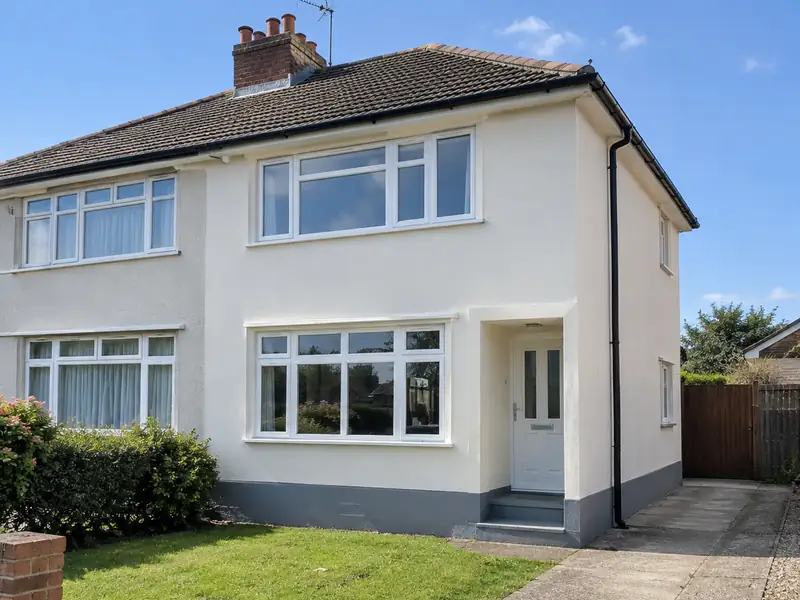
External rendering is applying a protective, weather-resistant coating to the outside walls of a house, using sand and cement, monocouche or thin-coat silicone render, to give a smooth or textured finish that protects the masonry and improves appearance.
Cost is usually the first question about external rendering, so here is the guide for Yorkshire and the Humber: £6,600–£15,000 including VAT. We cover the whole of West Yorkshire, with Leeds, Bradford, Huddersfield and Wakefield among the main centres. Because each UK nation sets its own rules, we check the requirements in England for your property, then put a firm price on paper following a free survey.
- Guide price
- £6,600–£15,000 inc VAT
- Time on site
- 1–3 weeks on site, depending on weather
- Planning rules
- England
- Price level
- About 6% below the national guide
- Towns listed
- 26
- Survey
- Free, with a written quote
External rendering prices in West Yorkshire
What will external rendering cost in West Yorkshire? Our guide range is £6,600–£15,000 including VAT. That figure is adjusted for Yorkshire and the Humber, about 6% below the national guide, and is intended for planning a budget. A firm written price for your chosen specification follows a free survey at your home.
| Type of job | What it usually involves | Guide in West Yorkshire |
|---|---|---|
| Front elevation or small terrace | One elevation or a small terraced house, including scaffolding and preparation. | £2,800–£6,600 |
| Typical semi-detached | All rendered walls of a 3-bed semi in monocouche or silicone, with scaffolding. | £6,600–£15,000 |
| Detached or full strip and re-render | Larger houses, or homes needing old render removed and walls repaired first. | £14,000–£28,000 |
What moves the price up or down:
- Wall area to be rendered and the height of the house
- Render system: sand and cement, monocouche or silicone
- Removing old render or pebbledash and repairing the walls
- Detailing around windows, bays, sills and pipes
What do you get?
- Survey of walls, existing render, cracks and damp-proof course
- Scaffolding erected and removed, with neighbours' access agreed
- Removal of loose or failed render and pebbledash where needed
- Beads at corners, edges and above the damp-proof course
- Mesh reinforcement and base coats to suit the chosen system
- Making good around pipes, vents and fixings, and a site clean-up
Homes in West Yorkshire
Leeds and Bradford are known for back-to-back and through terraces, many in sandstone or millstone grit, with stone-slate roofs on older properties. Halifax, Huddersfield and the Calder valley have mill-town stone terraces climbing steep hillsides, and interwar semis, post-war estates and newer housing surround the larger towns.
Back-to-backs and through terraces often suit dormer loft conversions and careful kitchen layouts. Stone properties commonly need repointing with suitable mortar, roof repairs and window replacement, and hillside plots can need retaining walls.
The Pennine hills bring high rainfall, wind and frost, and the Calder valley has a history of serious flooding.
Do you need permission in West Yorkshire?
Each UK nation sets its own consent rules, and West Yorkshire is in England. What follows is a plain summary; we check the specifics for your property with the council before pricing anything.
In England, re-rendering or cladding a house is often allowed without planning permission, but stone, render, timber, plastic or tile cladding is not permitted development in conservation areas, and listed buildings need consent.
If you render or re-clad more than 25% of an external wall, Building Regulations usually require the wall’s insulation to be improved where that is practical, and building control should be notified.
Rules change and every property is different, so we check the planning history and constraints for your address before we quote.
How does the job run?
Survey and measure
A free survey comes first. It gives us what we need to price external rendering properly, including dimensions, existing materials and access for deliveries, and gives you the chance to ask anything you like.
Your fixed price
The quote arrives in writing, not over the phone. It covers the full scope, the finishes you've chosen, any exclusions and the payment schedule, with a fixed price tied to that specification.
Dates and permissions
Preparation matters as much as the build. We agree access, parking and working hours with you, order materials in good time, and confirm any permissions so the job isn't held up once it starts.
On site to finish
On site, the agreed plan is followed and any change is put in writing first. At completion we do a final clean, go through the snagging list with you and leave you with the relevant documents.
What you can expect from us
Frequently asked questions
What time of year should rendering be done?
Render needs mild, dry conditions to cure properly, so spring to early autumn is ideal. Most render systems should not be applied when frost is likely, in heavy rain or in strong direct sun, which can dry it too quickly and cause cracking. We plan the programme around the forecast and may pause work if the weather turns, which protects the finish.
Which postcodes in West Yorkshire do you cover?
We cover LS1, BD1, HD1 and WF1, along with the rest of West Yorkshire. If your postcode is not listed, get in touch anyway: our coverage is UK-wide, and we can usually arrange a survey wherever you live. Enter your postcode in the guide-price tool or contact form and we will confirm.
Which render system should I choose?
The right render depends on your walls and how much upkeep you want. Sand and cement is the lowest-cost option but needs repainting every few years. Monocouche is coloured through, so it needs no painting, and suits block and brick walls. Silicone thin-coat is flexible, water-repellent and stays cleaner, but costs more. Lime render suits older solid walls. We recommend a system after inspecting your walls.
What happens at the survey?
We visit your home at a time that suits you, look at the area involved, take measurements and check access, condition and any services that might be affected. We talk through what you want from external rendering, explain the options and answer questions. There is no charge and no obligation; afterwards we send a written quote.
Can you render over pebbledash or old render?
Rendering over existing pebbledash or render is sometimes possible if it is firmly bonded, but if it sounds hollow, is cracked or is coming away, it must be removed first. Covering failing render simply hides the problem until the new coat fails too. We tap-test the walls and explain whether removal is needed. Removal adds time and cost but gives a sound base.
Towns in West Yorkshire
Below is our list of West Yorkshire towns for external rendering. If yours isn't shown, we may still cover it, so it is worth asking us directly.