
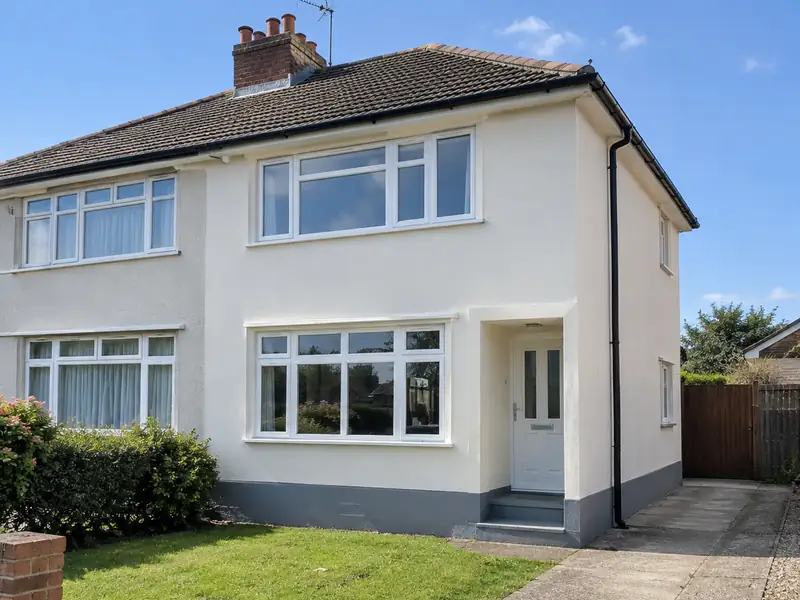
External rendering is applying a protective, weather-resistant coating to the outside walls of a house, using sand and cement, monocouche or thin-coat silicone render, to give a smooth or textured finish that protects the masonry and improves appearance.
In Batley, as anywhere in West Yorkshire, the price of external rendering is driven mainly by size, materials and access. Across Yorkshire and the Humber our guide sits at £6,600–£15,000 with VAT, but restricted parking, a narrow side passage or extra preparation can move the figure either way. That is why every price we give follows a visit to the house.
- Guide price
- £6,600–£15,000 inc VAT
- Time on site
- 1–3 weeks on site, depending on weather
- Postcodes
- WF12, WF13, WF16 and WF17
- Planning rules
- England
- Local area
- Kirklees
- Survey
- Free, with a written quote
What should you budget for external rendering in Batley?
What will external rendering cost in Batley? Our guide range is £6,600–£15,000 including VAT. That figure is adjusted for Yorkshire and the Humber, about 6% below the national guide, and is intended for planning a budget. A firm written price for your chosen specification follows a free survey at your home.
| Type of job | What it usually involves | Guide in Batley |
|---|---|---|
| Front elevation or small terrace | One elevation or a small terraced house, including scaffolding and preparation. | £2,800–£6,600 |
| Typical semi-detached | All rendered walls of a 3-bed semi in monocouche or silicone, with scaffolding. | £6,600–£15,000 |
| Detached or full strip and re-render | Larger houses, or homes needing old render removed and walls repaired first. | £14,000–£28,000 |
The main things that change the figure:
- Wall area to be rendered and the height of the house
- Render system: sand and cement, monocouche or silicone
- Removing old render or pebbledash and repairing the walls
- Detailing around windows, bays, sills and pipes
What do you get?
- Survey of walls, existing render, cracks and damp-proof course
- Removal of loose or failed render and pebbledash where needed
- Windows, doors and surfaces masked and protected
- Mesh reinforcement and base coats to suit the chosen system
- Finish coat in your chosen colour and texture
- Making good around pipes, vents and fixings, and a site clean-up
Homes in West Yorkshire
Leeds and Bradford are known for back-to-back and through terraces, many in sandstone or millstone grit, with stone-slate roofs on older properties. Halifax, Huddersfield and the Calder valley have mill-town stone terraces climbing steep hillsides, and interwar semis, post-war estates and newer housing surround the larger towns.
The Pennine hills bring high rainfall, wind and frost, and the Calder valley has a history of serious flooding.
These patterns matter for external rendering: older walls, roofs and floors in Batley can need different materials or extra preparation compared with newer homes.
Planning and building rules in Batley
Planning law differs across the UK. For a home in Batley, it is the England rules below that count, and we check them with the council ahead of any quote.
In England, re-rendering or cladding a house is often allowed without planning permission, but stone, render, timber, plastic or tile cladding is not permitted development in conservation areas, and listed buildings need consent.
If you render or re-clad more than 25% of an external wall, Building Regulations usually require the wall’s insulation to be improved where that is practical, and building control should be notified.
Rules change and every property is different, so we check the planning history and constraints for your address before we quote.
What happens after you get in touch?
Free site survey
First, someone visits your home in Batley to see the space, take measurements and note anything that could affect the work, such as access or the condition of what is there. There is no charge for this visit.
Your fixed price
Next you receive a written quote with a fixed price for the agreed specification. It lists what is included, what is not, and how payments are staged, so you can compare it properly.
Getting ready
Once you accept, we agree start dates, order materials and deal with any planning, building control or neighbour notices the job needs. You'll know who is coming and when before work begins.
Finish and handover
The job proceeds in the order set out in the programme, with dust and debris kept under control. Finally we tidy away, inspect the work together and pass the finished project over to you with its paperwork.
What you can expect from us
External rendering in Batley: questions
How long will external rendering take?
On a typical home, allow 1–3 weeks on site, depending on weather. Larger projects, older buildings and extra work found once things are opened up can extend that, while simpler jobs may be shorter. Your quote includes an estimate of time on site, and your point of contact keeps you updated on the programme as the work progresses.
Can I stay at home during the work?
In most cases, yes. Most people can live at home throughout, and we plan the work to keep disruption down by protecting floors, agreeing working hours and keeping access routes clear. Bigger jobs affecting kitchens, bathrooms or heating may mean a short spell with reduced facilities, and we talk this through with you at the survey.
Can you render over pebbledash or old render?
Rendering over existing pebbledash or render is sometimes possible if it is firmly bonded, but if it sounds hollow, is cracked or is coming away, it must be removed first. Covering failing render simply hides the problem until the new coat fails too. We tap-test the walls and explain whether removal is needed. Removal adds time and cost but gives a sound base.
What time of year should rendering be done?
Render needs mild, dry conditions to cure properly, so spring to early autumn is ideal. Most render systems should not be applied when frost is likely, in heavy rain or in strong direct sun, which can dry it too quickly and cause cracking. We plan the programme around the forecast and may pause work if the weather turns, which protects the finish.
How long does rendering take?
Rendering a typical semi-detached house takes around one to three weeks. Scaffolding goes up first, then removal of old render, repairs, beads and mesh. Base coats need time to cure before the finish coat. Weather has a big effect, because render should not be applied in rain, frost or strong heat. We give you an expected programme with the quote.
Near Batley
Batley and its WF12, WF13, WF16 and WF17 postcodes are part of our coverage. Homeowners in Dewsbury, Heckmondwike and Liversedge can also book a free survey with us and receive a written price for their job.