
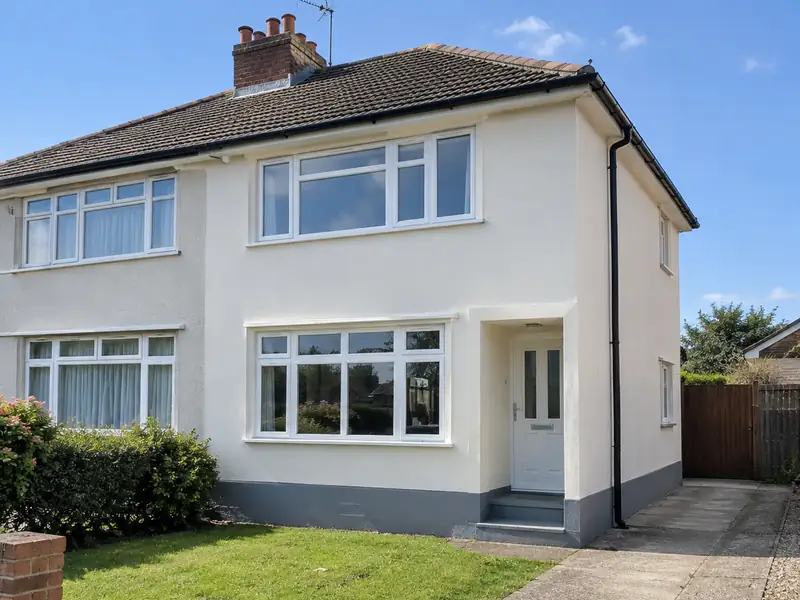
External rendering is applying a protective, weather-resistant coating to the outside walls of a house, using sand and cement, monocouche or thin-coat silicone render, to give a smooth or textured finish that protects the masonry and improves appearance.
Looking for external rendering in Gloucestershire? We organise the whole job, bringing in the trades it needs under one agreement, and you have a single contact. We cover Gloucester, Cheltenham, Stroud and Kingswood, along with villages and suburbs nearby. The rules in England decide what consents are needed, and our guide range of £7,100–£16,500 including VAT gives you a realistic starting point for a budget.
- Guide price
- £7,100–£16,500 inc VAT
- Time on site
- 1–3 weeks on site, depending on weather
- Planning rules
- England
- Price level
- About 2% above the national guide
- Towns listed
- 8
- Survey
- Free, with a written quote
How much does external rendering cost in Gloucestershire?
Budgeting for external rendering in Gloucestershire? The numbers below include VAT and are adjusted for the South West, where costs are about 2% above the national guide. The headline range is £7,100–£16,500. Nothing is final until we have measured up at a free survey and agreed the specification with you.
| Type of job | What it usually involves | Guide in Gloucestershire |
|---|---|---|
| Front elevation or small terrace | One elevation or a small terraced house, including scaffolding and preparation. | £3,100–£7,100 |
| Typical semi-detached | All rendered walls of a 3-bed semi in monocouche or silicone, with scaffolding. | £7,100–£16,500 |
| Detached or full strip and re-render | Larger houses, or homes needing old render removed and walls repaired first. | £15,500–£30,500 |
What moves the price up or down:
- Wall area to be rendered and the height of the house
- Render system: sand and cement, monocouche or silicone
- Removing old render or pebbledash and repairing the walls
- Detailing around windows, bays, sills and pipes
What’s included?
- Survey of walls, existing render, cracks and damp-proof course
- Scaffolding erected and removed, with neighbours' access agreed
- Removal of loose or failed render and pebbledash where needed
- Mesh reinforcement and base coats to suit the chosen system
- Finish coat in your chosen colour and texture
- Making good around pipes, vents and fixings, and a site clean-up
Homes in Gloucestershire
Golden Cotswold limestone defines towns and villages such as Cirencester, Stow and Tetbury, often with stone-slate roofs. Cheltenham is known for Regency stucco terraces and villas, Gloucester has Victorian brick terraces and interwar estates, the Stroud valleys have mill-era stone cottages, and the Forest of Dean uses its own sandstone.
Cotswold stone homes often need lime pointing, stone repairs and windows that suit conservation areas. Regency houses may call for render and decorating, while brick terraces and estate homes suit loft rooms and extensions.
The Cotswold escarpment is exposed to wind and rain, while low ground along the Severn has a well-known flood risk.
Planning and building rules in Gloucestershire
Which rules apply depends on where you live. For Gloucestershire, the answer is England, and the points below reflect that; we verify them with the council before quoting.
In England, re-rendering or cladding a house is often allowed without planning permission, but stone, render, timber, plastic or tile cladding is not permitted development in conservation areas, and listed buildings need consent.
If you render or re-clad more than 25% of an external wall, Building Regulations usually require the wall’s insulation to be improved where that is practical, and building control should be notified.
Rules change and every property is different, so we check the planning history and constraints for your address before we quote.
The four stages
Survey and measure
A free survey comes first. It gives us what we need to price external rendering properly, including dimensions, existing materials and access for deliveries, and gives you the chance to ask anything you like.
Quote in writing
We put everything into a written, fixed-price quote: the specification, what's excluded, staged payments and the expected time on site. Take whatever time you need to decide; there's no pressure to commit.
Dates and permissions
We handle the paperwork side: checking whether planning permission or building control approval is needed, submitting applications where they are, and scheduling the trades and materials around your dates.
Finish and handover
On site, the agreed plan is followed and any change is put in writing first. At completion we do a final clean, go through the snagging list with you and leave you with the relevant documents.
What you can expect from us
Frequently asked questions
Do I need planning permission to render my house?
Whether rendering needs planning permission depends on how it changes the appearance, your home's location, whether it is listed or in a conservation area, and which UK nation you are in. Rendering over brick may need permission in some places, while replacing existing render like for like often does not. Listed buildings need consent. We check the position before quoting.
Who do I deal with during the job?
One point of contact manages your project from survey to handover. They schedule the trades working under our contract, keep you updated on progress, and are the person to call with any question. You don't need to coordinate builders, electricians or decorators separately, because that is part of what we do.
How long will external rendering take?
On a typical home, allow 1–3 weeks on site, depending on weather. Larger projects, older buildings and extra work found once things are opened up can extend that, while simpler jobs may be shorter. Your quote includes an estimate of time on site, and your point of contact keeps you updated on the programme as the work progresses.
What time of year should rendering be done?
Render needs mild, dry conditions to cure properly, so spring to early autumn is ideal. Most render systems should not be applied when frost is likely, in heavy rain or in strong direct sun, which can dry it too quickly and cause cracking. We plan the programme around the forecast and may pause work if the weather turns, which protects the finish.
How do I look after silicone or monocouche render?
Through-coloured render needs little upkeep. Check it once a year for cracks or damage, especially around windows and pipes, and keep gutters clear so water does not run down the walls. If green algae appears on shaded walls, a specialist render cleaner applied with a soft brush or low-pressure wash removes it. Avoid high-pressure jet washing, which can damage the surface.
Towns in Gloucestershire
Below is our list of Gloucestershire towns for external rendering. If yours isn't shown, we may still cover it, so it is worth asking us directly.