
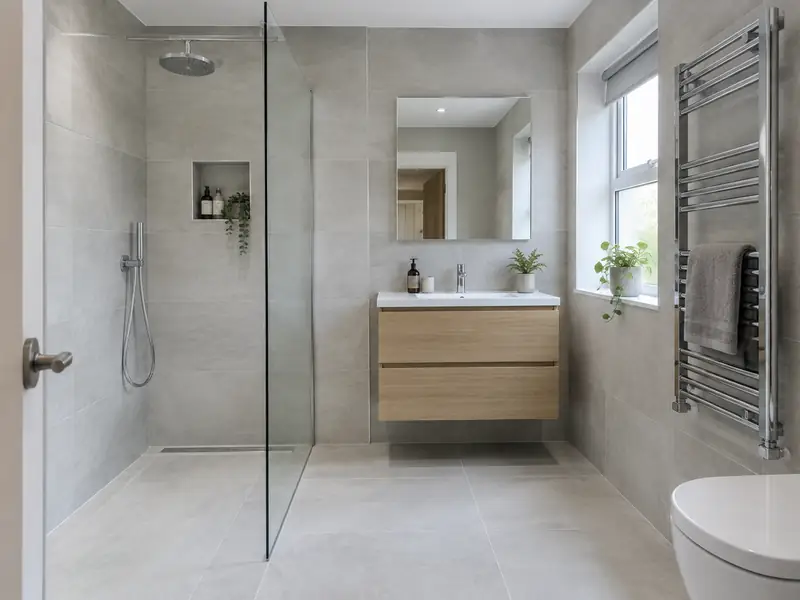
A bathroom installation replaces your old suite with new sanitaryware, a bath or shower, tiling and fittings, including the plumbing, electrics, ventilation and waterproofing needed for a complete, watertight room.
Every house in Greenwich is a little different, so we never price a new bathroom from a brochure. We look at the structure, access and existing finishes first, then put in writing a fixed figure for the scope we settle on. As a rough steer, homeowners in London should budget £6,500–£15,500 including VAT, with work typically taking 1–2 weeks per bathroom.
- Guide price
- £6,500–£15,500 inc VAT
- Time on site
- 1–2 weeks per bathroom
- Postcodes
- SE3, SE7, SE10 and SE12
- Planning rules
- England
- Local area
- Greater London
- Survey
- Free, with a written quote
What should you budget for a new bathroom in Greenwich?
The table below shows guide prices for a new bathroom in Greenwich. They are based on rates in London, which run about 30% above the national guide, giving an overall range of £6,500–£15,500. All figures include VAT and are firmed up after a free site survey.
| Type of job | What it usually involves | Guide in Greenwich |
|---|---|---|
| Shower room or en-suite | A compact room with a shower, basin and toilet, keeping the existing layout. | £5,200–£10,500 |
| Family bathroom | A full suite with bath and shower, new tiling, lighting and an extractor fan. | £6,500–£15,500 |
| Premium bathroom or wet room | Standalone bath, wet room or walk-in shower, underfloor heating and large-format tiles. | £15,500–£26,000 |
What moves the price up or down:
- Room size and the amount of tiling
- Suite, shower and tap specification
- Wet room waterproofing and underfloor heating
- Condition of the floor, walls and existing pipework
What does the job include in Greenwich?
- Measured survey and layout planning for your room
- Removal and disposal of the old suite and tiles
- New supply and waste pipework, including concealed fittings
- Waterproofing behind showers and in wet areas
- Wall and floor tiling to your chosen design
- Heated towel rail, silicone sealing and a final clean
What are homes like around Greenwich?
London's housing is dominated by Victorian and Edwardian terraces, often in yellow London stock brick, with Georgian terraces in central districts and mansion blocks across many inner areas. Outer boroughs have large belts of interwar semis, and there are extensive post-war council estates. Many houses have been split into flats, and conservation areas are widespread.
London Clay shrinks and swells with the seasons, and street trees close to houses can contribute to movement, which affects foundation design.
If your house in Greenwich fits one of these patterns, it helps us anticipate what a new bathroom will involve, though we always confirm the details on site.
Do you need permission in Greenwich?
England, Wales, Scotland and Northern Ireland each handle planning a little differently. Greenwich comes under England, covered below, and we raise any questions with the council before your quote is finalised.
Internal work such as a new kitchen, bathroom, flooring, plastering or decorating does not need planning permission in England, unless the house is listed, when listed building consent may be needed even for internal changes.
Some internal work is covered by Building Regulations: new electrical circuits and work in bathrooms (Part P), new drainage, structural changes, extractor ventilation and any new window. Notifiable work is certified by a registered installer or by building control.
Rules change and every property is different, so we check the planning history and constraints for your address before we quote.
From survey to handover
Survey and measure
It starts with a survey at the property, free of charge. We check condition, access and services, ask how you want the finished result to look, and answer any questions you have about a new bathroom.
Quote in writing
You get the price in writing, itemised so you can see where the money goes. As long as the specification stays the same, that is the price you pay for a new bathroom.
Getting ready
We handle the paperwork side: checking whether planning permission or building control approval is needed, submitting applications where they are, and scheduling the trades and materials around your dates.
Finish and handover
The job proceeds in the order set out in the programme, with dust and debris kept under control. Finally we tidy away, inspect the work together and pass the finished project over to you with its paperwork.
How we work
Common questions
Who do I deal with during the job?
One point of contact manages your project from survey to handover. They schedule the trades working under our contract, keep you updated on progress, and are the person to call with any question. You don't need to coordinate builders, electricians or decorators separately, because that is part of what we do.
How much does a new bathroom cost?
A typical family bathroom costs £6,500–£15,500 supplied and fitted, including tiling, a new suite, shower, lighting and an extractor fan. Shower rooms and simple en-suites cost a little less, while wet rooms, standalone baths and large-format tiles cost more. Moving the toilet or replacing rotten floorboards adds to the total. We confirm a fixed price for the agreed specification after the survey.
Do you cover Blackheath, Canary Wharf and Blackwall?
Yes. As well as Greenwich, we cover Blackheath, Canary Wharf and Blackwall and the rest of London. Our coverage is UK-wide, so the process is the same wherever you are: a free site survey, a quote in writing that fixes the price for the agreed scope, and one point of contact while the work is planned and carried out.
Do I need a new boiler for a new shower?
You do not always need a new boiler for a new shower, but your hot water system decides what kind of shower will work well. Combi boilers suit mixer showers directly from the mains. Tank-fed systems may need a pump for good pressure, and electric showers heat their own water. We check your boiler, cylinder and water pressure during the survey and recommend a shower to match.
Which tiles are easiest to keep clean?
Large-format porcelain tiles are usually easiest to keep clean, because there are fewer grout lines to collect dirt and porcelain absorbs very little water. Glossy tiles show water marks more than matt ones, while textured floor tiles give better grip. Grout colour matters too: mid-grey hides staining better than white. We can suggest anti-slip ratings and grout options that suit how you use the room.
Nearby towns
Whether you're in the centre of Greenwich or on its outskirts, SE3, SE7, SE10 and SE12 addresses are covered. We extend the same service, and the same fixed-price approach, to Blackheath, Canary Wharf and Blackwall.