
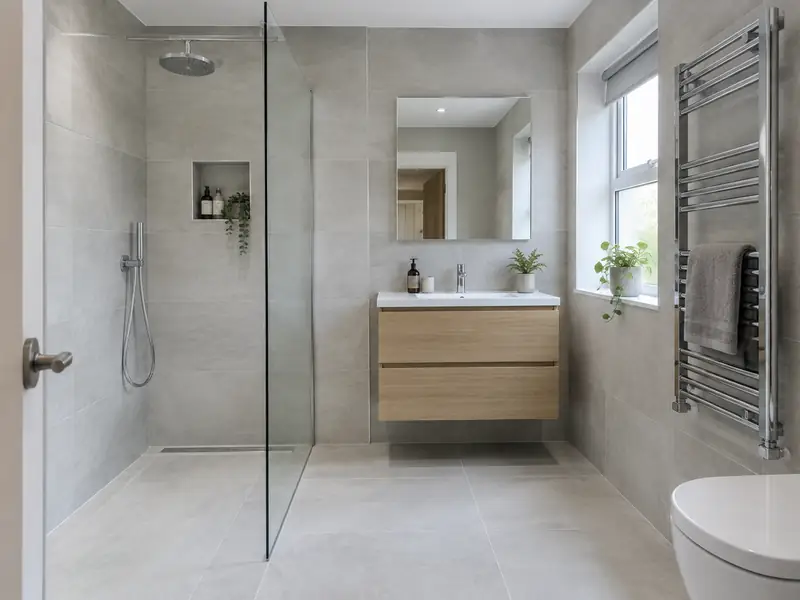
A bathroom installation replaces your old suite with new sanitaryware, a bath or shower, tiling and fittings, including the plumbing, electrics, ventilation and waterproofing needed for a complete, watertight room.
Cost is usually the first question about a new bathroom, so here is the guide for the South West: £5,100–£12,000 including VAT. We cover the whole of Wiltshire, with Swindon, Salisbury, Trowbridge and Chippenham among the main centres. Because each UK nation sets its own rules, we check the requirements in England for your property, then put a firm price on paper following a free survey.
- Guide price
- £5,100–£12,000 inc VAT
- Time on site
- 1–2 weeks per bathroom
- Planning rules
- England
- Price level
- About 2% above the national guide
- Towns listed
- 5
- Survey
- Free, with a written quote
How much does a new bathroom cost in Wiltshire?
These are guide costs, not quotes. For a new bathroom in Wiltshire the range is £5,100–£12,000, VAT included, reflecting prices in the South West that are about 2% above the national guide. Once we have visited for a free survey, you get a firm figure for the scope you approve.
| Type of job | What it usually involves | Guide in Wiltshire |
|---|---|---|
| Shower room or en-suite | A compact room with a shower, basin and toilet, keeping the existing layout. | £4,100–£8,200 |
| Family bathroom | A full suite with bath and shower, new tiling, lighting and an extractor fan. | £5,100–£12,000 |
| Premium bathroom or wet room | Standalone bath, wet room or walk-in shower, underfloor heating and large-format tiles. | £12,000–£20,500 |
Your price depends mostly on:
- Room size and the amount of tiling
- Suite, shower and tap specification
- Wet room waterproofing and underfloor heating
- Condition of the floor, walls and existing pipework
What do you get?
- Removal and disposal of the old suite and tiles
- New supply and waste pipework, including concealed fittings
- Electrics, lighting and extractor fan by qualified trades, with certificates
- Waterproofing behind showers and in wet areas
- Wall and floor tiling to your chosen design
- Bath or shower, basin, toilet and taps fitted and tested
Homes in Wiltshire
Salisbury has medieval and Georgian streets, the north-west around Corsham and Bradford on Avon uses Bath stone, and chalk and flint appear on the downland. Swindon has railway-village terraces and very large post-war and modern estates, and many Wiltshire villages have thatched cottages, some with chalk cob walls.
Cob and Bath stone walls need breathable, lime-based repairs, and thatched cottages may need careful roof work. Swindon's railway terraces suit loft rooms and rear extensions, while its large estates often add garage conversions, driveways and landscaping.
Salisbury Plain and the downs are exposed to wind and frost, while river valleys around Salisbury and the Avon can flood.
Planning and building rules in Wiltshire
England, Wales, Scotland and Northern Ireland each handle planning a little differently. Wiltshire comes under England, covered below, and we raise any questions with the council before your quote is finalised.
Internal work such as a new kitchen, bathroom, flooring, plastering or decorating does not need planning permission in England, unless the house is listed, when listed building consent may be needed even for internal changes.
Some internal work is covered by Building Regulations: new electrical circuits and work in bathrooms (Part P), new drainage, structural changes, extractor ventilation and any new window. Notifiable work is certified by a registered installer or by building control.
Rules change and every property is different, so we check the planning history and constraints for your address before we quote.
How does the job run?
Free site survey
A free survey comes first. It gives us what we need to price a new bathroom properly, including dimensions, existing materials and access for deliveries, and gives you the chance to ask anything you like.
Your fixed price
After the survey we send a quote for a new bathroom that fixes the price for the scope we've agreed. If you want to change materials or scope, we revise it in writing before anything is booked.
Getting ready
With the quote agreed, we book the work in and handle preparation: permissions where needed, building control notifications, material orders and access arrangements for your Wiltshire property.
On site to finish
On site, the agreed plan is followed and any change is put in writing first. At completion we do a final clean, go through the snagging list with you and leave you with the relevant documents.
How we work
Frequently asked questions
Is a wet room right for my home?
A wet room is a fully waterproofed room with a shower area that drains through the floor, with no tray or step. It suits accessible bathrooms and modern designs, and makes cleaning easy. It needs a floor with enough depth for a gentle fall to the drain, and careful tanking of the whole room. Timber floors often need strengthening. We check suitability at the survey.
Do I need a new boiler for a new shower?
You do not always need a new boiler for a new shower, but your hot water system decides what kind of shower will work well. Combi boilers suit mixer showers directly from the mains. Tank-fed systems may need a pump for good pressure, and electric showers heat their own water. We check your boiler, cylinder and water pressure during the survey and recommend a shower to match.
Is the price fixed?
Yes, for the specification we agree. Your written quote sets out exactly what is included at a fixed price. It only changes if you ask for something different, or if a problem the survey could not reasonably reveal later needs extra work. In either case we explain the change and confirm it in writing before going ahead.
How long will a new bathroom take?
On a typical home, allow 1–2 weeks per bathroom. Larger projects, older buildings and extra work found once things are opened up can extend that, while simpler jobs may be shorter. Your quote includes an estimate of time on site, and your point of contact keeps you updated on the programme as the work progresses.
Which tiles are easiest to keep clean?
Large-format porcelain tiles are usually easiest to keep clean, because there are fewer grout lines to collect dirt and porcelain absorbs very little water. Glossy tiles show water marks more than matt ones, while textured floor tiles give better grip. Grout colour matters too: mid-grey hides staining better than white. We can suggest anti-slip ratings and grout options that suit how you use the room.
Towns in Wiltshire
Choose your town from the list to see how we price and plan a new bathroom in your part of Wiltshire, including typical time on site.