
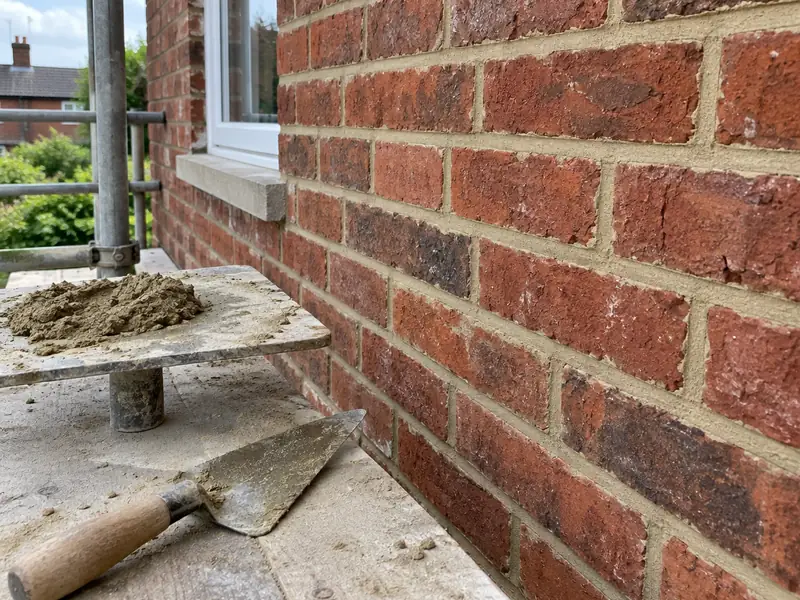
Repointing is raking out old, crumbling mortar from between bricks and replacing it with fresh mortar, sealing the joints against rain and protecting the wall; brickwork repairs replace spalled or cracked bricks and rebuild damaged sections.
Addresses across PO36 fall within our coverage for brickwork and repointing, so if your home is in Sandown we can arrange a survey on a day that works for you. We inspect the existing building, discuss materials and layout, and then price the agreed specification in writing. Expect a guide range of £2,800–£6,700 including VAT before that visit.
- Guide price
- £2,800–£6,700 inc VAT
- Time on site
- 3–10 days for a typical house
- Postcodes
- PO36
- Planning rules
- England
- Local area
- Isle of Wight
- Survey
- Free, with a written quote
How much does brickwork and repointing cost in Sandown?
What will brickwork and repointing cost in Sandown? Our guide range is £2,800–£6,700 including VAT. That figure is adjusted for the South East, about 12% above the national guide, and is intended for planning a budget. A firm written price for your chosen specification follows a free survey at your home.
| Type of job | What it usually involves | Guide in Sandown |
|---|---|---|
| Chimney or small area | Repointing a chimney stack, gable or single wall, including access. | £650–£2,000 |
| Typical semi-detached | Repointing the main elevations of a 3-bed semi, including scaffolding. | £2,800–£6,700 |
| Detached or lime work | Larger houses, or period homes repointed in lime with brick repairs. | £5,600–£11,000 |
What moves the price up or down:
- Wall area to repoint and the height of the house
- Mortar type: cement or lime, and joint style
- Scaffolding and access, including chimneys
- Condition of the existing mortar and how hard it is to remove
What do you get?
- Scaffolding or access towers where needed
- Raking out old mortar to the correct depth
- Colour and joint style matched as closely as possible
- Replacement of spalled or cracked bricks
- Clean-down of brick faces after pointing
- Waste removal and a tidy site
Local housing and brickwork and repointing
The island has Victorian seaside villas and terraces in Ryde, Ventnor, Shanklin and Cowes, older cottages in island sandstone and limestone, and thatched roofs in some villages. Post-war bungalows, chalets and newer estates are common around Newport and the larger towns.
Salt and wind exposure is high on most coasts, and parts of the south, such as the Undercliff near Ventnor, are known for ground movement.
Knowing the typical building types in Isle of Wight helps, but a survey of your own home in Sandown is what decides the right approach to brickwork and repointing.
Planning and building rules in Sandown
Each UK nation sets its own consent rules, and Sandown is in England. What follows is a plain summary; we check the specifics for your property with the council before pricing anything.
Repointing and repairing brickwork with matching materials is maintenance, so it does not need planning permission in England. On a listed building, work that affects its character, including a change of mortar or brick, may need listed building consent.
Building Regulations do not normally apply to repointing or brick repairs, but rebuilding a wall, chimney or structural section can need building control involvement.
Rules change and every property is different, so we check the planning history and constraints for your address before we quote.
What happens after you get in touch?
A visit to your home
We arrange a free site survey on a date convenient to you. We measure up, look at the existing structure and access, and discuss your plans for brickwork and repointing so the price reflects your home.
Price and scope agreed
After the survey we send a quote for brickwork and repointing that fixes the price for the scope we've agreed. If you want to change materials or scope, we revise it in writing before anything is booked.
Dates and permissions
Next comes planning the work itself. We set a start date that suits you, line up the right trades, and make sure any approvals for brickwork and repointing are in place before the first day on site.
On site to finish
During the work we protect the areas around it and tidy up at the end of each day. Once complete, we check the finish, remove our materials and hand over paperwork such as building control sign-off where it applies.
Working with SK Home Improvements
Frequently asked questions
How do I know if my house needs repointing?
A house needs repointing when the mortar between bricks is crumbling, recessed well behind the brick face, cracked or missing. You may be able to scrape it out with a key. Damp patches inside, especially on exposed walls, and plants growing in joints are other signs. Patches of failed mortar can be repointed on their own, but widespread decay usually means a full elevation.
Can I stay at home during the work?
In most cases, yes. Most people can live at home throughout, and we plan the work to keep disruption down by protecting floors, agreeing working hours and keeping access routes clear. Bigger jobs affecting kitchens, bathrooms or heating may mean a short spell with reduced facilities, and we talk this through with you at the survey.
What happens at the survey?
We visit your home at a time that suits you, look at the area involved, take measurements and check access, condition and any services that might be affected. We talk through what you want from brickwork and repointing, explain the options and answer questions. There is no charge and no obligation; afterwards we send a written quote.
Is repointing messy or noisy?
Raking out old mortar is noisy and dusty, especially when power tools are used on hard mortar. We sheet scaffolding to contain dust, keep windows closed nearby and clear up at the end of each day. The noisy phase moves around the house elevation by elevation. Inside, you may notice some dust on windowsills, so it helps to keep windows shut.
When is the right time of year to repoint?
Repointing should be done in mild, dry weather, usually spring to early autumn. Fresh mortar must be kept from frost while it cures, and lime mortar in particular needs protection from frost, rain and strong sun for several days. We cover fresh work with hessian or sheeting where needed and plan the job around the forecast.
Near Sandown
Sandown and its PO36 postcodes are part of our coverage. Homeowners in Ryde, Newport, Isle of Wight and Southsea can also book a free survey with us and receive a written price for their job.