
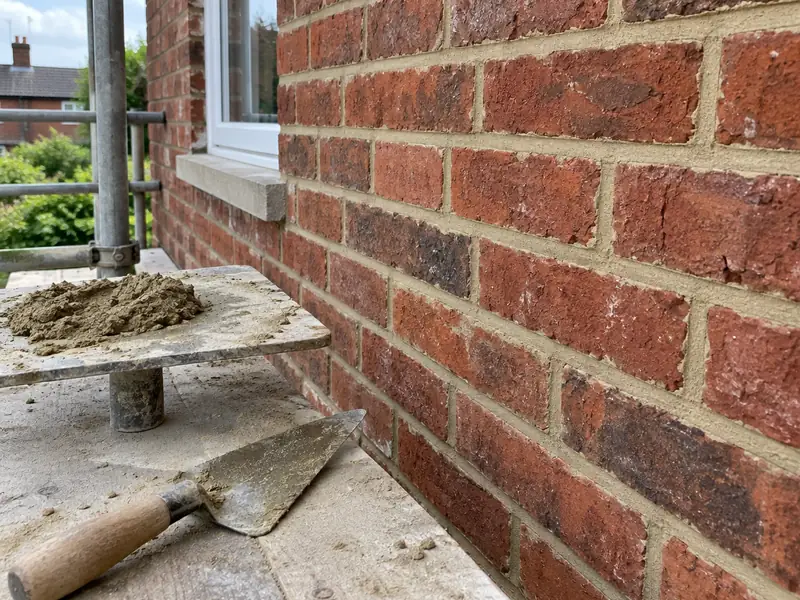
Repointing is raking out old, crumbling mortar from between bricks and replacing it with fresh mortar, sealing the joints against rain and protecting the wall; brickwork repairs replace spalled or cracked bricks and rebuild damaged sections.
Every house in Blackheath is a little different, so we never price brickwork and repointing from a brochure. We look at the structure, access and existing finishes first, then put in writing a fixed figure for the scope we settle on. As a rough steer, homeowners in London should budget £3,200–£7,800 including VAT, with work typically taking 3–10 days for a typical house.
- Guide price
- £3,200–£7,800 inc VAT
- Time on site
- 3–10 days for a typical house
- Postcodes
- SE3, SE4, SE7, SE10 and SE12
- Planning rules
- England
- Local area
- Greater London
- Survey
- Free, with a written quote
What should you budget for brickwork and repointing in Blackheath?
The costs listed here are typical for brickwork and repointing around Blackheath and include VAT. They reflect labour and material costs in London, about 30% above the national guide, giving a range of £3,200–£7,800. Exact pricing depends on your home, so we only fix it once a free site survey is done.
| Type of job | What it usually involves | Guide in Blackheath |
|---|---|---|
| Chimney or small area | Repointing a chimney stack, gable or single wall, including access. | £800–£2,300 |
| Typical semi-detached | Repointing the main elevations of a 3-bed semi, including scaffolding. | £3,200–£7,800 |
| Detached or lime work | Larger houses, or period homes repointed in lime with brick repairs. | £6,500–£13,000 |
Expect these to shape the final quote:
- Wall area to repoint and the height of the house
- Mortar type: cement or lime, and joint style
- Number of bricks to replace and how well they match
- Condition of the existing mortar and how hard it is to remove
Scope of the work
- Survey of mortar, bricks, cracks and the cause of any damp
- Scaffolding or access towers where needed
- Raking out old mortar to the correct depth
- Colour and joint style matched as closely as possible
- Replacement of spalled or cracked bricks
- Clean-down of brick faces after pointing
Local housing and brickwork and repointing
London's housing is dominated by Victorian and Edwardian terraces, often in yellow London stock brick, with Georgian terraces in central districts and mansion blocks across many inner areas. Outer boroughs have large belts of interwar semis, and there are extensive post-war council estates. Many houses have been split into flats, and conservation areas are widespread.
Terraces suit side-return extensions and rear dormer loft conversions; interwar semis commonly take hip-to-gable lofts. Shared party walls, restricted parking and conservation rules often shape the plans and the programme.
None of this holds for every street in Blackheath, which is why we look at your actual house before pricing brickwork and repointing rather than assuming from its age alone.
Do you need permission in Blackheath?
As Blackheath is in England, read the following with that system of planning and building control in mind. We check what applies to your house with the council before you receive a quote.
Repointing and repairing brickwork with matching materials is maintenance, so it does not need planning permission in England. On a listed building, work that affects its character, including a change of mortar or brick, may need listed building consent.
Building Regulations do not normally apply to repointing or brick repairs, but rebuilding a wall, chimney or structural section can need building control involvement.
Rules change and every property is different, so we check the planning history and constraints for your address before we quote.
From survey to handover
Survey and measure
First, someone visits your home in Blackheath to see the space, take measurements and note anything that could affect the work, such as access or the condition of what is there. There is no charge for this visit.
Price and scope agreed
The quote arrives in writing, not over the phone. It covers the full scope, the finishes you've chosen, any exclusions and the payment schedule, with a fixed price tied to that specification.
Getting ready
Before anyone starts, we confirm the programme in writing, check whether consents are required and arrange deliveries. If a skip or scaffolding on the road needs a permit, we apply for it.
On site to finish
Work goes ahead as scheduled and you deal with one contact throughout. When the last trade leaves, we clear and clean the site, talk you through what has been done and pass on any certificates and care instructions.
Why homeowners choose us
Frequently asked questions
When is the right time of year to repoint?
Repointing should be done in mild, dry weather, usually spring to early autumn. Fresh mortar must be kept from frost while it cures, and lime mortar in particular needs protection from frost, rain and strong sun for several days. We cover fresh work with hessian or sheeting where needed and plan the job around the forecast.
What happens at the survey?
We visit your home at a time that suits you, look at the area involved, take measurements and check access, condition and any services that might be affected. We talk through what you want from brickwork and repointing, explain the options and answer questions. There is no charge and no obligation; afterwards we send a written quote.
Do I need planning permission in Blackheath?
It depends on the work, the size of the project, your property type and whether the building is listed or in a conservation area. Blackheath is in England, so England's rules apply. Many smaller jobs need no planning application, but some still need building control approval. We check what applies to your address before quoting.
Should my house be repointed with lime or cement?
Houses built before about the 1920s were usually built with soft bricks and lime mortar, and should normally be repointed in lime. Hard cement mortar in these walls traps moisture and can cause the brick faces to crumble. Newer homes built with cement mortar are usually repointed in a similar mix. We check your wall construction before recommending a mortar.
Will repointing cure damp?
Repointing can stop damp caused by rain getting through failed mortar joints, which is common on exposed walls. It will not fix damp from leaking gutters, a bridged damp-proof course, condensation or high ground levels against the wall. We look for the cause during the survey and recommend fixing that, so repointing is not done for the wrong reason.
Also covering areas around Blackheath
Homes across SE3, SE4, SE7 and SE10 in Blackheath are within our coverage, as are those in Greenwich, Catford and Eltham. If you are just outside these areas, ask anyway, because we work right across the UK.