
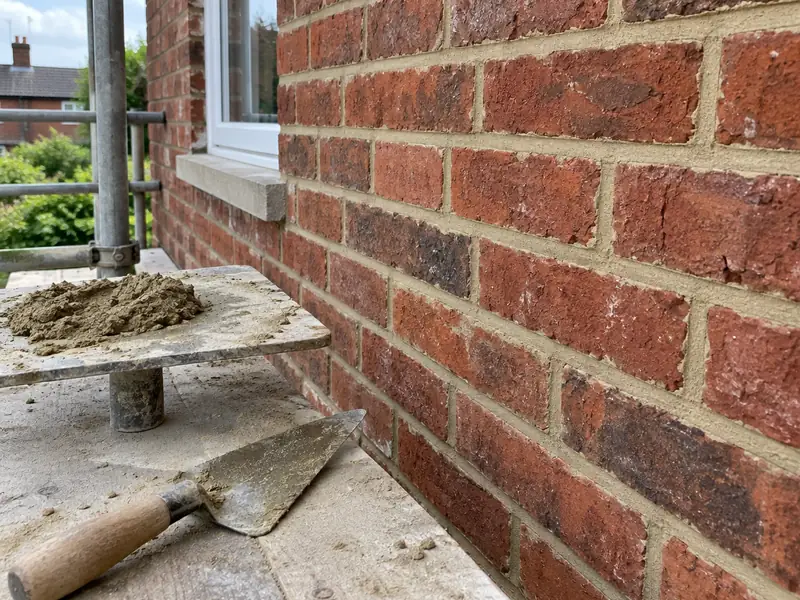
Repointing is raking out old, crumbling mortar from between bricks and replacing it with fresh mortar, sealing the joints against rain and protecting the wall; brickwork repairs replace spalled or cracked bricks and rebuild damaged sections.
From a first conversation about brickwork and repointing to the day the site is cleared, homeowners in Chalk Farm deal with us directly. We come out to measure up at no cost, explain the choices in plain terms and send a written quote. For context, comparable work in London usually falls within £3,200–£7,800 including VAT, and it is available across N7, N1C, NW1 and NW3.
- Guide price
- £3,200–£7,800 inc VAT
- Time on site
- 3–10 days for a typical house
- Postcodes
- N7, N1C, NW1, NW3 and NW5
- Planning rules
- England
- Local area
- Greater London
- Survey
- Free, with a written quote
Brickwork and repointing prices in Chalk Farm
Below is a breakdown of typical costs for brickwork and repointing in Chalk Farm. Because rates in London are about 30% above the national guide, the overall guide comes to £3,200–£7,800, including VAT. Size, materials and access move the figure, and a free-of-charge survey settles it.
| Type of job | What it usually involves | Guide in Chalk Farm |
|---|---|---|
| Chimney or small area | Repointing a chimney stack, gable or single wall, including access. | £800–£2,300 |
| Typical semi-detached | Repointing the main elevations of a 3-bed semi, including scaffolding. | £3,200–£7,800 |
| Detached or lime work | Larger houses, or period homes repointed in lime with brick repairs. | £6,500–£13,000 |
What moves the price up or down:
- Wall area to repoint and the height of the house
- Mortar type: cement or lime, and joint style
- Scaffolding and access, including chimneys
- Condition of the existing mortar and how hard it is to remove
Scope of the work
- Scaffolding or access towers where needed
- Raking out old mortar to the correct depth
- Mortar mixed to suit the wall, in lime or cement
- Replacement of spalled or cracked bricks
- Clean-down of brick faces after pointing
- Waste removal and a tidy site
Homes in London
London's housing is dominated by Victorian and Edwardian terraces, often in yellow London stock brick, with Georgian terraces in central districts and mansion blocks across many inner areas. Outer boroughs have large belts of interwar semis, and there are extensive post-war council estates. Many houses have been split into flats, and conservation areas are widespread.
Terraces suit side-return extensions and rear dormer loft conversions; interwar semis commonly take hip-to-gable lofts. Shared party walls, restricted parking and conservation rules often shape the plans and the programme.
With that background in mind, here is how we typically handle brickwork and repointing for homes in Chalk Farm, from the first visit to the finished result.
Planning and building rules in Chalk Farm
England, Wales, Scotland and Northern Ireland each handle planning a little differently. Chalk Farm comes under England, covered below, and we raise any questions with the council before your quote is finalised.
Repointing and repairing brickwork with matching materials is maintenance, so it does not need planning permission in England. On a listed building, work that affects its character, including a change of mortar or brick, may need listed building consent.
Building Regulations do not normally apply to repointing or brick repairs, but rebuilding a wall, chimney or structural section can need building control involvement.
Rules change and every property is different, so we check the planning history and constraints for your address before we quote.
What happens after you get in touch?
We look at the job
First, someone visits your home in Chalk Farm to see the space, take measurements and note anything that could affect the work, such as access or the condition of what is there. There is no charge for this visit.
Your fixed price
The quote arrives in writing, not over the phone. It covers the full scope, the finishes you've chosen, any exclusions and the payment schedule, with a fixed price tied to that specification.
Plan and prepare
With the quote agreed, we book the work in and handle preparation: permissions where needed, building control notifications, material orders and access arrangements for your Chalk Farm property.
Build and hand over
During the work we protect the areas around it and tidy up at the end of each day. Once complete, we check the finish, remove our materials and hand over paperwork such as building control sign-off where it applies.
What you can expect from us
Questions about brickwork and repointing in Chalk Farm
Who do I deal with during the job?
One point of contact manages your project from survey to handover. They schedule the trades working under our contract, keep you updated on progress, and are the person to call with any question. You don't need to coordinate builders, electricians or decorators separately, because that is part of what we do.
Do I need planning permission in Chalk Farm?
It depends on the work, the size of the project, your property type and whether the building is listed or in a conservation area. Chalk Farm is in England, so England's rules apply. Many smaller jobs need no planning application, but some still need building control approval. We check what applies to your address before quoting.
How do I know if my house needs repointing?
A house needs repointing when the mortar between bricks is crumbling, recessed well behind the brick face, cracked or missing. You may be able to scrape it out with a key. Damp patches inside, especially on exposed walls, and plants growing in joints are other signs. Patches of failed mortar can be repointed on their own, but widespread decay usually means a full elevation.
Can you match the colour of my existing mortar?
Matching mortar colour is done by choosing the right sand and, where needed, adding pigment or using a coloured lime. We make test panels and let them dry, because mortar looks darker when wet. The joint style, such as flush, bucket handle or weatherstruck, also affects the look. An exact match is not always possible on old walls, but a careful match blends in well.
When is the right time of year to repoint?
Repointing should be done in mild, dry weather, usually spring to early autumn. Fresh mortar must be kept from frost while it cures, and lime mortar in particular needs protection from frost, rain and strong sun for several days. We cover fresh work with hessian or sheeting where needed and plan the job around the forecast.
Nearby towns
We cover every part of Chalk Farm, including N7, N1C, NW1 and NW3, and nearby Camden Town, Holloway and Archway. Wherever you are within that patch, the survey is free and the quote comes to you in writing.