
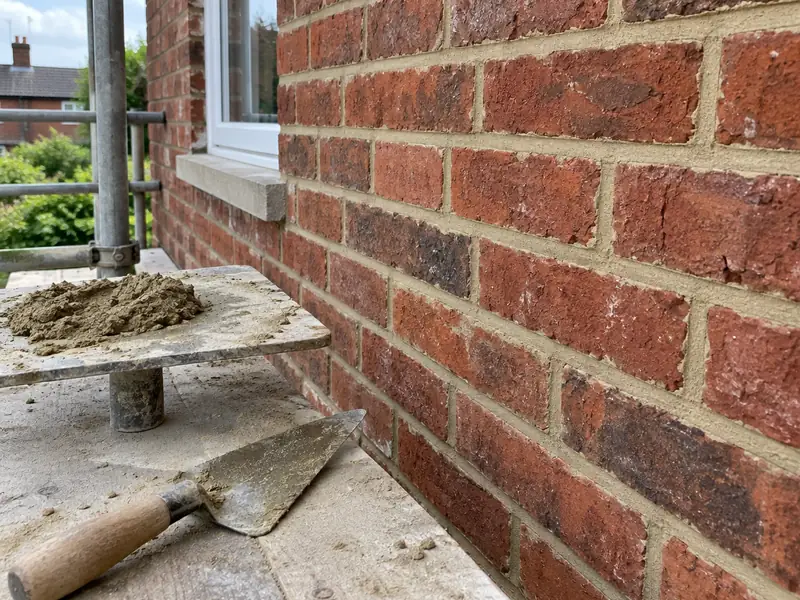
Repointing is raking out old, crumbling mortar from between bricks and replacing it with fresh mortar, sealing the joints against rain and protecting the wall; brickwork repairs replace spalled or cracked bricks and rebuild damaged sections.
Addresses across WA9, WA10 and WA11 fall within our coverage for brickwork and repointing, so if your home is in St Helens we can arrange a survey on a day that works for you. We inspect the existing building, discuss materials and layout, and then price the agreed specification in writing. Expect a guide range of £2,400–£5,700 including VAT before that visit.
- Guide price
- £2,400–£5,700 inc VAT
- Time on site
- 3–10 days for a typical house
- Postcodes
- WA9, WA10 and WA11
- Planning rules
- England
- Local area
- Merseyside
- Survey
- Free, with a written quote
Brickwork and repointing prices in St Helens
What should you budget for brickwork and repointing in St Helens? Use the figures below as a starting point. Prices in the North West sit about 5% below the national guide, so the range here is £2,400–£5,700 including VAT. Your fixed price comes in writing once we've surveyed the property, at no charge.
| Type of job | What it usually involves | Guide in St Helens |
|---|---|---|
| Chimney or small area | Repointing a chimney stack, gable or single wall, including access. | £550–£1,700 |
| Typical semi-detached | Repointing the main elevations of a 3-bed semi, including scaffolding. | £2,400–£5,700 |
| Detached or lime work | Larger houses, or period homes repointed in lime with brick repairs. | £4,800–£9,500 |
Expect these to shape the final quote:
- Wall area to repoint and the height of the house
- Mortar type: cement or lime, and joint style
- Scaffolding and access, including chimneys
- Condition of the existing mortar and how hard it is to remove
What’s included?
- Survey of mortar, bricks, cracks and the cause of any damp
- Raking out old mortar to the correct depth
- Mortar mixed to suit the wall, in lime or cement
- Colour and joint style matched as closely as possible
- Replacement of spalled or cracked bricks
- Waste removal and a tidy site
Local housing and brickwork and repointing
Liverpool's housing includes Georgian terraces near the centre, large areas of Victorian red-brick terraces, Edwardian semis in the suburbs and big interwar council estates. The Wirral has Victorian villas and interwar semis, Southport has Victorian villas and bungalows, and St Helens and Knowsley have post-war estates and newer housing.
Terraces suit loft rooms, kitchen extensions and repointing, and many need their roofs and windows renewed. Suburban semis commonly take side extensions, driveways and porches.
Knowing the typical building types in Merseyside helps, but a survey of your own home in St Helens is what decides the right approach to brickwork and repointing.
Planning and building rules in St Helens
Because St Helens falls under England's rules, the guidance below is the version relevant to you. Before sending a price, we check your property's position with the council.
Repointing and repairing brickwork with matching materials is maintenance, so it does not need planning permission in England. On a listed building, work that affects its character, including a change of mortar or brick, may need listed building consent.
Building Regulations do not normally apply to repointing or brick repairs, but rebuilding a wall, chimney or structural section can need building control involvement.
Rules change and every property is different, so we check the planning history and constraints for your address before we quote.
How does the job run?
Survey and measure
First, someone visits your home in St Helens to see the space, take measurements and note anything that could affect the work, such as access or the condition of what is there. There is no charge for this visit.
Price and scope agreed
The quote arrives in writing, not over the phone. It covers the full scope, the finishes you've chosen, any exclusions and the payment schedule, with a fixed price tied to that specification.
Getting ready
Before anyone starts, we confirm the programme in writing, check whether consents are required and arrange deliveries. If a skip or scaffolding on the road needs a permit, we apply for it.
Finish and handover
Our trades complete brickwork and repointing while your point of contact keeps you updated. When everything is finished, we clear the site, take away waste and go through the result with you before handover.
Why homeowners choose us
Frequently asked questions
Which postcodes in St Helens do you cover?
We cover WA9, WA10 and WA11, along with the rest of Merseyside. If your postcode is not listed, get in touch anyway: our coverage is UK-wide, and we can usually arrange a survey wherever you live. Enter your postcode in the guide-price tool or contact form and we will confirm.
Will repointing cure damp?
Repointing can stop damp caused by rain getting through failed mortar joints, which is common on exposed walls. It will not fix damp from leaking gutters, a bridged damp-proof course, condensation or high ground levels against the wall. We look for the cause during the survey and recommend fixing that, so repointing is not done for the wrong reason.
What happens at the survey?
We visit your home at a time that suits you, look at the area involved, take measurements and check access, condition and any services that might be affected. We talk through what you want from brickwork and repointing, explain the options and answer questions. There is no charge and no obligation; afterwards we send a written quote.
How do I know if my house needs repointing?
A house needs repointing when the mortar between bricks is crumbling, recessed well behind the brick face, cracked or missing. You may be able to scrape it out with a key. Damp patches inside, especially on exposed walls, and plants growing in joints are other signs. Patches of failed mortar can be repointed on their own, but widespread decay usually means a full elevation.
When is the right time of year to repoint?
Repointing should be done in mild, dry weather, usually spring to early autumn. Fresh mortar must be kept from frost while it cures, and lime mortar in particular needs protection from frost, rain and strong sun for several days. We cover fresh work with hessian or sheeting where needed and plan the job around the forecast.
Also covering areas around St Helens
Live in St Helens? Our coverage takes in the WA9, WA10 and WA11 postcode areas and reaches out to Prescot, Ashton in Makerfield and Huyton, so homes on the outskirts and in the next town along are included.