
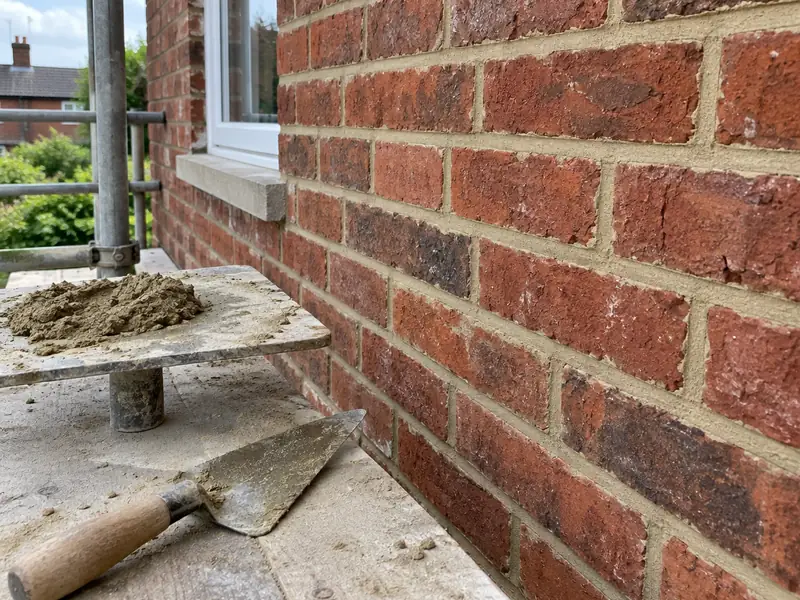
Repointing is raking out old, crumbling mortar from between bricks and replacing it with fresh mortar, sealing the joints against rain and protecting the wall; brickwork repairs replace spalled or cracked bricks and rebuild damaged sections.
We arrange brickwork and repointing for homeowners in Stratford-upon-Avon and the wider Warwickshire. The job is planned, priced and managed by us and carried out by tradespeople engaged under our contract, so there is one agreement and one contact. On a typical home the work takes 3–10 days for a typical house, and guide pricing in the West Midlands is £2,400–£5,900, VAT included.
- Guide price
- £2,400–£5,900 inc VAT
- Time on site
- 3–10 days for a typical house
- Postcodes
- CV37
- Planning rules
- England
- Local area
- Warwickshire
- Survey
- Free, with a written quote
Brickwork and repointing prices in Stratford-upon-Avon
These are guide costs, not quotes. For brickwork and repointing in Stratford-upon-Avon the range is £2,400–£5,900, VAT included, reflecting prices in the West Midlands that are about 2% below the national guide. Once we have visited for a free survey, you get a firm figure for the scope you approve.
| Type of job | What it usually involves | Guide in Stratford-upon-Avon |
|---|---|---|
| Chimney or small area | Repointing a chimney stack, gable or single wall, including access. | £600–£1,750 |
| Typical semi-detached | Repointing the main elevations of a 3-bed semi, including scaffolding. | £2,400–£5,900 |
| Detached or lime work | Larger houses, or period homes repointed in lime with brick repairs. | £4,900–£9,800 |
The main things that change the figure:
- Wall area to repoint and the height of the house
- Mortar type: cement or lime, and joint style
- Number of bricks to replace and how well they match
- Scaffolding and access, including chimneys
What’s included?
- Survey of mortar, bricks, cracks and the cause of any damp
- Scaffolding or access towers where needed
- Raking out old mortar to the correct depth
- Replacement of spalled or cracked bricks
- Clean-down of brick faces after pointing
- Waste removal and a tidy site
What are homes like around Stratford-upon-Avon?
Stratford-upon-Avon and Warwick have timber-framed and Georgian buildings, and Leamington Spa is known for Regency stucco terraces and villas. Nuneaton and Bedworth have brick terraces from their mining and industrial past, Rugby mixes Victorian housing with large new estates, and southern villages near the Cotswolds use limestone and blue lias.
A moderate Midlands climate, but the Avon and its tributaries flood in places, and clay soils can move in dry spells.
That variety is why a guide price for brickwork and repointing in Stratford-upon-Avon is only a starting point; the survey shows what your particular property needs.
Do you need permission in Stratford-upon-Avon?
Stratford-upon-Avon is in England, so the planning and building rules set out below are the ones that apply. We confirm the details with the council before we quote.
Repointing and repairing brickwork with matching materials is maintenance, so it does not need planning permission in England. On a listed building, work that affects its character, including a change of mortar or brick, may need listed building consent.
Building Regulations do not normally apply to repointing or brick repairs, but rebuilding a wall, chimney or structural section can need building control involvement.
Rules change and every property is different, so we check the planning history and constraints for your address before we quote.
How does the job run?
Survey and measure
We arrange a free site survey on a date convenient to you. We measure up, look at the existing structure and access, and discuss your plans for brickwork and repointing so the price reflects your home.
Price and scope agreed
After the survey we send a quote for brickwork and repointing that fixes the price for the scope we've agreed. If you want to change materials or scope, we revise it in writing before anything is booked.
Getting ready
We handle the paperwork side: checking whether planning permission or building control approval is needed, submitting applications where they are, and scheduling the trades and materials around your dates.
The work itself
The job proceeds in the order set out in the programme, with dust and debris kept under control. Finally we tidy away, inspect the work together and pass the finished project over to you with its paperwork.
How we work
Frequently asked questions
What happens at the survey?
We visit your home at a time that suits you, look at the area involved, take measurements and check access, condition and any services that might be affected. We talk through what you want from brickwork and repointing, explain the options and answer questions. There is no charge and no obligation; afterwards we send a written quote.
Who do I deal with during the job?
One point of contact manages your project from survey to handover. They schedule the trades working under our contract, keep you updated on progress, and are the person to call with any question. You don't need to coordinate builders, electricians or decorators separately, because that is part of what we do.
When is the right time of year to repoint?
Repointing should be done in mild, dry weather, usually spring to early autumn. Fresh mortar must be kept from frost while it cures, and lime mortar in particular needs protection from frost, rain and strong sun for several days. We cover fresh work with hessian or sheeting where needed and plan the job around the forecast.
Should my house be repointed with lime or cement?
Houses built before about the 1920s were usually built with soft bricks and lime mortar, and should normally be repointed in lime. Hard cement mortar in these walls traps moisture and can cause the brick faces to crumble. Newer homes built with cement mortar are usually repointed in a similar mix. We check your wall construction before recommending a mortar.
How do I know if my house needs repointing?
A house needs repointing when the mortar between bricks is crumbling, recessed well behind the brick face, cracked or missing. You may be able to scrape it out with a key. Damp patches inside, especially on exposed walls, and plants growing in joints are other signs. Patches of failed mortar can be repointed on their own, but widespread decay usually means a full elevation.
Near Stratford-upon-Avon
Addresses in CV37 are all covered for Stratford-upon-Avon, along with Warwick, Leamington Spa and Kenilworth close by. Give us your postcode when you get in touch and we will confirm the details.