
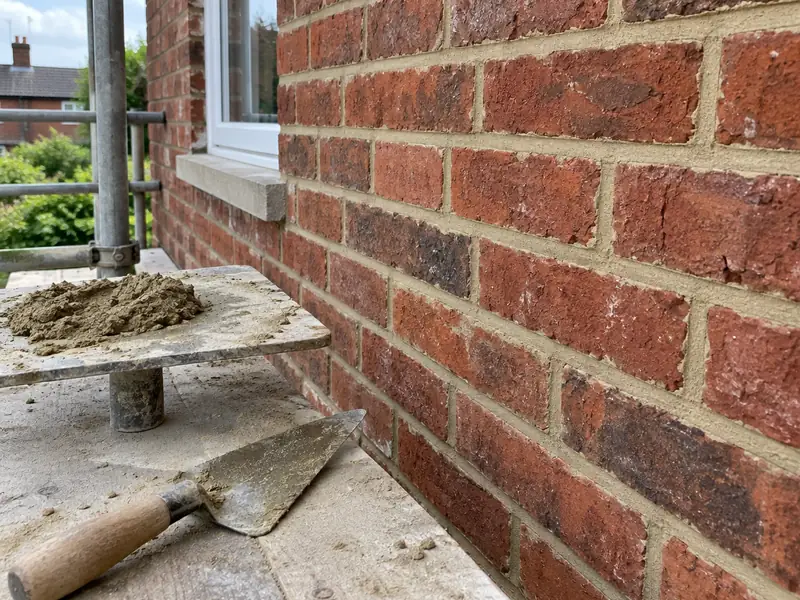
Repointing is raking out old, crumbling mortar from between bricks and replacing it with fresh mortar, sealing the joints against rain and protecting the wall; brickwork repairs replace spalled or cracked bricks and rebuild damaged sections.
Clydach sits within our coverage for brickwork and repointing, as do neighbouring Neath, Swansea and Briton Ferry. Before giving a price we want to see the property: the condition of what's there now, the access, and anything that might need extra work. The guide range for Wales is £2,300–£5,500 including VAT, and your written quote will spell out exactly what that covers.
- Guide price
- £2,300–£5,500 inc VAT
- Time on site
- 3–10 days for a typical house
- Postcodes
- SA6 and SA7
- Planning rules
- Wales
- Local area
- Swansea
- Survey
- Free, with a written quote
Brickwork and repointing prices in Clydach
The costs listed here are typical for brickwork and repointing around Clydach and include VAT. They reflect labour and material costs in Wales, about 8% below the national guide, giving a range of £2,300–£5,500. Exact pricing depends on your home, so we only fix it once a free site survey is done.
| Type of job | What it usually involves | Guide in Clydach |
|---|---|---|
| Chimney or small area | Repointing a chimney stack, gable or single wall, including access. | £550–£1,650 |
| Typical semi-detached | Repointing the main elevations of a 3-bed semi, including scaffolding. | £2,300–£5,500 |
| Detached or lime work | Larger houses, or period homes repointed in lime with brick repairs. | £4,600–£9,200 |
Expect these to shape the final quote:
- Wall area to repoint and the height of the house
- Mortar type: cement or lime, and joint style
- Number of bricks to replace and how well they match
- Scaffolding and access, including chimneys
What’s included?
- Raking out old mortar to the correct depth
- Mortar mixed to suit the wall, in lime or cement
- Colour and joint style matched as closely as possible
- Replacement of spalled or cracked bricks
- Clean-down of brick faces after pointing
- Waste removal and a tidy site
What are homes like around Clydach?
Swansea's Victorian terraces climb its hillsides, its centre was largely rebuilt after wartime bombing, and Neath and Port Talbot have industrial terraces and post-war estates. Gower villages have stone cottages, and Pennant sandstone is common in older walls. Newer estates have grown on the edges of the main towns.
Hillside terraces often need repointing, rendering, roof repairs and window replacement, and loft conversions can work well. Gower stone cottages call for lime-based repairs, and estate homes commonly take extensions and driveways.
Knowing the typical building types in West Glamorgan helps, but a survey of your own home in Clydach is what decides the right approach to brickwork and repointing.
Planning and building rules in Clydach
Homes in Clydach come under the regulations for Wales, summarised below. We don't rely on general rules alone: we confirm the position for your address with the council before a quote goes out.
In Wales, repointing and like-for-like brick repairs are maintenance and do not need planning permission; listed buildings may need consent for changes in materials.
Building Regulations do not normally apply to repointing, though structural rebuilding can.
Rules change and every property is different, so we check the planning history and constraints for your address before we quote.
How does the job run?
Free site survey
A free survey comes first. It gives us what we need to price brickwork and repointing properly, including dimensions, existing materials and access for deliveries, and gives you the chance to ask anything you like.
Price and scope agreed
We turn the survey notes into a written quote. The price is fixed for the specification we agree, and the document sets out materials, scope and payment stages in plain language.
Plan and prepare
Preparation matters as much as the build. We agree access, parking and working hours with you, order materials in good time, and confirm any permissions so the job isn't held up once it starts.
The work itself
During the work we protect the areas around it and tidy up at the end of each day. Once complete, we check the finish, remove our materials and hand over paperwork such as building control sign-off where it applies.
Working with SK Home Improvements
Common questions
When is the right time of year to repoint?
Repointing should be done in mild, dry weather, usually spring to early autumn. Fresh mortar must be kept from frost while it cures, and lime mortar in particular needs protection from frost, rain and strong sun for several days. We cover fresh work with hessian or sheeting where needed and plan the job around the forecast.
What happens at the survey?
We visit your home at a time that suits you, look at the area involved, take measurements and check access, condition and any services that might be affected. We talk through what you want from brickwork and repointing, explain the options and answer questions. There is no charge and no obligation; afterwards we send a written quote.
How do I know if my house needs repointing?
A house needs repointing when the mortar between bricks is crumbling, recessed well behind the brick face, cracked or missing. You may be able to scrape it out with a key. Damp patches inside, especially on exposed walls, and plants growing in joints are other signs. Patches of failed mortar can be repointed on their own, but widespread decay usually means a full elevation.
How much does repointing a house cost?
Repointing a typical 3-bed semi costs £2,300–£5,500, including scaffolding. As a guide, allow roughly £25–£55 per square metre of wall plus fixed costs for access and set-up. Chimney stacks, lime mortar and brick replacement add cost, while repointing a single elevation costs less. We confirm a fixed price after inspecting your walls.
Is the price fixed?
Yes, for the specification we agree. Your written quote sets out exactly what is included at a fixed price. It only changes if you ask for something different, or if a problem the survey could not reasonably reveal later needs extra work. In either case we explain the change and confirm it in writing before going ahead.
Nearby towns
We cover every part of Clydach, including SA6 and SA7, and nearby Neath, Swansea and Briton Ferry. Wherever you are within that patch, the survey is free and the quote comes to you in writing.