
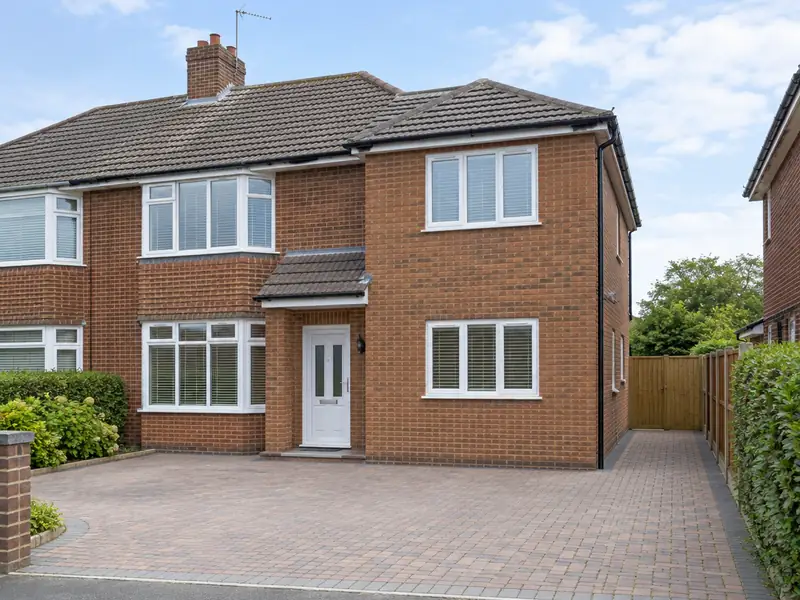
A double-storey extension adds two floors of new space to your house in one build, typically a larger kitchen or living room downstairs with an extra bedroom, bathroom or en-suite above, sharing one set of foundations and one roof.
Cwmbran sits within our coverage for a double-storey extension, as do neighbouring Pontypool, Risca and Newport, Gwent. Before giving a price we want to see the property: the condition of what's there now, the access, and anything that might need extra work. The guide range for Wales is £55,000–£110,000 including VAT, and your written quote will spell out exactly what that covers.
- Guide price
- £55,000–£110,000 inc VAT
- Time on site
- 14–22 weeks on site
- Postcodes
- NP44
- Planning rules
- Wales
- Local area
- Torfaen
- Survey
- Free, with a written quote
Double-storey extensions prices in Cwmbran
The table below shows guide prices for a double-storey extension in Cwmbran. They are based on rates in Wales, which run about 8% below the national guide, giving an overall range of £55,000–£110,000. All figures include VAT and are firmed up after a free site survey.
| Type of job | What it usually involves | Guide in Cwmbran |
|---|---|---|
| Small (15–20m² total) | A compact rear or side extension adding a small room on each floor. | £37,000–£60,000 |
| Typical (30–40m² total) | A larger kitchen or living room below with a double bedroom or en-suite above. | £55,000–£110,000 |
| Large (50m² plus total) | Wide or deep extensions, often with a new bathroom, steelwork and high-spec glazing. | £92,000–£166,000 |
Your price depends mostly on:
- Combined floor area across both storeys
- How the new roof joins the existing roof
- Foundation depth, ground conditions and drains to divert
- Scaffolding duration, access and the level of finishes
Scope of the work
- Groundworks, foundations and below-ground drainage
- First-floor joists, stud walls and new openings upstairs
- Scaffolding for the full build, erected and inspected
- Electrics, plumbing and heating by qualified trades, with certificates
- Windows, external doors, plastering and internal doors
- Building control inspections and completion certificate
Homes in Gwent
Newport has Victorian and Edwardian terraces and interwar suburbs, while valley towns such as Ebbw Vale, Abertillery and Blaenavon have stone terraces stepped along steep hillsides. Monmouth and Abergavenny keep Georgian centres, and Cwmbran was built as a post-war new town with planned estates.
The valleys are among the wettest parts of south Wales, and steep sites, old mine workings and retaining walls all affect building work.
So when we survey a Cwmbran property for a double-storey extension, the first step is working out how it was built and what has been changed since.
Permissions for a double-storey extension in Cwmbran
Each UK nation sets its own consent rules, and Cwmbran is in Wales. What follows is a plain summary; we check the specifics for your property with the council before pricing anything.
In Wales, two-storey extensions are tightly limited under permitted development, including distance to the rear boundary, so most need planning permission.
Building Regulations approval is needed in Wales, and the Party Wall etc. Act 1996 applies to work on or near shared walls.
Rules change and every property is different, so we check the planning history and constraints for your address before we quote.
From survey to handover
Survey and measure
It starts with a survey at the property, free of charge. We check condition, access and services, ask how you want the finished result to look, and answer any questions you have about a double-storey extension.
Your fixed price
The quote arrives in writing, not over the phone. It covers the full scope, the finishes you've chosen, any exclusions and the payment schedule, with a fixed price tied to that specification.
Getting ready
Once you accept, we agree start dates, order materials and deal with any planning, building control or neighbour notices the job needs. You'll know who is coming and when before work begins.
The work itself
Work goes ahead as scheduled and you deal with one contact throughout. When the last trade leaves, we clear and clean the site, talk you through what has been done and pass on any certificates and care instructions.
Why homeowners choose us
Double-storey extensions in Cwmbran: questions
How much will a double-storey extension cost in Cwmbran?
As a guide, expect to pay £55,000–£110,000 including VAT for a double-storey extension in Cwmbran. That range is adjusted for Wales, which runs about 8% below the national guide. Where your project lands depends on size, materials, access and the condition of what is already there. We confirm a fixed price in writing after a free survey of your home.
Can we live at home while it is built?
Most families stay at home during a double-storey extension. The new structure is built outside first, and we only break through into the existing rooms near the end, usually one floor at a time. Upstairs, this may mean a bedroom is out of use for a week or two. We fit dust screens, protect floors and stairs, and plan any time without water or power in advance.
What happens at the survey?
We visit your home at a time that suits you, look at the area involved, take measurements and check access, condition and any services that might be affected. We talk through what you want from a double-storey extension, explain the options and answer questions. There is no charge and no obligation; afterwards we send a written quote.
How is the new roof joined to the existing house?
The new roof is usually tied into the existing roof so the two read as one. On a rear extension this often means a lower ridge or a hipped end, with valleys where the slopes meet. We strip back some existing tiles, fix new rafters and battens, and lay matching tiles or slates. Lead or proprietary flashings seal the junctions so water runs off properly.
Do I need planning permission for a two-storey extension?
Most two-storey extensions need planning permission, but it depends on the size, height and position, your home's location, whether it is listed or in a conservation area, and which UK nation you are in. In England, a two-storey rear extension can sometimes be built under permitted development if it is no deeper than 3m and at least 7m from the rear boundary. We check what applies before quoting.
Nearby towns
We welcome enquiries from all NP44 postcodes in Cwmbran, plus Pontypool, Risca and Newport, Gwent. Each one gets the same survey at no charge and a written price fixed for the work described.