
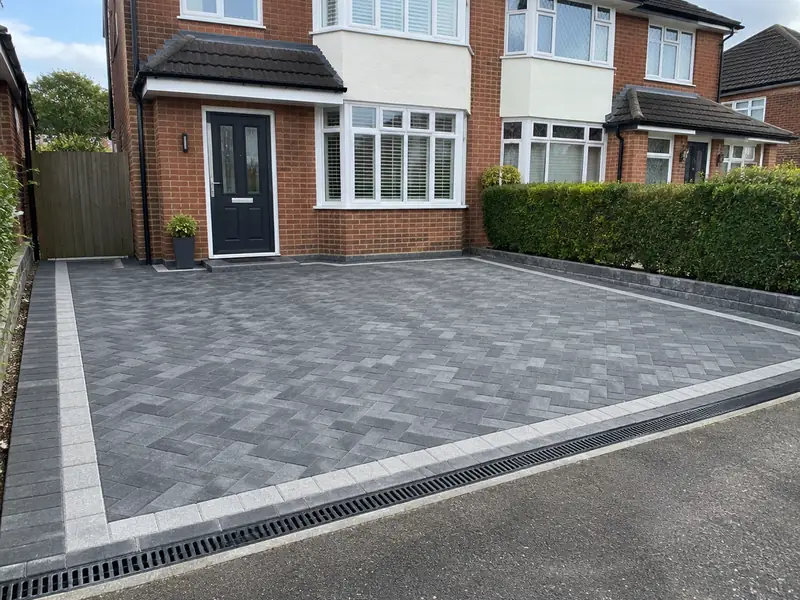
A new driveway is a hard-wearing surface for parking, such as block paving, resin bound gravel, tarmac or gravel, laid on an excavated and compacted sub-base with edging and drainage designed to carry vehicle loads and handle rainwater.
For a homeowner in Flint, planning a new driveway tends to begin with two questions: what will it cost, and how disruptive will it be? Our guide range is £3,700–£8,300 including VAT, and a typical job runs to 3–7 days on site. Both numbers firm up once we have seen the property, measured up and agreed exactly what is included.
- Guide price
- £3,700–£8,300 inc VAT
- Time on site
- 3–7 days on site
- Postcodes
- CH6
- Planning rules
- Wales
- Local area
- Flintshire
- Survey
- Free, with a written quote
Driveways prices in Flint
What will a new driveway cost in Flint? Our guide range is £3,700–£8,300 including VAT. That figure is adjusted for Wales, about 8% below the national guide, and is intended for planning a budget. A firm written price for your chosen specification follows a free survey at your home.
| Type of job | What it usually involves | Guide in Flint |
|---|---|---|
| Gravel or tarmac | A typical 40–50m² drive in gravel on a grid, or tarmac with block edging. | £1,850–£4,600 |
| Block paving or resin bound | A typical 40–50m² drive with sub-base, edging and drainage. | £3,700–£8,300 |
| Large or premium driveway | Larger drives, natural stone, walls, steps or a new dropped kerb. | £7,400–£14,500 |
What moves the price up or down:
- Driveway area and the depth of excavation needed
- Surface: gravel, tarmac, block paving, resin or stone
- Edging, steps, walls and manhole adjustments
- Access for machinery and removal of spoil
What does the job include in Flint?
- Survey of levels, drainage, manholes and access
- Excavation and removal of the old surface and soil
- Weed membrane and compacted MOT Type 1 sub-base
- Drainage channels or soakaway where needed
- Manhole covers raised or replaced to new levels
- Site cleared and waste removed
Homes in Clwyd
Wrexham has Victorian terraces in red Ruabon brick, alongside interwar and post-war estates. The north coast resorts of Rhyl, Prestatyn and Colwyn Bay have Victorian villas, guest-house terraces and bungalows, while Denbighshire and Flintshire villages use local stone under Welsh slate roofs.
Terraces suit loft conversions and rear extensions, and many need repointing and roof work. Coastal bungalows commonly take loft rooms and window renewal, and stone cottages need lime-based repairs.
That mix of housing shapes how we approach a new driveway in Flint: the age and construction of your home affect the materials, the method and, in the end, the price.
Permissions for a new driveway in Flint
Homes in Flint come under the regulations for Wales, summarised below. We don't rely on general rules alone: we confirm the position for your address with the council before a quote goes out.
In Wales, hard surfaces in front gardens need to be permeable or drain within the property to avoid planning permission. Larger schemes can also need approval from the council’s SuDS Approving Body (SAB), and a dropped kerb needs highways consent.
Building Regulations do not usually apply, but drainage design matters.
Rules change and every property is different, so we check the planning history and constraints for your address before we quote.
What happens after you get in touch?
A visit to your home
First, someone visits your home in Flint to see the space, take measurements and note anything that could affect the work, such as access or the condition of what is there. There is no charge for this visit.
Price and scope agreed
The quote arrives in writing, not over the phone. It covers the full scope, the finishes you've chosen, any exclusions and the payment schedule, with a fixed price tied to that specification.
Booking the work
Next comes planning the work itself. We set a start date that suits you, line up the right trades, and make sure any approvals for a new driveway are in place before the first day on site.
Finish and handover
The work is carried out to the agreed specification, with floors and furniture protected and the site kept tidy. At the end we clean up, walk through the finished job with you and hand over any certificates.
How we work
Frequently asked questions
How long does it take to lay a driveway?
Laying a typical driveway takes around three to seven days, depending on size, surface and ground conditions. Excavation and sub-base usually take the first few days, then edging, drainage and the surface. Resin needs dry weather and time to cure, and you will usually need to keep cars off for a short period afterwards. We confirm timings and access arrangements with your quote.
Which driveway surface is easiest to maintain?
Resin bound gravel is one of the easiest surfaces to maintain, because it is smooth, porous and resists weeds, needing only an occasional sweep and wash. Block paving needs re-sanding joints and occasional weed control. Tarmac needs little upkeep but can soften in heat. Gravel needs raking and topping up. We explain the upkeep of each surface before you choose.
What happens at the survey?
We visit your home at a time that suits you, look at the area involved, take measurements and check access, condition and any services that might be affected. We talk through what you want from a new driveway, explain the options and answer questions. There is no charge and no obligation; afterwards we send a written quote.
Can you combine a new driveway with other work?
Yes. Because we manage several trades under one contract, we can plan a new driveway alongside other work on your Flint home, such as new windows with rendering, or a kitchen refit with an extension. Combining jobs can reduce repeat set-up such as scaffolding, skips and access, and every element is listed and priced in the same written quote.
Can I use my car during the work?
You will not be able to park on the driveway while it is being dug out and laid, so plan to park on the street or nearby for the duration. We keep a safe pedestrian route to your front door where possible. After completion, block paving and tarmac can usually be driven on straight away, while resin and concrete need a short curing period first.
Also covering areas around Flint
We cover every part of Flint, including CH6, and nearby Deeside, Buckley and Heswall. Wherever you are within that patch, the survey is free and the quote comes to you in writing.