
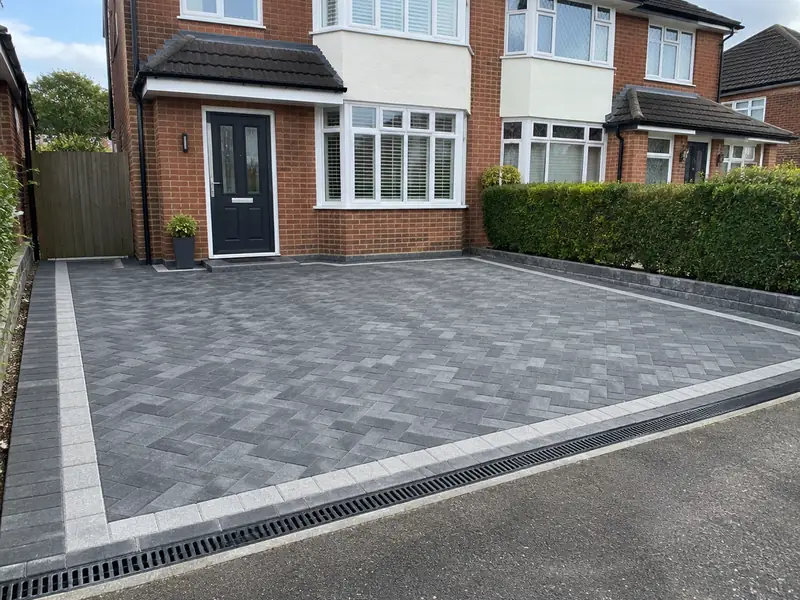
A new driveway is a hard-wearing surface for parking, such as block paving, resin bound gravel, tarmac or gravel, laid on an excavated and compacted sub-base with edging and drainage designed to carry vehicle loads and handle rainwater.
Anyone planning a new driveway in Derry/Londonderry wants three things: a clear price, a realistic timetable and a tidy job. We publish a guide of £3,400–£7,700 including VAT for Northern Ireland up front, explain that work normally takes 3–7 days on site, and confirm both in writing after a free survey of your property.
- Guide price
- £3,400–£7,700 inc VAT
- Time on site
- 3–7 days on site
- Postcodes
- BT48
- Planning rules
- Northern Ireland
- Local area
- Derry
- Survey
- Free, with a written quote
How much does a new driveway cost in Derry/Londonderry?
Here is how the guide price for a new driveway breaks down in Derry/Londonderry. We start from national figures and adjust for Northern Ireland, which comes out about 14% below the national guide. The resulting range, VAT included, is £3,400–£7,700, and a survey, at no cost to you, firms it up.
| Type of job | What it usually involves | Guide in Derry/Londonderry |
|---|---|---|
| Gravel or tarmac | A typical 40–50m² drive in gravel on a grid, or tarmac with block edging. | £1,700–£4,300 |
| Block paving or resin bound | A typical 40–50m² drive with sub-base, edging and drainage. | £3,400–£7,700 |
| Large or premium driveway | Larger drives, natural stone, walls, steps or a new dropped kerb. | £6,900–£14,000 |
Your price depends mostly on:
- Surface: gravel, tarmac, block paving, resin or stone
- Drainage, soakaways and changes in level
- Edging, steps, walls and manhole adjustments
- Access for machinery and removal of spoil
What does the job include in Derry/Londonderry?
- Excavation and removal of the old surface and soil
- Weed membrane and compacted MOT Type 1 sub-base
- Edging kerbs or restraints to hold the surface in place
- Drainage channels or soakaway where needed
- Manhole covers raised or replaced to new levels
- New surface laid, compacted and finished
Homes in County Londonderry
Derry has Georgian and Victorian terraces around its walled city, alongside large post-war estates and newer developments. Coleraine, Limavady and Magherafelt mix older town centres with semis and estates, Portstewart has seaside villas, and rural areas have many detached homes and bungalows, often roughcast.
Terraces suit loft conversions and rear extensions, while rural bungalows commonly take extensions, loft rooms and driveways. Roughcast homes often need re-rendering, and coastal houses need roofline and window renewal.
So when we survey a Derry/Londonderry property for a new driveway, the first step is working out how it was built and what has been changed since.
Do you need permission in Derry/Londonderry?
The notes below cover Northern Ireland, which is where Derry/Londonderry sits. Rules change and every property is different, so we speak to the council before pricing your job.
In Northern Ireland, hard surfaces around a house are often permitted development, but check that surface water drains within your property. A dropped kerb needs consent from DfI Roads.
Building control approval is not normally needed for a driveway.
Rules change and every property is different, so we check the planning history and constraints for your address before we quote.
How does the job run?
Free site survey
We begin by looking at the job in person. During the free survey we discuss options, materials and budget for a new driveway, and photograph or measure anything the quote needs to reflect.
Your fixed price
We turn the survey notes into a written quote. The price is fixed for the specification we agree, and the document sets out materials, scope and payment stages in plain language.
Getting ready
We handle the paperwork side: checking whether planning permission or building control approval is needed, submitting applications where they are, and scheduling the trades and materials around your dates.
Build and hand over
On site, the agreed plan is followed and any change is put in writing first. At completion we do a final clean, go through the snagging list with you and leave you with the relevant documents.
Why homeowners choose us
Questions about a new driveway in Derry/Londonderry
Which driveway surface is easiest to maintain?
Resin bound gravel is one of the easiest surfaces to maintain, because it is smooth, porous and resists weeds, needing only an occasional sweep and wash. Block paving needs re-sanding joints and occasional weed control. Tarmac needs little upkeep but can soften in heat. Gravel needs raking and topping up. We explain the upkeep of each surface before you choose.
How long will a new driveway take?
On a typical home, allow 3–7 days on site. Larger projects, older buildings and extra work found once things are opened up can extend that, while simpler jobs may be shorter. Your quote includes an estimate of time on site, and your point of contact keeps you updated on the programme as the work progresses.
Do I need planning permission in Derry/Londonderry?
It depends on the work, the size of the project, your property type and whether the building is listed or in a conservation area. Derry/Londonderry is in Northern Ireland, so Northern Ireland's rules apply. Many smaller jobs need no planning application, but some still need building control approval. We check what applies to your address before quoting.
What is a sub-base and why does it matter?
The sub-base is the layer of crushed, compacted stone beneath the driveway surface that spreads the weight of vehicles into the ground. Most driveway failures, such as sinking, rutting and loose blocks, come from a sub-base that is too thin or poorly compacted. We excavate to the right depth for your soil and compact the sub-base in layers before laying the surface.
Can I use my car during the work?
You will not be able to park on the driveway while it is being dug out and laid, so plan to park on the street or nearby for the duration. We keep a safe pedestrian route to your front door where possible. After completion, block paving and tarmac can usually be driven on straight away, while resin and concrete need a short curing period first.
Also covering areas around Derry/Londonderry
If your address falls within BT48, we cover it. The same goes for neighbouring Strabane, Limavady and Coleraine, which we include alongside Derry/Londonderry when arranging surveys and quotes.