
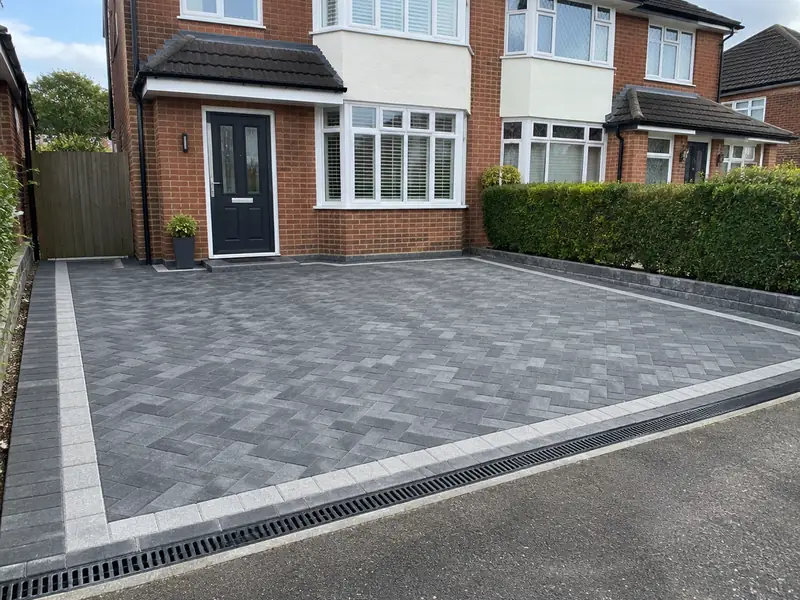
A new driveway is a hard-wearing surface for parking, such as block paving, resin bound gravel, tarmac or gravel, laid on an excavated and compacted sub-base with edging and drainage designed to carry vehicle loads and handle rainwater.
Getting a new driveway right in Harwich starts with understanding the house you already have: its age, how it was built and what has been altered over the years. We survey first, then commit on paper to a price that holds as long as the scope stays the same. Across the East of England, guide prices run at £4,200–£9,400 including VAT, and homes in Felixstowe, Ipswich and Clacton-on-Sea are covered too.
- Guide price
- £4,200–£9,400 inc VAT
- Time on site
- 3–7 days on site
- Postcodes
- CO12
- Planning rules
- England
- Local area
- Essex
- Survey
- Free, with a written quote
Driveways prices in Harwich
The table below shows guide prices for a new driveway in Harwich. They are based on rates in the East of England, which run about 5% above the national guide, giving an overall range of £4,200–£9,400. All figures include VAT and are firmed up after a free site survey.
| Type of job | What it usually involves | Guide in Harwich |
|---|---|---|
| Gravel or tarmac | A typical 40–50m² drive in gravel on a grid, or tarmac with block edging. | £2,100–£5,200 |
| Block paving or resin bound | A typical 40–50m² drive with sub-base, edging and drainage. | £4,200–£9,400 |
| Large or premium driveway | Larger drives, natural stone, walls, steps or a new dropped kerb. | £8,400–£17,000 |
The main things that change the figure:
- Driveway area and the depth of excavation needed
- Surface: gravel, tarmac, block paving, resin or stone
- Drainage, soakaways and changes in level
- Access for machinery and removal of spoil
What do you get?
- Excavation and removal of the old surface and soil
- Edging kerbs or restraints to hold the surface in place
- Drainage channels or soakaway where needed
- Manhole covers raised or replaced to new levels
- New surface laid, compacted and finished
- Site cleared and waste removed
Local housing and a new driveway
Essex ranges from timber-framed and weatherboarded cottages in the north, some with decorative pargeting, to Victorian terraces in Colchester, Chelmsford and Southend. Basildon and Harlow were built as post-war new towns, much of the south-east has interwar suburbs and bungalows, and large new estates continue to appear around Chelmsford and Braintree.
Terraces and semis commonly suit loft conversions and rear extensions, and many bungalows can take a loft room. New-town homes often need cladding, window and roofline renewal, while timber-framed cottages call for lime plaster and repairs that respect the original frame.
For a new driveway in Harwich, this means checking things like wall construction, roof structure and existing services before we put a figure on paper.
Permissions for a new driveway in Harwich
For anyone in Harwich, the relevant framework is England's. The summary below is general, so we always contact the council about your address before putting a price in writing.
In England, a new or replacement front-garden surface over 5 m² needs planning permission unless it is permeable or drains to a lawn or border within your property. A new dropped kerb needs consent from the council’s highways team, and access onto a classified road may need planning permission.
Building Regulations do not usually apply to driveways, but drainage must not discharge onto the road or a neighbour’s land.
Rules change and every property is different, so we check the planning history and constraints for your address before we quote.
How does the job run?
Free site survey
We arrange a free site survey on a date convenient to you. We measure up, look at the existing structure and access, and discuss your plans for a new driveway so the price reflects your home.
Price and scope agreed
We turn the survey notes into a written quote. The price is fixed for the specification we agree, and the document sets out materials, scope and payment stages in plain language.
Booking the work
Once you accept, we agree start dates, order materials and deal with any planning, building control or neighbour notices the job needs. You'll know who is coming and when before work begins.
Finish and handover
Work goes ahead as scheduled and you deal with one contact throughout. When the last trade leaves, we clear and clean the site, talk you through what has been done and pass on any certificates and care instructions.
How we work
Driveways in Harwich: questions
How long does it take to lay a driveway?
Laying a typical driveway takes around three to seven days, depending on size, surface and ground conditions. Excavation and sub-base usually take the first few days, then edging, drainage and the surface. Resin needs dry weather and time to cure, and you will usually need to keep cars off for a short period afterwards. We confirm timings and access arrangements with your quote.
Do I need planning permission for a driveway?
Whether a driveway needs planning permission depends on its size, surface and drainage, your home's location, whether it is listed or in a conservation area, and which UK nation you are in. In England, a new or replacement front driveway over 5m² needs permission unless it uses a permeable surface or drains to a lawn or border. We check the rules and design to suit.
What is a sub-base and why does it matter?
The sub-base is the layer of crushed, compacted stone beneath the driveway surface that spreads the weight of vehicles into the ground. Most driveway failures, such as sinking, rutting and loose blocks, come from a sub-base that is too thin or poorly compacted. We excavate to the right depth for your soil and compact the sub-base in layers before laying the surface.
How long will a new driveway take?
On a typical home, allow 3–7 days on site. Larger projects, older buildings and extra work found once things are opened up can extend that, while simpler jobs may be shorter. Your quote includes an estimate of time on site, and your point of contact keeps you updated on the programme as the work progresses.
Can I stay at home during the work?
In most cases, yes. Most people can live at home throughout, and we plan the work to keep disruption down by protecting floors, agreeing working hours and keeping access routes clear. Bigger jobs affecting kitchens, bathrooms or heating may mean a short spell with reduced facilities, and we talk this through with you at the survey.
Nearby towns
Whether you're in the centre of Harwich or on its outskirts, CO12 addresses are covered. We extend the same service, and the same fixed-price approach, to Felixstowe, Ipswich and Clacton-on-Sea.