
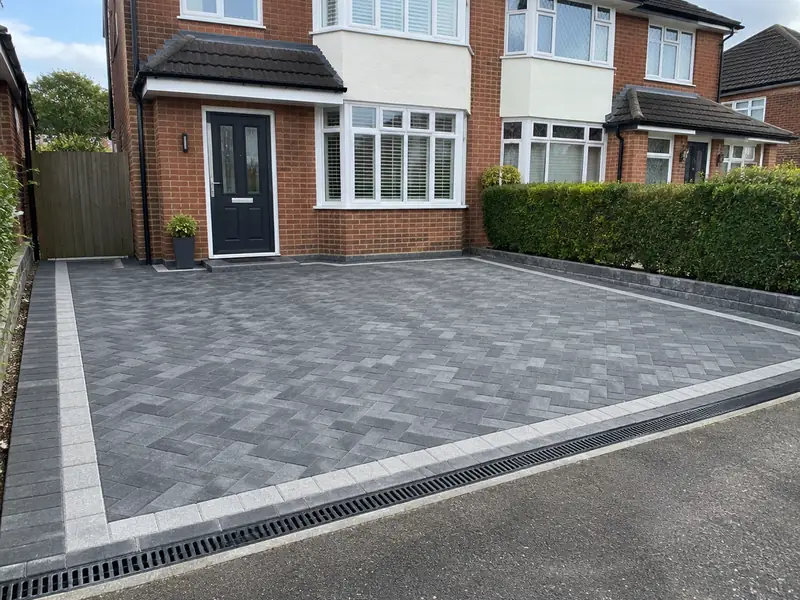
A new driveway is a hard-wearing surface for parking, such as block paving, resin bound gravel, tarmac or gravel, laid on an excavated and compacted sub-base with edging and drainage designed to carry vehicle loads and handle rainwater.
Addresses across PH33 fall within our coverage for a new driveway, so if your home is in Fort William we can arrange a survey on a day that works for you. We inspect the existing building, discuss materials and layout, and then price the agreed specification in writing. Expect a guide range of £3,800–£8,600 including VAT before that visit.
- Guide price
- £3,800–£8,600 inc VAT
- Time on site
- 3–7 days on site
- Postcodes
- PH33
- Planning rules
- Scotland
- Local area
- Highland
- Survey
- Free, with a written quote
What should you budget for a new driveway in Fort William?
Every figure below is a guide for a new driveway in Fort William, inclusive of VAT. Regional pricing for Scotland works out about 4% below the national guide, and the overall span is £3,800–£8,600. The survey costs you nothing, and after it we commit to a firm price for your specification in writing.
| Type of job | What it usually involves | Guide in Fort William |
|---|---|---|
| Gravel or tarmac | A typical 40–50m² drive in gravel on a grid, or tarmac with block edging. | £1,900–£4,800 |
| Block paving or resin bound | A typical 40–50m² drive with sub-base, edging and drainage. | £3,800–£8,600 |
| Large or premium driveway | Larger drives, natural stone, walls, steps or a new dropped kerb. | £7,700–£15,500 |
Expect these to shape the final quote:
- Driveway area and the depth of excavation needed
- Surface: gravel, tarmac, block paving, resin or stone
- Drainage, soakaways and changes in level
- Edging, steps, walls and manhole adjustments
Scope of the work
- Survey of levels, drainage, manholes and access
- Excavation and removal of the old surface and soil
- Weed membrane and compacted MOT Type 1 sub-base
- Edging kerbs or restraints to hold the surface in place
- Manhole covers raised or replaced to new levels
- New surface laid, compacted and finished
Homes in Highlands and Islands
Inverness has Victorian villas and terraces and large modern estates, while rural Highland homes range from harled stone cottages and croft houses to modern timber-frame kit houses, which are common across the region. Orkney uses local flagstone, and island and coastal communities mix traditional stone homes with newer bungalows.
Croft houses and stone cottages often need lime harling, re-roofing and window renewal. Bungalows commonly take extensions and loft rooms, and remote projects need careful planning for materials and access.
None of this holds for every street in Fort William, which is why we look at your actual house before pricing a new driveway rather than assuming from its age alone.
Do you need permission in Fort William?
England, Wales, Scotland and Northern Ireland each handle planning a little differently. Fort William comes under Scotland, covered below, and we raise any questions with the council before your quote is finalised.
In Scotland, a hard surface in front of a house is usually permitted development if it is permeable or drains within the property. A dropped kerb or road opening needs consent from the council as roads authority.
A building warrant is not normally needed for a driveway.
Rules change and every property is different, so we check the planning history and constraints for your address before we quote.
The four stages
Free site survey
Book a visit and we'll come to you. The survey covers measurements, the state of what's there now and any obvious constraints, so the price that follows is based on your actual home, not an average.
Quote in writing
The quote arrives in writing, not over the phone. It covers the full scope, the finishes you've chosen, any exclusions and the payment schedule, with a fixed price tied to that specification.
Plan and prepare
We handle the paperwork side: checking whether planning permission or building control approval is needed, submitting applications where they are, and scheduling the trades and materials around your dates.
Finish and handover
Work goes ahead as scheduled and you deal with one contact throughout. When the last trade leaves, we clear and clean the site, talk you through what has been done and pass on any certificates and care instructions.
Why homeowners choose us
Frequently asked questions
How do you stop a driveway flooding?
A driveway stays dry when rainwater can drain away rather than pooling or running towards the house. Permeable surfaces such as resin bound gravel or permeable block paving let water soak through to the ground. Non-permeable surfaces need falls directing water to a channel drain, soakaway or garden border. We check levels and drainage during the survey and design the falls accordingly.
Do I need planning permission for a driveway?
Whether a driveway needs planning permission depends on its size, surface and drainage, your home's location, whether it is listed or in a conservation area, and which UK nation you are in. In England, a new or replacement front driveway over 5m² needs permission unless it uses a permeable surface or drains to a lawn or border. We check the rules and design to suit.
Can I stay at home during the work?
In most cases, yes. Most people can live at home throughout, and we plan the work to keep disruption down by protecting floors, agreeing working hours and keeping access routes clear. Bigger jobs affecting kitchens, bathrooms or heating may mean a short spell with reduced facilities, and we talk this through with you at the survey.
Can I use my car during the work?
You will not be able to park on the driveway while it is being dug out and laid, so plan to park on the street or nearby for the duration. We keep a safe pedestrian route to your front door where possible. After completion, block paving and tarmac can usually be driven on straight away, while resin and concrete need a short curing period first.
Do I need planning permission in Fort William?
It depends on the work, the size of the project, your property type and whether the building is listed or in a conservation area. Fort William is in Scotland, so Scotland's rules apply. Many smaller jobs need no planning application, but some still need building control approval. We check what applies to your address before quoting.
Near Fort William
From PH33 to the edges of Fort William and on into Oban, Inverness and Crieff, we can arrange a site visit and a written quote for your project, planned around dates that work for you.