
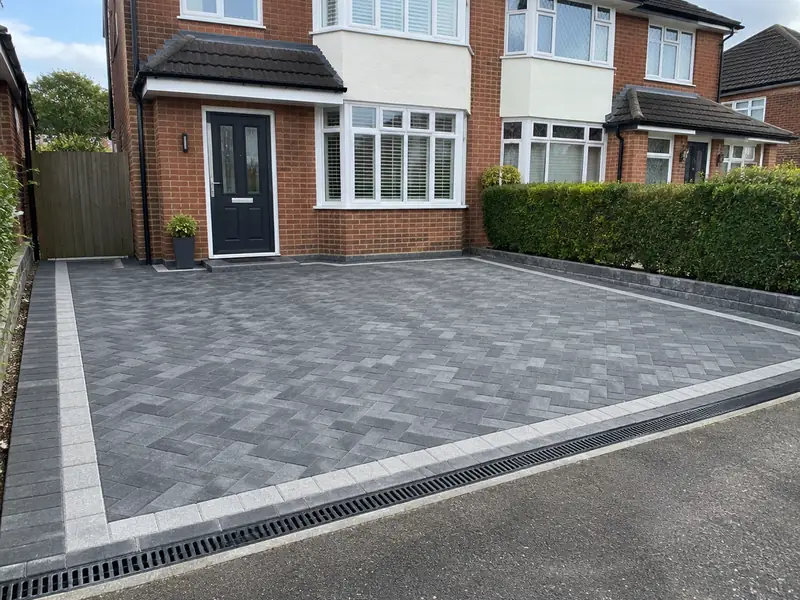
A new driveway is a hard-wearing surface for parking, such as block paving, resin bound gravel, tarmac or gravel, laid on an excavated and compacted sub-base with edging and drainage designed to carry vehicle loads and handle rainwater.
Homeowners in Blackwall usually consider a new driveway for one of a few reasons: something has worn out, the house no longer suits the way they live, or they are getting it ready to sell. We visit, agree a specification and put a fixed price in writing. Most jobs like this take 3–7 days on site, and we work across London, including Canary Wharf, Canning Town and Bow.
- Guide price
- £5,200–£11,500 inc VAT
- Time on site
- 3–7 days on site
- Postcodes
- E3, E13, E14, E15 and E16
- Planning rules
- England
- Local area
- Greater London
- Survey
- Free, with a written quote
How much does a new driveway cost in Blackwall?
These are guide costs, not quotes. For a new driveway in Blackwall the range is £5,200–£11,500, VAT included, reflecting prices in London that are about 30% above the national guide. Once we have visited for a free survey, you get a firm figure for the scope you approve.
| Type of job | What it usually involves | Guide in Blackwall |
|---|---|---|
| Gravel or tarmac | A typical 40–50m² drive in gravel on a grid, or tarmac with block edging. | £2,600–£6,500 |
| Block paving or resin bound | A typical 40–50m² drive with sub-base, edging and drainage. | £5,200–£11,500 |
| Large or premium driveway | Larger drives, natural stone, walls, steps or a new dropped kerb. | £10,500–£21,000 |
Expect these to shape the final quote:
- Driveway area and the depth of excavation needed
- Surface: gravel, tarmac, block paving, resin or stone
- Drainage, soakaways and changes in level
- Edging, steps, walls and manhole adjustments
What does the job include in Blackwall?
- Survey of levels, drainage, manholes and access
- Weed membrane and compacted MOT Type 1 sub-base
- Edging kerbs or restraints to hold the surface in place
- Drainage channels or soakaway where needed
- Manhole covers raised or replaced to new levels
- New surface laid, compacted and finished
Homes in London
London's housing is dominated by Victorian and Edwardian terraces, often in yellow London stock brick, with Georgian terraces in central districts and mansion blocks across many inner areas. Outer boroughs have large belts of interwar semis, and there are extensive post-war council estates. Many houses have been split into flats, and conservation areas are widespread.
Terraces suit side-return extensions and rear dormer loft conversions; interwar semis commonly take hip-to-gable lofts. Shared party walls, restricted parking and conservation rules often shape the plans and the programme.
So when we survey a Blackwall property for a new driveway, the first step is working out how it was built and what has been changed since.
Planning and building rules in Blackwall
Each UK nation sets its own consent rules, and Blackwall is in England. What follows is a plain summary; we check the specifics for your property with the council before pricing anything.
In England, a new or replacement front-garden surface over 5 m² needs planning permission unless it is permeable or drains to a lawn or border within your property. A new dropped kerb needs consent from the council’s highways team, and access onto a classified road may need planning permission.
Building Regulations do not usually apply to driveways, but drainage must not discharge onto the road or a neighbour’s land.
Rules change and every property is different, so we check the planning history and constraints for your address before we quote.
From survey to handover
Survey and measure
Book a visit and we'll come to you. The survey covers measurements, the state of what's there now and any obvious constraints, so the price that follows is based on your actual home, not an average.
Quote in writing
The quote arrives in writing, not over the phone. It covers the full scope, the finishes you've chosen, any exclusions and the payment schedule, with a fixed price tied to that specification.
Plan and prepare
Preparation matters as much as the build. We agree access, parking and working hours with you, order materials in good time, and confirm any permissions so the job isn't held up once it starts.
Build and hand over
During the work we protect the areas around it and tidy up at the end of each day. Once complete, we check the finish, remove our materials and hand over paperwork such as building control sign-off where it applies.
How we work
Common questions
How do you stop a driveway flooding?
A driveway stays dry when rainwater can drain away rather than pooling or running towards the house. Permeable surfaces such as resin bound gravel or permeable block paving let water soak through to the ground. Non-permeable surfaces need falls directing water to a channel drain, soakaway or garden border. We check levels and drainage during the survey and design the falls accordingly.
How much does a new driveway cost?
A typical 40–50m² block paved or resin bound driveway costs £5,200–£11,500, including excavation, sub-base, edging and drainage. As a guide, allow roughly £70–£150 per square metre plus fixed costs for machinery and waste. Gravel and tarmac cost less, while natural stone, steps and walls cost more. A new dropped kerb is a separate cost. We confirm a fixed price after measuring.
Do I need planning permission in Blackwall?
It depends on the work, the size of the project, your property type and whether the building is listed or in a conservation area. Blackwall is in England, so England's rules apply. Many smaller jobs need no planning application, but some still need building control approval. We check what applies to your address before quoting.
Can I stay at home during the work?
In most cases, yes. Most people can live at home throughout, and we plan the work to keep disruption down by protecting floors, agreeing working hours and keeping access routes clear. Bigger jobs affecting kitchens, bathrooms or heating may mean a short spell with reduced facilities, and we talk this through with you at the survey.
What is a sub-base and why does it matter?
The sub-base is the layer of crushed, compacted stone beneath the driveway surface that spreads the weight of vehicles into the ground. Most driveway failures, such as sinking, rutting and loose blocks, come from a sub-base that is too thin or poorly compacted. We excavate to the right depth for your soil and compact the sub-base in layers before laying the surface.
Also covering areas around Blackwall
Coverage for Blackwall spans E3, E13, E14 and E15. Close by, Canary Wharf, Canning Town and Bow are covered too, and the rest of our UK-wide area follows the same survey-then-quote process from start to finish.