
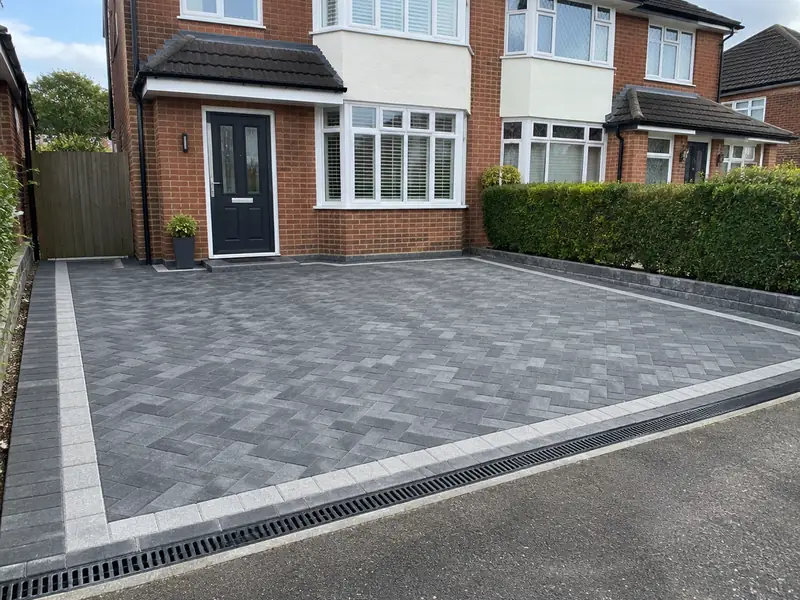
A new driveway is a hard-wearing surface for parking, such as block paving, resin bound gravel, tarmac or gravel, laid on an excavated and compacted sub-base with edging and drainage designed to carry vehicle loads and handle rainwater.
Tynemouth sits within our coverage for a new driveway, as do neighbouring North Shields, South Shields and Whitley Bay. Before giving a price we want to see the property: the condition of what's there now, the access, and anything that might need extra work. The guide range for the North East is £3,600–£8,100 including VAT, and your written quote will spell out exactly what that covers.
- Guide price
- £3,600–£8,100 inc VAT
- Time on site
- 3–7 days on site
- Postcodes
- NE29, NE30 and NE33
- Planning rules
- England
- Local area
- North Tyneside
- Survey
- Free, with a written quote
Driveways prices in Tynemouth
Prices for a new driveway vary from house to house, but in Tynemouth most projects fall within £3,600–£8,100 including VAT. That reflects costs in the North East, about 10% below the national guide. Treat the table as a budgeting aid; the written figure follows a survey we carry out for free.
| Type of job | What it usually involves | Guide in Tynemouth |
|---|---|---|
| Gravel or tarmac | A typical 40–50m² drive in gravel on a grid, or tarmac with block edging. | £1,800–£4,500 |
| Block paving or resin bound | A typical 40–50m² drive with sub-base, edging and drainage. | £3,600–£8,100 |
| Large or premium driveway | Larger drives, natural stone, walls, steps or a new dropped kerb. | £7,200–£14,500 |
What moves the price up or down:
- Driveway area and the depth of excavation needed
- Surface: gravel, tarmac, block paving, resin or stone
- Drainage, soakaways and changes in level
- Edging, steps, walls and manhole adjustments
What do you get?
- Survey of levels, drainage, manholes and access
- Excavation and removal of the old surface and soil
- Weed membrane and compacted MOT Type 1 sub-base
- Drainage channels or soakaway where needed
- New surface laid, compacted and finished
- Site cleared and waste removed
Local housing and a new driveway
Tyneside flats, pairs of upper and lower flats behind a terraced front, are a distinctive feature of Newcastle and Gateshead. Sunderland is known for its single-storey terraced 'Sunderland cottages', and both cities have Victorian brick and stone terraces, interwar estates and post-war housing. Washington was built as a new town from the 1960s.
Terraces and Tyneside flats commonly need repointing, roof work and window replacement. Houses suit loft rooms and rear extensions, and new-town homes often take garage conversions and cladding upgrades.
If your house in Tynemouth fits one of these patterns, it helps us anticipate what a new driveway will involve, though we always confirm the details on site.
Permissions for a new driveway in Tynemouth
The notes below cover England, which is where Tynemouth sits. Rules change and every property is different, so we speak to the council before pricing your job.
In England, a new or replacement front-garden surface over 5 m² needs planning permission unless it is permeable or drains to a lawn or border within your property. A new dropped kerb needs consent from the council’s highways team, and access onto a classified road may need planning permission.
Building Regulations do not usually apply to driveways, but drainage must not discharge onto the road or a neighbour’s land.
Rules change and every property is different, so we check the planning history and constraints for your address before we quote.
From survey to handover
Free site survey
Book a visit and we'll come to you. The survey covers measurements, the state of what's there now and any obvious constraints, so the price that follows is based on your actual home, not an average.
Your fixed price
Next you receive a written quote with a fixed price for the agreed specification. It lists what is included, what is not, and how payments are staged, so you can compare it properly.
Dates and permissions
Once you accept, we agree start dates, order materials and deal with any planning, building control or neighbour notices the job needs. You'll know who is coming and when before work begins.
On site to finish
Work goes ahead as scheduled and you deal with one contact throughout. When the last trade leaves, we clear and clean the site, talk you through what has been done and pass on any certificates and care instructions.
How we work
Driveways in Tynemouth: questions
Can I stay at home during the work?
In most cases, yes. Most people can live at home throughout, and we plan the work to keep disruption down by protecting floors, agreeing working hours and keeping access routes clear. Bigger jobs affecting kitchens, bathrooms or heating may mean a short spell with reduced facilities, and we talk this through with you at the survey.
How do you stop a driveway flooding?
A driveway stays dry when rainwater can drain away rather than pooling or running towards the house. Permeable surfaces such as resin bound gravel or permeable block paving let water soak through to the ground. Non-permeable surfaces need falls directing water to a channel drain, soakaway or garden border. We check levels and drainage during the survey and design the falls accordingly.
Do I need planning permission in Tynemouth?
It depends on the work, the size of the project, your property type and whether the building is listed or in a conservation area. Tynemouth is in England, so England's rules apply. Many smaller jobs need no planning application, but some still need building control approval. We check what applies to your address before quoting.
Can I use my car during the work?
You will not be able to park on the driveway while it is being dug out and laid, so plan to park on the street or nearby for the duration. We keep a safe pedestrian route to your front door where possible. After completion, block paving and tarmac can usually be driven on straight away, while resin and concrete need a short curing period first.
How long does it take to lay a driveway?
Laying a typical driveway takes around three to seven days, depending on size, surface and ground conditions. Excavation and sub-base usually take the first few days, then edging, drainage and the surface. Resin needs dry weather and time to cure, and you will usually need to keep cars off for a short period afterwards. We confirm timings and access arrangements with your quote.
Near Tynemouth
Whether you're in the centre of Tynemouth or on its outskirts, NE29, NE30 and NE33 addresses are covered. We extend the same service, and the same fixed-price approach, to North Shields, South Shields and Whitley Bay.