
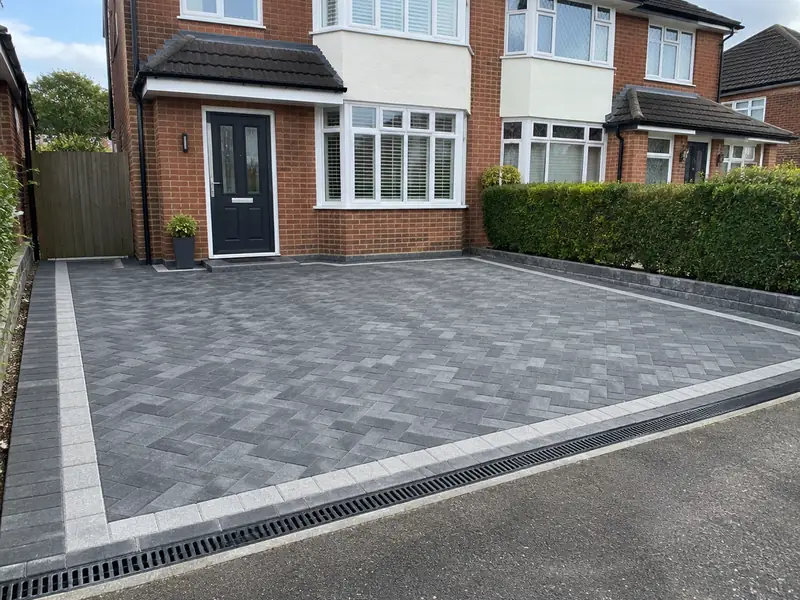
A new driveway is a hard-wearing surface for parking, such as block paving, resin bound gravel, tarmac or gravel, laid on an excavated and compacted sub-base with edging and drainage designed to carry vehicle loads and handle rainwater.
Planning a new driveway for a home in Neath means making a handful of decisions about materials, layout, finish and timing. We help you work through them at a free survey, then confirm in writing what it will cost for the options you pick. Most projects of this type need 3–7 days on site, and we cover every SA10 and SA11 address as well as the rest of West Glamorgan.
- Guide price
- £3,700–£8,300 inc VAT
- Time on site
- 3–7 days on site
- Postcodes
- SA10 and SA11
- Planning rules
- Wales
- Local area
- Neath Port Talbot
- Survey
- Free, with a written quote
What should you budget for a new driveway in Neath?
These are guide costs, not quotes. For a new driveway in Neath the range is £3,700–£8,300, VAT included, reflecting prices in Wales that are about 8% below the national guide. Once we have visited for a free survey, you get a firm figure for the scope you approve.
| Type of job | What it usually involves | Guide in Neath |
|---|---|---|
| Gravel or tarmac | A typical 40–50m² drive in gravel on a grid, or tarmac with block edging. | £1,850–£4,600 |
| Block paving or resin bound | A typical 40–50m² drive with sub-base, edging and drainage. | £3,700–£8,300 |
| Large or premium driveway | Larger drives, natural stone, walls, steps or a new dropped kerb. | £7,400–£14,500 |
The main things that change the figure:
- Driveway area and the depth of excavation needed
- Surface: gravel, tarmac, block paving, resin or stone
- Drainage, soakaways and changes in level
- Edging, steps, walls and manhole adjustments
What do you get?
- Survey of levels, drainage, manholes and access
- Excavation and removal of the old surface and soil
- Edging kerbs or restraints to hold the surface in place
- Drainage channels or soakaway where needed
- Manhole covers raised or replaced to new levels
- Site cleared and waste removed
Building in Neath
Swansea's Victorian terraces climb its hillsides, its centre was largely rebuilt after wartime bombing, and Neath and Port Talbot have industrial terraces and post-war estates. Gower villages have stone cottages, and Pennant sandstone is common in older walls. Newer estates have grown on the edges of the main towns.
Hillside terraces often need repointing, rendering, roof repairs and window replacement, and loft conversions can work well. Gower stone cottages call for lime-based repairs, and estate homes commonly take extensions and driveways.
None of this holds for every street in Neath, which is why we look at your actual house before pricing a new driveway rather than assuming from its age alone.
Permissions for a new driveway in Neath
Because Neath falls under Wales's rules, the guidance below is the version relevant to you. Before sending a price, we check your property's position with the council.
In Wales, hard surfaces in front gardens need to be permeable or drain within the property to avoid planning permission. Larger schemes can also need approval from the council’s SuDS Approving Body (SAB), and a dropped kerb needs highways consent.
Building Regulations do not usually apply, but drainage design matters.
Rules change and every property is different, so we check the planning history and constraints for your address before we quote.
What happens after you get in touch?
A visit to your home
Book a visit and we'll come to you. The survey covers measurements, the state of what's there now and any obvious constraints, so the price that follows is based on your actual home, not an average.
Quote in writing
The quote arrives in writing, not over the phone. It covers the full scope, the finishes you've chosen, any exclusions and the payment schedule, with a fixed price tied to that specification.
Dates and permissions
Preparation matters as much as the build. We agree access, parking and working hours with you, order materials in good time, and confirm any permissions so the job isn't held up once it starts.
On site to finish
During the work we protect the areas around it and tidy up at the end of each day. Once complete, we check the finish, remove our materials and hand over paperwork such as building control sign-off where it applies.
How we work
Driveways in Neath: questions
How long will a new driveway take?
On a typical home, allow 3–7 days on site. Larger projects, older buildings and extra work found once things are opened up can extend that, while simpler jobs may be shorter. Your quote includes an estimate of time on site, and your point of contact keeps you updated on the programme as the work progresses.
Can I use my car during the work?
You will not be able to park on the driveway while it is being dug out and laid, so plan to park on the street or nearby for the duration. We keep a safe pedestrian route to your front door where possible. After completion, block paving and tarmac can usually be driven on straight away, while resin and concrete need a short curing period first.
Do I need permission for a dropped kerb?
A dropped kerb lets vehicles cross the pavement onto your drive, and creating or widening one needs consent from your local highways authority. They usually check visibility, the distance from junctions and trees, and whether there is enough space to park off the road. Many councils carry out the kerb work themselves or use approved contractors. We can help with the application.
Do I need planning permission in Neath?
It depends on the work, the size of the project, your property type and whether the building is listed or in a conservation area. Neath is in Wales, so Wales's rules apply. Many smaller jobs need no planning application, but some still need building control approval. We check what applies to your address before quoting.
How do you stop a driveway flooding?
A driveway stays dry when rainwater can drain away rather than pooling or running towards the house. Permeable surfaces such as resin bound gravel or permeable block paving let water soak through to the ground. Non-permeable surfaces need falls directing water to a channel drain, soakaway or garden border. We check levels and drainage during the survey and design the falls accordingly.
Near Neath
If your address falls within SA10 and SA11, we cover it. The same goes for neighbouring Briton Ferry, Clydach and Swansea, which we include alongside Neath when arranging surveys and quotes.