
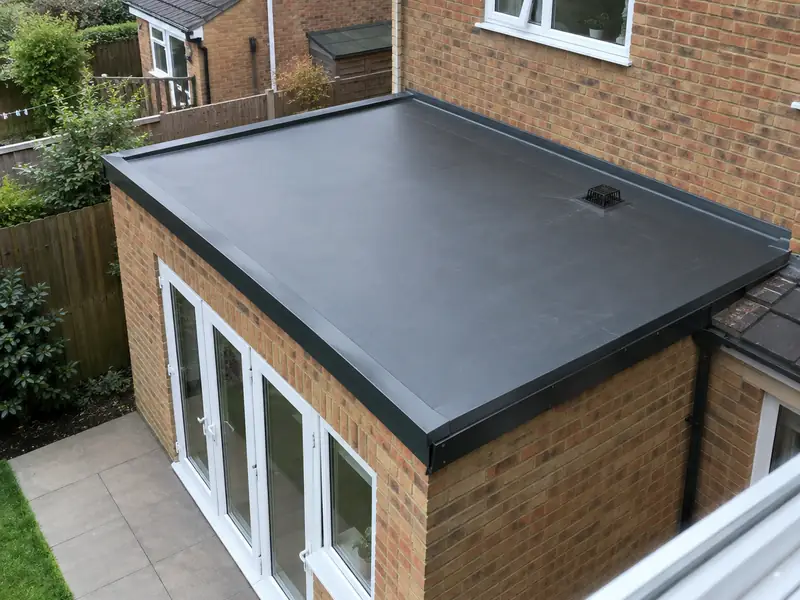
A flat roof replacement strips the old covering from a low-pitched roof and lays a new waterproof system, usually EPDM rubber, GRP fibreglass or torch-on felt, over a sound deck with correct falls, upstands, trims and outlets so rainwater drains away.
Thinking about a new flat roof in High Wycombe? We take charge of the whole project, co-ordinating every trade involved, and one person keeps you updated. Guide prices for the South East sit at £2,200–£5,000 including VAT, and a typical job takes 1–3 days for most roofs. Your own figure depends on what the survey finds and the specification you settle on.
- Guide price
- £2,200–£5,000 inc VAT
- Time on site
- 1–3 days for most roofs
- Postcodes
- HP11, HP12 and HP13
- Planning rules
- England
- Local area
- Buckinghamshire
- Survey
- Free, with a written quote
What should you budget for a new flat roof in High Wycombe?
No two jobs cost exactly the same, but the ranges below give a fair picture of a new flat roof in High Wycombe. Pricing for the South East runs about 12% above the national guide, and the overall guide is £2,200–£5,000 with VAT included. We'll confirm your figure after surveying the property for free.
| Type of job | What it usually involves | Guide in High Wycombe |
|---|---|---|
| Small roof (up to 8m²) | A dormer, bay, porch or small garage roof re-covered in EPDM or GRP. | £900–£2,200 |
| Extension or garage (15–25m²) | A typical extension or single garage roof stripped and re-covered. | £2,200–£5,000 |
| Large or new warm roof | Larger roofs, or roofs needing a new deck and insulation build-up. | £4,500–£10,000 |
Your price depends mostly on:
- Roof area and access to the roof
- Covering system: EPDM, GRP or torch-on felt
- Condition of the deck and joists underneath
- Number of rooflights, pipes and upstands to detail
Scope of the work
- Survey of the covering, deck, falls, upstands and drainage
- Stripping and disposal of the old roof covering
- Replacement of rotten or soft deck boards
- New EPDM, GRP or torch-on felt membrane laid to falls
- Upstands, flashings and drip edges finished neatly
- New trims, outlets and gutter connections
Building in High Wycombe
Buckinghamshire runs from Chiltern villages of brick and flint, through Metroland interwar semis around Amersham and Chesham, to Victorian terraces in High Wycombe and Aylesbury. Milton Keynes adds estates built from the 1970s onwards in brick, render and timber frame, and new housing continues to spread around its edges.
The Chiltern hills are more exposed than the vale below, and clay-with-flints soils make drainage design and footing depth worth checking early.
Knowing the typical building types in Buckinghamshire helps, but a survey of your own home in High Wycombe is what decides the right approach to a new flat roof.
Do you need permission in High Wycombe?
England, Wales, Scotland and Northern Ireland each handle planning a little differently. High Wycombe comes under England, covered below, and we raise any questions with the council before your quote is finalised.
Re-roofing a house with similar materials does not usually need planning permission in England. Listed buildings and conservation areas may need consent if the covering changes.
Replacing more than a quarter of a roof’s covering counts as renovation under Building Regulations, so the work is notified and the roof insulation may need upgrading. Bats are protected across the UK; if they roost under roof tiles, soffits or fascias, work stops and a licensed ecologist advises before it restarts.
Rules change and every property is different, so we check the planning history and constraints for your address before we quote.
The four stages
Free site survey
We arrange a free site survey on a date convenient to you. We measure up, look at the existing structure and access, and discuss your plans for a new flat roof so the price reflects your home.
Quote in writing
We turn the survey notes into a written quote. The price is fixed for the specification we agree, and the document sets out materials, scope and payment stages in plain language.
Getting ready
Preparation matters as much as the build. We agree access, parking and working hours with you, order materials in good time, and confirm any permissions so the job isn't held up once it starts.
Finish and handover
Work goes ahead as scheduled and you deal with one contact throughout. When the last trade leaves, we clear and clean the site, talk you through what has been done and pass on any certificates and care instructions.
What you can expect from us
Frequently asked questions
Is the price fixed?
Yes, for the specification we agree. Your written quote sets out exactly what is included at a fixed price. It only changes if you ask for something different, or if a problem the survey could not reasonably reveal later needs extra work. In either case we explain the change and confirm it in writing before going ahead.
Do I need planning permission in High Wycombe?
It depends on the work, the size of the project, your property type and whether the building is listed or in a conservation area. High Wycombe is in England, so England's rules apply. Many smaller jobs need no planning application, but some still need building control approval. We check what applies to your address before quoting.
Why does water sit on my flat roof?
Ponding water on a flat roof is usually caused by inadequate falls, sagging joists, a deck that has dipped or blocked outlets. Small puddles that dry within a day or two are not always a problem, but standing water speeds up wear and finds any weakness. A new roof can be laid on firring strips or tapered insulation to create proper falls. We check falls during the survey.
How long does a flat roof last?
A well-installed EPDM or GRP flat roof can last 25 years or more, while torch-on felt systems typically last around 15–25 years, depending on quality and exposure. Lifespan depends on correct falls, good detailing at edges and upstands, and keeping outlets clear. Foot traffic, ponding and poor ventilation shorten it. Annual checks help catch small problems early.
Which is better, EPDM rubber or GRP fibreglass?
EPDM rubber and GRP fibreglass are both reliable modern flat roof systems. EPDM is a single flexible sheet with very few joints, which copes well with movement and suits most extensions and garages. GRP is a hard, seamless finish that copes better with foot traffic and complex shapes, but needs dry weather to apply. Felt costs less but usually lasts less long. We recommend a system after seeing your roof.
Near High Wycombe
Our coverage in High Wycombe includes HP11, HP12 and HP13. We also travel to Marlow, Amersham and Maidenhead, so neighbouring addresses are looked after on exactly the same terms as those in town.