
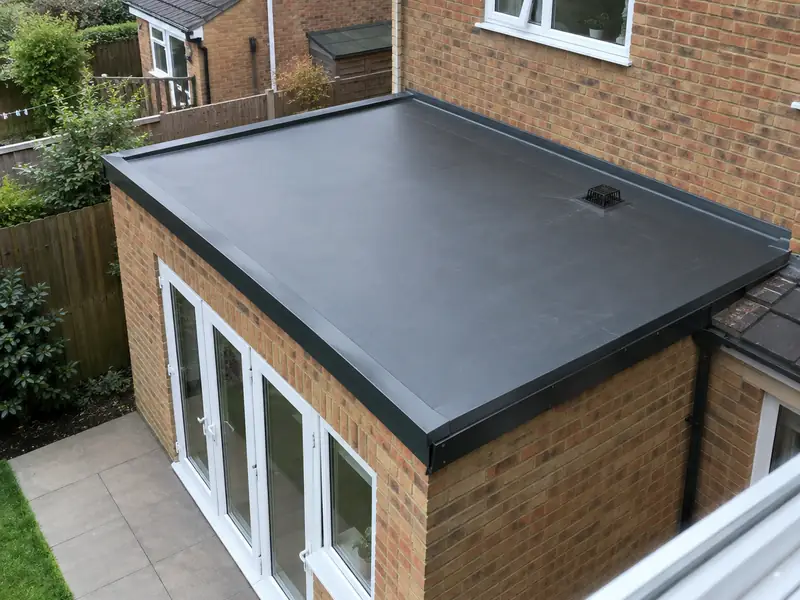
A flat roof replacement strips the old covering from a low-pitched roof and lays a new waterproof system, usually EPDM rubber, GRP fibreglass or torch-on felt, over a sound deck with correct falls, upstands, trims and outlets so rainwater drains away.
For a homeowner in Plymouth, planning a new flat roof tends to begin with two questions: what will it cost, and how disruptive will it be? Our guide range is £2,000–£4,600 including VAT, and a typical job runs to 1–3 days for most roofs. Both numbers firm up once we have seen the property, measured up and agreed exactly what is included.
- Guide price
- £2,000–£4,600 inc VAT
- Time on site
- 1–3 days for most roofs
- Postcodes
- PL1, PL2, PL3 and PL4
- Planning rules
- England
- Local area
- Devon
- Survey
- Free, with a written quote
Flat roofs prices in Plymouth
What will a new flat roof cost in Plymouth? Our guide range is £2,000–£4,600 including VAT. That figure is adjusted for the South West, about 2% above the national guide, and is intended for planning a budget. A firm written price for your chosen specification follows a free survey at your home.
| Type of job | What it usually involves | Guide in Plymouth |
|---|---|---|
| Small roof (up to 8m²) | A dormer, bay, porch or small garage roof re-covered in EPDM or GRP. | £800–£2,000 |
| Extension or garage (15–25m²) | A typical extension or single garage roof stripped and re-covered. | £2,000–£4,600 |
| Large or new warm roof | Larger roofs, or roofs needing a new deck and insulation build-up. | £4,100–£9,200 |
What moves the price up or down:
- Roof area and access to the roof
- Covering system: EPDM, GRP or torch-on felt
- Insulation upgrades and changes to roof height at edges
- Number of rooflights, pipes and upstands to detail
What do you get?
- Survey of the covering, deck, falls, upstands and drainage
- Replacement of rotten or soft deck boards
- New EPDM, GRP or torch-on felt membrane laid to falls
- Upstands, flashings and drip edges finished neatly
- New trims, outlets and gutter connections
- Rooflights refitted or replaced where required
Building in Plymouth
Devon is known for cob and thatch cottages, especially in mid and east Devon, alongside granite on Dartmoor and red sandstone around Exeter. Exeter and Plymouth have Georgian and Victorian terraces, Plymouth's centre was largely rebuilt after the war, and seaside towns such as Torquay and Exmouth have rendered villas and newer estates.
Cob and stone homes need breathable lime plaster and render rather than cement. Victorian terraces suit loft rooms and window replacement, while post-war and newer homes often take extensions, rendering and roofline renewal.
That variety is why a guide price for a new flat roof in Plymouth is only a starting point; the survey shows what your particular property needs.
Planning and building rules in Plymouth
Homes in Plymouth come under the regulations for England, summarised below. We don't rely on general rules alone: we confirm the position for your address with the council before a quote goes out.
Re-roofing a house with similar materials does not usually need planning permission in England. Listed buildings and conservation areas may need consent if the covering changes.
Replacing more than a quarter of a roof’s covering counts as renovation under Building Regulations, so the work is notified and the roof insulation may need upgrading. Bats are protected across the UK; if they roost under roof tiles, soffits or fascias, work stops and a licensed ecologist advises before it restarts.
Rules change and every property is different, so we check the planning history and constraints for your address before we quote.
How does the job run?
We look at the job
We begin by looking at the job in person. During the free survey we discuss options, materials and budget for a new flat roof, and photograph or measure anything the quote needs to reflect.
Price and scope agreed
Next you receive a written quote with a fixed price for the agreed specification. It lists what is included, what is not, and how payments are staged, so you can compare it properly.
Plan and prepare
Before anyone starts, we confirm the programme in writing, check whether consents are required and arrange deliveries. If a skip or scaffolding on the road needs a permit, we apply for it.
Finish and handover
During the work we protect the areas around it and tidy up at the end of each day. Once complete, we check the finish, remove our materials and hand over paperwork such as building control sign-off where it applies.
Working with SK Home Improvements
Flat roofs in Plymouth: questions
How long does a flat roof last?
A well-installed EPDM or GRP flat roof can last 25 years or more, while torch-on felt systems typically last around 15–25 years, depending on quality and exposure. Lifespan depends on correct falls, good detailing at edges and upstands, and keeping outlets clear. Foot traffic, ponding and poor ventilation shorten it. Annual checks help catch small problems early.
Which is better, EPDM rubber or GRP fibreglass?
EPDM rubber and GRP fibreglass are both reliable modern flat roof systems. EPDM is a single flexible sheet with very few joints, which copes well with movement and suits most extensions and garages. GRP is a hard, seamless finish that copes better with foot traffic and complex shapes, but needs dry weather to apply. Felt costs less but usually lasts less long. We recommend a system after seeing your roof.
What happens at the survey?
We visit your home at a time that suits you, look at the area involved, take measurements and check access, condition and any services that might be affected. We talk through what you want from a new flat roof, explain the options and answer questions. There is no charge and no obligation; afterwards we send a written quote.
Is the price fixed?
Yes, for the specification we agree. Your written quote sets out exactly what is included at a fixed price. It only changes if you ask for something different, or if a problem the survey could not reasonably reveal later needs extra work. In either case we explain the change and confirm it in writing before going ahead.
Is a flat roof suitable for a roof terrace?
A flat roof can only be used as a terrace if it is designed for it, with joists strong enough for people and furniture, a hard-wearing surface, safe edge protection and correct drainage. Using a standard extension roof as a terrace can damage it and may need planning permission and building regulations approval. We can advise on what a conversion would involve.
Near Plymouth
Plymouth and its PL1, PL2, PL3 and PL4 postcodes are part of our coverage. Homeowners in Plymstock, Paignton and Newton Abbot can also book a free survey with us and receive a written price for their job.