
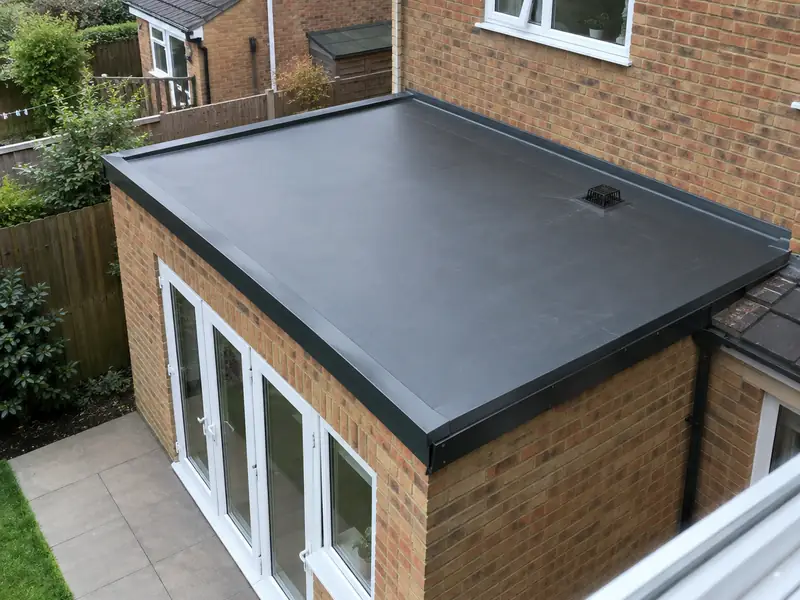
A flat roof replacement strips the old covering from a low-pitched roof and lays a new waterproof system, usually EPDM rubber, GRP fibreglass or torch-on felt, over a sound deck with correct falls, upstands, trims and outlets so rainwater drains away.
Thinking about a new flat roof in Stafford? We take charge of the whole project, co-ordinating every trade involved, and one person keeps you updated. Guide prices for the West Midlands sit at £1,950–£4,400 including VAT, and a typical job takes 1–3 days for most roofs. Your own figure depends on what the survey finds and the specification you settle on.
- Guide price
- £1,950–£4,400 inc VAT
- Time on site
- 1–3 days for most roofs
- Postcodes
- ST16 and ST17
- Planning rules
- England
- Local area
- Staffordshire
- Survey
- Free, with a written quote
Flat roofs prices in Stafford
What should you budget for a new flat roof in Stafford? Use the figures below as a starting point. Prices in the West Midlands sit about 2% below the national guide, so the range here is £1,950–£4,400 including VAT. Your fixed price comes in writing once we've surveyed the property, at no charge.
| Type of job | What it usually involves | Guide in Stafford |
|---|---|---|
| Small roof (up to 8m²) | A dormer, bay, porch or small garage roof re-covered in EPDM or GRP. | £800–£1,950 |
| Extension or garage (15–25m²) | A typical extension or single garage roof stripped and re-covered. | £1,950–£4,400 |
| Large or new warm roof | Larger roofs, or roofs needing a new deck and insulation build-up. | £3,900–£8,800 |
The main things that change the figure:
- Roof area and access to the roof
- Covering system: EPDM, GRP or torch-on felt
- Insulation upgrades and changes to roof height at edges
- Number of rooflights, pipes and upstands to detail
What’s included?
- Survey of the covering, deck, falls, upstands and drainage
- Stripping and disposal of the old roof covering
- Replacement of rotten or soft deck boards
- Insulation upgrade to a warm roof build-up where agreed
- New EPDM, GRP or torch-on felt membrane laid to falls
- New trims, outlets and gutter connections
Building in Stafford
Stoke-on-Trent has long rows of Victorian terraces from its pottery industry, often in red brick with Staffordshire blue brick details. Stafford, Lichfield and Tamworth mix Georgian and Victorian centres with interwar and post-war estates, Burton has brewery-era terraces, and the Staffordshire Moorlands around Leek use local gritstone.
The Moorlands are colder and wetter than the rest of the county, and parts of north Staffordshire sit over former coal workings.
In Stafford, as elsewhere in Staffordshire, we take the building's age and construction into account before recommending anything, because both can change what is involved in a new flat roof.
Do you need permission in Stafford?
Each UK nation sets its own consent rules, and Stafford is in England. What follows is a plain summary; we check the specifics for your property with the council before pricing anything.
Re-roofing a house with similar materials does not usually need planning permission in England. Listed buildings and conservation areas may need consent if the covering changes.
Replacing more than a quarter of a roof’s covering counts as renovation under Building Regulations, so the work is notified and the roof insulation may need upgrading. Bats are protected across the UK; if they roost under roof tiles, soffits or fascias, work stops and a licensed ecologist advises before it restarts.
Rules change and every property is different, so we check the planning history and constraints for your address before we quote.
What happens after you get in touch?
A visit to your home
We begin by looking at the job in person. During the free survey we discuss options, materials and budget for a new flat roof, and photograph or measure anything the quote needs to reflect.
Your fixed price
The quote arrives in writing, not over the phone. It covers the full scope, the finishes you've chosen, any exclusions and the payment schedule, with a fixed price tied to that specification.
Plan and prepare
Before anyone starts, we confirm the programme in writing, check whether consents are required and arrange deliveries. If a skip or scaffolding on the road needs a permit, we apply for it.
The work itself
The job proceeds in the order set out in the programme, with dust and debris kept under control. Finally we tidy away, inspect the work together and pass the finished project over to you with its paperwork.
Working with SK Home Improvements
Frequently asked questions
Why does water sit on my flat roof?
Ponding water on a flat roof is usually caused by inadequate falls, sagging joists, a deck that has dipped or blocked outlets. Small puddles that dry within a day or two are not always a problem, but standing water speeds up wear and finds any weakness. A new roof can be laid on firring strips or tapered insulation to create proper falls. We check falls during the survey.
Who do I deal with during the job?
One point of contact manages your project from survey to handover. They schedule the trades working under our contract, keep you updated on progress, and are the person to call with any question. You don't need to coordinate builders, electricians or decorators separately, because that is part of what we do.
How long does a flat roof last?
A well-installed EPDM or GRP flat roof can last 25 years or more, while torch-on felt systems typically last around 15–25 years, depending on quality and exposure. Lifespan depends on correct falls, good detailing at edges and upstands, and keeping outlets clear. Foot traffic, ponding and poor ventilation shorten it. Annual checks help catch small problems early.
Is a flat roof suitable for a roof terrace?
A flat roof can only be used as a terrace if it is designed for it, with joists strong enough for people and furniture, a hard-wearing surface, safe edge protection and correct drainage. Using a standard extension roof as a terrace can damage it and may need planning permission and building regulations approval. We can advise on what a conversion would involve.
Can I stay at home during the work?
In most cases, yes. Most people can live at home throughout, and we plan the work to keep disruption down by protecting floors, agreeing working hours and keeping access routes clear. Bigger jobs affecting kitchens, bathrooms or heating may mean a short spell with reduced facilities, and we talk this through with you at the survey.
Nearby towns
Homes across ST16 and ST17 in Stafford are within our coverage, as are those in Rugeley, Cannock and Great Wyrley. If you are just outside these areas, ask anyway, because we work right across the UK.