
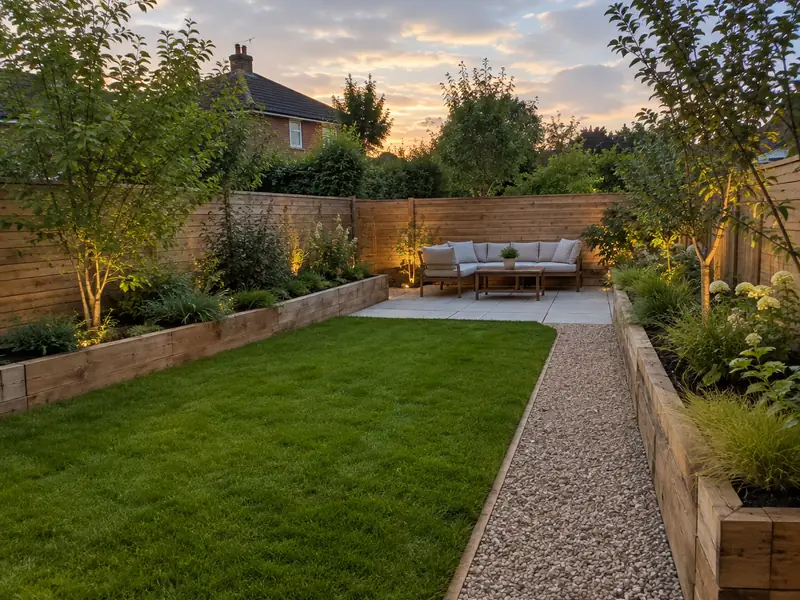
Garden landscaping is designing and building an outdoor space as a whole, combining hard landscaping such as patios, paths, walls and steps with soft landscaping such as lawns, planting and beds, plus drainage and lighting, so the garden works for how you live.
Homeowners in Truro usually consider garden landscaping for one of a few reasons: something has worn out, the house no longer suits the way they live, or they are getting it ready to sell. We visit, agree a specification and put a fixed price in writing. Most jobs like this take 1–4 weeks on site, depending on scope, and we work across Cornwall, including Falmouth, Redruth and Newquay.
- Guide price
- £6,100–£15,500 inc VAT
- Time on site
- 1–4 weeks on site, depending on scope
- Postcodes
- TR1
- Planning rules
- England
- Local area
- Cornwall
- Survey
- Free, with a written quote
What should you budget for garden landscaping in Truro?
These are guide costs, not quotes. For garden landscaping in Truro the range is £6,100–£15,500, VAT included, reflecting prices in the South West that are about 2% above the national guide. Once we have visited for a free survey, you get a firm figure for the scope you approve.
| Type of job | What it usually involves | Guide in Truro |
|---|---|---|
| Garden refresh | Clearance, new turf, edging, bark or gravel and some planting. | £1,550–£5,100 |
| Typical garden makeover | A new patio, lawn, borders, paths and planting in a typical rear garden. | £6,100–£15,500 |
| Full redesign | Levels, retaining walls, large patios, lighting and drainage for larger or sloping gardens. | £15,500–£35,500 |
Your price depends mostly on:
- Garden size, access and the amount of clearance needed
- Levels, slopes, retaining walls and steps
- Drainage, soil quality and ground conditions
- Materials chosen for paving, walls and features
What does the job include in Truro?
- Survey of size, levels, soil, drainage and access
- Site clearance and removal of old features and waste
- Groundworks, levelling and drainage
- Patios, paths, steps and edging laid on proper bases
- Raised beds, low walls or sleepers built to the agreed design
- Planting, bark or gravel finishing and outdoor lighting where included
Local housing and garden landscaping
Older Cornish homes are often built of granite or slatey local stone, with slate roofs and sometimes slate-hung walls facing the weather. Cob cottages survive in places, Truro and Falmouth keep Georgian and Victorian streets, and many towns have rendered post-war houses, bungalows and newer estates on their edges.
Stone and cob properties often need breathable lime render, careful repointing and roof repairs. Post-war and newer homes commonly benefit from new windows, roofline renewal, external rendering and single-storey extensions.
Building traditions across Cornwall also raise conservation and planning questions, so we check those for garden landscaping in Truro at the survey stage.
Planning and building rules in Truro
The notes below cover England, which is where Truro sits. Rules change and every property is different, so we speak to the council before pricing your job.
Most garden landscaping in England needs no planning permission. Trees protected by a Tree Preservation Order, or trees in a conservation area, need the council’s consent or notice before work; outbuildings and raised platforms have their own limits.
Building Regulations rarely apply to landscaping, though new drainage and garden electrics must comply.
Rules change and every property is different, so we check the planning history and constraints for your address before we quote.
From survey to handover
A visit to your home
We arrange a free site survey on a date convenient to you. We measure up, look at the existing structure and access, and discuss your plans for garden landscaping so the price reflects your home.
Quote in writing
You get the price in writing, itemised so you can see where the money goes. As long as the specification stays the same, that is the price you pay for garden landscaping.
Getting ready
We handle the paperwork side: checking whether planning permission or building control approval is needed, submitting applications where they are, and scheduling the trades and materials around your dates.
On site to finish
Our trades complete garden landscaping while your point of contact keeps you updated. When everything is finished, we clear the site, take away waste and go through the result with you before handover.
What you can expect from us
Frequently asked questions
Who do I deal with during the job?
One point of contact manages your project from survey to handover. They schedule the trades working under our contract, keep you updated on progress, and are the person to call with any question. You don't need to coordinate builders, electricians or decorators separately, because that is part of what we do.
How long does a garden makeover take?
A typical garden makeover takes around one to four weeks on site, depending on size and scope. Clearance and groundworks come first, then drainage, patios, paths and walls, followed by turf and planting. Larger or sloping gardens with retaining walls take longer. Weather can affect timings, especially for groundworks and laying turf. We give you a programme with your quote.
What can be done about a waterlogged garden?
A waterlogged garden is usually caused by heavy clay soil, compacted ground or water running off from hard surfaces. Solutions include French drains, soakaways, improving soil with organic matter, and making new paving permeable or directing its run-off to drains. Raised beds help plants in wet areas. We look at the cause during the survey and include drainage in the design.
Do I need planning permission for landscaping?
Most garden landscaping does not need planning permission, but it depends on the work, your home's location, whether it is listed or in a conservation area, and which UK nation you are in. Raised decking or patios, high walls and front garden paving can need permission, as can work affecting protected trees. We check the rules for your garden before quoting.
Can I stay at home during the work?
In most cases, yes. Most people can live at home throughout, and we plan the work to keep disruption down by protecting floors, agreeing working hours and keeping access routes clear. Bigger jobs affecting kitchens, bathrooms or heating may mean a short spell with reduced facilities, and we talk this through with you at the survey.
Also covering areas around Truro
Live in Truro? Our coverage takes in the TR1 postcode areas and reaches out to Falmouth, Redruth and Newquay, so homes on the outskirts and in the next town along are included.