
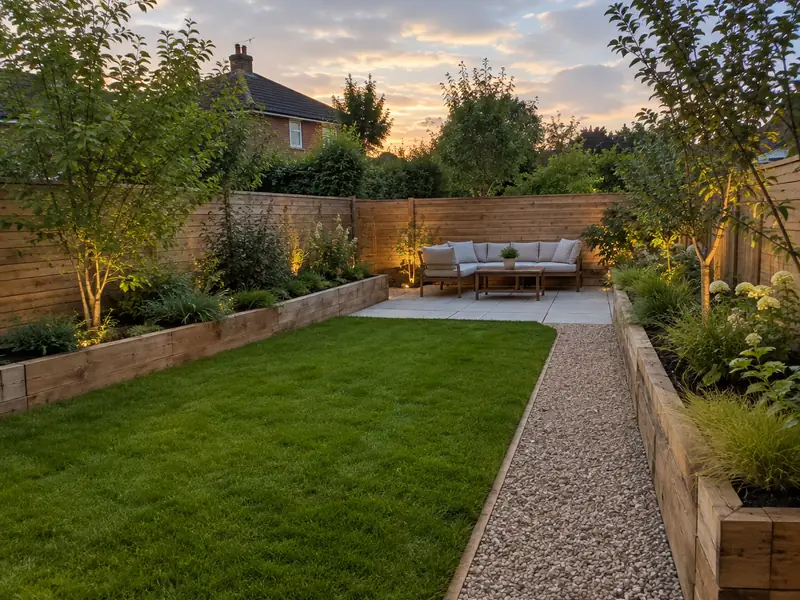
Garden landscaping is designing and building an outdoor space as a whole, combining hard landscaping such as patios, paths, walls and steps with soft landscaping such as lawns, planting and beds, plus drainage and lighting, so the garden works for how you live.
In Dunbartonshire, we price garden landscaping against our guide for Scotland, £5,800–£14,500 including VAT, then adjust it once we have surveyed your home. We work across Bearsden, Clydebank, Vale of Leven and Bishopbriggs and the rest of the county or region. Planning and building control requirements follow the rules for Scotland, and we look into your property's position before a written quote is sent.
- Guide price
- £5,800–£14,500 inc VAT
- Time on site
- 1–4 weeks on site, depending on scope
- Planning rules
- Scotland
- Price level
- About 4% below the national guide
- Towns listed
- 6
- Survey
- Free, with a written quote
How much does garden landscaping cost in Dunbartonshire?
What should you budget for garden landscaping in Dunbartonshire? Use the figures below as a starting point. Prices in Scotland sit about 4% below the national guide, so the range here is £5,800–£14,500 including VAT. Your fixed price comes in writing once we've surveyed the property, at no charge.
| Type of job | What it usually involves | Guide in Dunbartonshire |
|---|---|---|
| Garden refresh | Clearance, new turf, edging, bark or gravel and some planting. | £1,450–£4,800 |
| Typical garden makeover | A new patio, lawn, borders, paths and planting in a typical rear garden. | £5,800–£14,500 |
| Full redesign | Levels, retaining walls, large patios, lighting and drainage for larger or sloping gardens. | £14,500–£33,500 |
The main things that change the figure:
- Ratio of hard landscaping to lawn and planting
- Levels, slopes, retaining walls and steps
- Drainage, soil quality and ground conditions
- Materials chosen for paving, walls and features
What do you get?
- Survey of size, levels, soil, drainage and access
- Layout plan agreed with you before work starts
- Patios, paths, steps and edging laid on proper bases
- Raised beds, low walls or sleepers built to the agreed design
- Turf or artificial grass laid on a prepared base
- Planting, bark or gravel finishing and outdoor lighting where included
Housing across Dunbartonshire
Clydebank was heavily rebuilt after wartime bombing and has tenements and post-war estates, while Dumbarton has sandstone tenements and Victorian housing. Bearsden and Milngavie are known for Victorian villas and interwar bungalows, and Kirkintilloch mixes older terraces with post-war semis and newer developments.
Bungalows commonly suit loft conversions with dormers, and villas often take kitchen extensions and landscaping. Tenement flats may need window replacement, and harled homes often need re-rendering.
The west of Scotland gets frequent heavy rain and wind, so driving-rain exposure is a key consideration for render and pointing.
Planning and building rules in Dunbartonshire
The notes below cover Scotland, which is where Dunbartonshire sits. Rules change and every property is different, so we speak to the council before pricing your job.
Most garden landscaping in Scotland needs no planning permission; protected trees and trees in conservation areas need the council’s consent or notice.
A building warrant is rarely needed for landscaping.
Rules change and every property is different, so we check the planning history and constraints for your address before we quote.
The four stages
A visit to your home
It starts with a survey at the property, free of charge. We check condition, access and services, ask how you want the finished result to look, and answer any questions you have about garden landscaping.
Price and scope agreed
After the survey we send a quote for garden landscaping that fixes the price for the scope we've agreed. If you want to change materials or scope, we revise it in writing before anything is booked.
Dates and permissions
Once you accept, we agree start dates, order materials and deal with any planning, building control or neighbour notices the job needs. You'll know who is coming and when before work begins.
The work itself
Work goes ahead as scheduled and you deal with one contact throughout. When the last trade leaves, we clear and clean the site, talk you through what has been done and pass on any certificates and care instructions.
How we work
Questions about garden landscaping in Dunbartonshire
Can you combine garden landscaping with other work?
Yes. Because we manage several trades under one contract, we can plan garden landscaping alongside other work on your Dunbartonshire home, such as new windows with rendering, or a kitchen refit with an extension. Combining jobs can reduce repeat set-up such as scaffolding, skips and access, and every element is listed and priced in the same written quote.
Can you work around existing trees and plants?
We can design around trees and plants you want to keep, protecting their roots from digging and machinery and keeping levels unchanged near trunks. Some trees are protected by tree preservation orders or conservation area rules, which require permission before cutting or significant root work. We note any trees and plants you want to keep at the survey.
How much will garden landscaping cost in Dunbartonshire?
As a guide, expect to pay £5,800–£14,500 including VAT for garden landscaping in Dunbartonshire. That range is adjusted for Scotland, which runs about 4% below the national guide. Where your project lands depends on size, materials, access and the condition of what is already there. We confirm a fixed price in writing after a free survey of your home.
Do I need planning permission for landscaping?
Most garden landscaping does not need planning permission, but it depends on the work, your home's location, whether it is listed or in a conservation area, and which UK nation you are in. Raised decking or patios, high walls and front garden paving can need permission, as can work affecting protected trees. We check the rules for your garden before quoting.
What time of year suits garden landscaping?
Hard landscaping such as patios, paths and walls can be built most of the year, though frost and heavy rain cause delays. Planting is usually most successful in autumn and spring, when plants can establish roots before summer. Turf can be laid in most months if the ground is not frozen or waterlogged. We plan the order of work around the season.
Towns in Dunbartonshire
Below is our list of Dunbartonshire towns for garden landscaping. If yours isn't shown, we may still cover it, so it is worth asking us directly.