
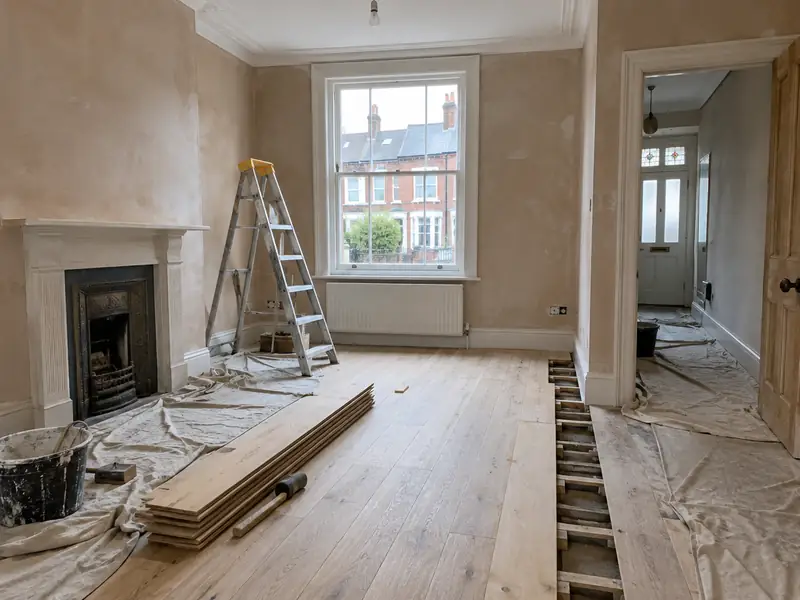
A whole-house renovation is a planned refurbishment of an entire home, typically combining rewiring, heating, plastering, new kitchen and bathroom, flooring and decoration, and sometimes layout changes, carried out in a logical order under one project.
We handle a whole-house renovation as a managed project across County Armagh: one contract, one contact, and trades working to an agreed specification. Coverage includes Craigavon, Portadown and Armagh and their surroundings. In Northern Ireland the consent rules have their own details, which we check for you. Typical prices in Northern Ireland fall within £38,500–£103,000, VAT included, and are fixed in writing after a survey.
- Guide price
- £38,500–£103,000 inc VAT
- Time on site
- 8–24 weeks on site, depending on scope
- Planning rules
- Northern Ireland
- Price level
- About 14% below the national guide
- Towns listed
- 3
- Survey
- Free, with a written quote
Whole-house renovations prices in County Armagh
The table below shows guide prices for a whole-house renovation in County Armagh. They are based on rates in Northern Ireland, which run about 14% below the national guide, giving an overall range of £38,500–£103,000. All figures include VAT and are firmed up after a free site survey.
| Type of job | What it usually involves | Guide in County Armagh |
|---|---|---|
| Light refurbishment | Decoration, flooring, minor repairs and perhaps one new kitchen or bathroom. | £13,000–£38,500 |
| Full refurbishment | Rewire, heating, plastering, new kitchen and bathroom, flooring and decoration throughout a 3-bed house. | £38,500–£103,000 |
| Renovation with structural changes | A full refurbishment plus wall removal, layout changes or extra bathrooms. | £86,000–£155,000 |
The main things that change the figure:
- Size of the house and number of rooms being renovated
- Whether rewiring, new heating and full replastering are needed
- Kitchen and bathroom specification
- Structural or layout changes and associated approvals
What’s included?
- Rewiring and new consumer unit by qualified electricians, with certificates
- Heating and plumbing upgrades by qualified engineers
- Plastering, skimming and repairs to ceilings and walls
- New kitchen and bathroom fitted to your chosen specification
- Flooring, internal doors, skirting and joinery
- Decoration and a final clean before handover
Housing across County Armagh
Armagh city has Georgian buildings, many in local limestone, around its historic centre. Portadown and Lurgan, linked by the Craigavon plan of the 1960s, have Victorian terraces, post-war estates and newer developments. The countryside is dotted with detached rural houses and bungalows, often finished in roughcast or render.
Rural bungalows and detached homes commonly take extensions, loft rooms, driveways and fencing. Terraces suit rear extensions and window replacement, and rendered houses often need re-rendering or painting.
A moderate inland climate with frequent rain and winter frost, and low ground near Lough Neagh can be wet.
Planning and building rules in County Armagh
Which rules apply depends on where you live. For County Armagh, the answer is Northern Ireland, and the points below reflect that; we verify them with the council before quoting.
Internal improvements do not need planning permission in Northern Ireland unless the building is listed.
The Building Regulations (Northern Ireland) apply to structural work, drainage and ventilation; electrical work should be tested and certified.
Rules change and every property is different, so we check the planning history and constraints for your address before we quote.
The four stages
We look at the job
We begin by looking at the job in person. During the free survey we discuss options, materials and budget for a whole-house renovation, and photograph or measure anything the quote needs to reflect.
Your fixed price
The quote arrives in writing, not over the phone. It covers the full scope, the finishes you've chosen, any exclusions and the payment schedule, with a fixed price tied to that specification.
Getting ready
Preparation matters as much as the build. We agree access, parking and working hours with you, order materials in good time, and confirm any permissions so the job isn't held up once it starts.
Finish and handover
Work goes ahead as scheduled and you deal with one contact throughout. When the last trade leaves, we clear and clean the site, talk you through what has been done and pass on any certificates and care instructions.
How we work
Frequently asked questions
Which parts of a renovation need building regulations approval?
Several parts of a renovation fall under building regulations, including rewiring and new circuits, new boilers and heating systems, structural changes such as removing walls, replacement windows and changes to drainage. Some of this is self-certified by suitably registered trades, and some needs building control approval. In Scotland a building warrant may be needed for certain works. We arrange the right approvals and certificates.
Can I stay at home during the work?
In most cases, yes. Most people can live at home throughout, and we plan the work to keep disruption down by protecting floors, agreeing working hours and keeping access routes clear. Bigger jobs affecting kitchens, bathrooms or heating may mean a short spell with reduced facilities, and we talk this through with you at the survey.
Who do I deal with during the job?
One point of contact manages your project from survey to handover. They schedule the trades working under our contract, keep you updated on progress, and are the person to call with any question. You don't need to coordinate builders, electricians or decorators separately, because that is part of what we do.
How much does it cost to renovate a whole house?
A full refurbishment of a typical 3-bed house costs £38,500–£103,000, covering rewiring, heating, plastering, a new kitchen and bathroom, flooring and decoration. A light refresh costs much less, while renovations with structural changes cost more. The biggest variables are the condition of the house and the kitchen and bathroom specification. We survey every room and give you a written price for the agreed scope.
Can we live in the house while it is renovated?
Living in a house during a full renovation is possible but hard, especially while rewiring, plastering and the kitchen and bathroom are being done. Many people move out for the noisiest weeks or stay elsewhere for the whole project. If you stay, we can phase the work room by room and keep one bathroom and a basic kitchen working for as long as possible. We discuss this at the survey.
Towns in County Armagh
Choose your town from the list to see how we price and plan a whole-house renovation in your part of County Armagh, including typical time on site.