
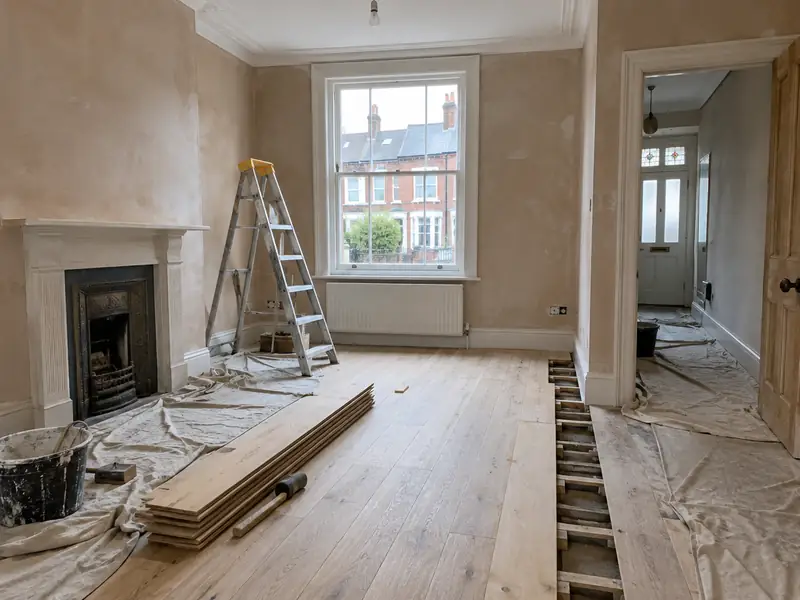
A whole-house renovation is a planned refurbishment of an entire home, typically combining rewiring, heating, plastering, new kitchen and bathroom, flooring and decoration, and sometimes layout changes, carried out in a logical order under one project.
Waltham Abbey sits within our coverage for a whole-house renovation, as do neighbouring Cheshunt, Chingford and Loughton. Before giving a price we want to see the property: the condition of what's there now, the access, and anything that might need extra work. The guide range for the East of England is £47,000–£126,000 including VAT, and your written quote will spell out exactly what that covers.
- Guide price
- £47,000–£126,000 inc VAT
- Time on site
- 8–24 weeks on site, depending on scope
- Postcodes
- EN9
- Planning rules
- England
- Local area
- Essex
- Survey
- Free, with a written quote
What should you budget for a whole-house renovation in Waltham Abbey?
The costs listed here are typical for a whole-house renovation around Waltham Abbey and include VAT. They reflect labour and material costs in the East of England, about 5% above the national guide, giving a range of £47,000–£126,000. Exact pricing depends on your home, so we only fix it once a free site survey is done.
| Type of job | What it usually involves | Guide in Waltham Abbey |
|---|---|---|
| Light refurbishment | Decoration, flooring, minor repairs and perhaps one new kitchen or bathroom. | £16,000–£47,000 |
| Full refurbishment | Rewire, heating, plastering, new kitchen and bathroom, flooring and decoration throughout a 3-bed house. | £47,000–£126,000 |
| Renovation with structural changes | A full refurbishment plus wall removal, layout changes or extra bathrooms. | £105,000–£189,000 |
Expect these to shape the final quote:
- Size of the house and number of rooms being renovated
- Whether rewiring, new heating and full replastering are needed
- Structural or layout changes and associated approvals
- Hidden problems such as damp, rot or outdated drainage
What’s included?
- Room-by-room survey and a planned order of works
- Strip-out of old kitchens, bathrooms, flooring and finishes
- Rewiring and new consumer unit by qualified electricians, with certificates
- Plastering, skimming and repairs to ceilings and walls
- New kitchen and bathroom fitted to your chosen specification
- Decoration and a final clean before handover
Local housing and a whole-house renovation
Essex ranges from timber-framed and weatherboarded cottages in the north, some with decorative pargeting, to Victorian terraces in Colchester, Chelmsford and Southend. Basildon and Harlow were built as post-war new towns, much of the south-east has interwar suburbs and bungalows, and large new estates continue to appear around Chelmsford and Braintree.
Terraces and semis commonly suit loft conversions and rear extensions, and many bungalows can take a loft room. New-town homes often need cladding, window and roofline renewal, while timber-framed cottages call for lime plaster and repairs that respect the original frame.
Building traditions across Essex also raise conservation and planning questions, so we check those for a whole-house renovation in Waltham Abbey at the survey stage.
Do you need permission in Waltham Abbey?
Because Waltham Abbey falls under England's rules, the guidance below is the version relevant to you. Before sending a price, we check your property's position with the council.
Internal work such as a new kitchen, bathroom, flooring, plastering or decorating does not need planning permission in England, unless the house is listed, when listed building consent may be needed even for internal changes.
Some internal work is covered by Building Regulations: new electrical circuits and work in bathrooms (Part P), new drainage, structural changes, extractor ventilation and any new window. Notifiable work is certified by a registered installer or by building control.
Rules change and every property is different, so we check the planning history and constraints for your address before we quote.
From survey to handover
A visit to your home
It starts with a survey at the property, free of charge. We check condition, access and services, ask how you want the finished result to look, and answer any questions you have about a whole-house renovation.
Written quote
You get the price in writing, itemised so you can see where the money goes. As long as the specification stays the same, that is the price you pay for a whole-house renovation.
Booking the work
Next comes planning the work itself. We set a start date that suits you, line up the right trades, and make sure any approvals for a whole-house renovation are in place before the first day on site.
The work itself
The job proceeds in the order set out in the programme, with dust and debris kept under control. Finally we tidy away, inspect the work together and pass the finished project over to you with its paperwork.
Working with SK Home Improvements
Questions about a whole-house renovation in Waltham Abbey
How long does a full house renovation take?
A full renovation of a typical 3-bed house usually takes around 8–16 weeks on site, and longer if there are structural changes or extensive repairs. A light refresh may take only a few weeks. Material lead times for kitchens, windows and bathroom fittings also affect the programme. We give you a week-by-week plan with your quote and update it as the work progresses.
How long will a whole-house renovation take?
On a typical home, allow 8–24 weeks on site, depending on scope. Larger projects, older buildings and extra work found once things are opened up can extend that, while simpler jobs may be shorter. Your quote includes an estimate of time on site, and your point of contact keeps you updated on the programme as the work progresses.
In what order should renovation work be done?
A renovation should follow a set order so finished work is never damaged by later trades. It usually runs from roof and structural repairs, through strip-out, first-fix electrics and plumbing, then plastering, second-fix electrics and plumbing, kitchen and bathroom fitting, flooring and finally decoration. Windows are usually fitted before plastering. We plan the programme around this sequence so each trade follows on smoothly.
What contingency should I allow?
A contingency is money set aside for problems found once work starts, such as rotten joists, hidden damp or wiring that is worse than expected. For older houses, setting aside at least 10–15% of the build cost is sensible. We look for warning signs during the survey and price known issues upfront. If something unexpected is found, we explain it and price it before carrying on.
Who do I deal with during the job?
One point of contact manages your project from survey to handover. They schedule the trades working under our contract, keep you updated on progress, and are the person to call with any question. You don't need to coordinate builders, electricians or decorators separately, because that is part of what we do.
Also covering areas around Waltham Abbey
Our coverage in Waltham Abbey includes EN9. We also travel to Cheshunt, Chingford and Loughton, so neighbouring addresses are looked after on exactly the same terms as those in town.