
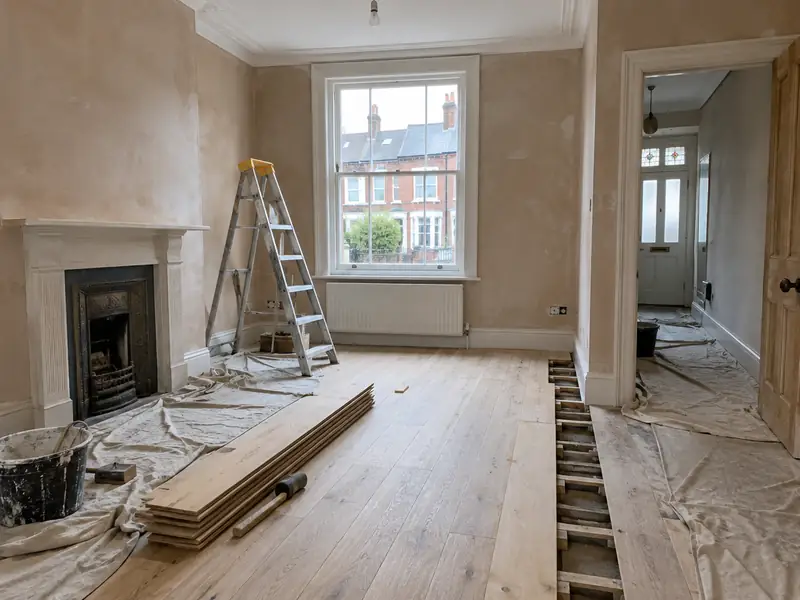
A whole-house renovation is a planned refurbishment of an entire home, typically combining rewiring, heating, plastering, new kitchen and bathroom, flooring and decoration, and sometimes layout changes, carried out in a logical order under one project.
Burntwood sits within our coverage for a whole-house renovation, as do neighbouring Great Wyrley, Lichfield and Cannock. Before giving a price we want to see the property: the condition of what's there now, the access, and anything that might need extra work. The guide range for the West Midlands is £44,000–£118,000 including VAT, and your written quote will spell out exactly what that covers.
- Guide price
- £44,000–£118,000 inc VAT
- Time on site
- 8–24 weeks on site, depending on scope
- Postcodes
- WS7
- Planning rules
- England
- Local area
- Staffordshire
- Survey
- Free, with a written quote
Whole-house renovations prices in Burntwood
Below is a breakdown of typical costs for a whole-house renovation in Burntwood. Because rates in the West Midlands are about 2% below the national guide, the overall guide comes to £44,000–£118,000, including VAT. Size, materials and access move the figure, and a free-of-charge survey settles it.
| Type of job | What it usually involves | Guide in Burntwood |
|---|---|---|
| Light refurbishment | Decoration, flooring, minor repairs and perhaps one new kitchen or bathroom. | £14,500–£44,000 |
| Full refurbishment | Rewire, heating, plastering, new kitchen and bathroom, flooring and decoration throughout a 3-bed house. | £44,000–£118,000 |
| Renovation with structural changes | A full refurbishment plus wall removal, layout changes or extra bathrooms. | £98,000–£176,000 |
Your price depends mostly on:
- Size of the house and number of rooms being renovated
- Whether rewiring, new heating and full replastering are needed
- Structural or layout changes and associated approvals
- Hidden problems such as damp, rot or outdated drainage
What do you get?
- Room-by-room survey and a planned order of works
- Strip-out of old kitchens, bathrooms, flooring and finishes
- Rewiring and new consumer unit by qualified electricians, with certificates
- Plastering, skimming and repairs to ceilings and walls
- New kitchen and bathroom fitted to your chosen specification
- Flooring, internal doors, skirting and joinery
Local housing and a whole-house renovation
Stoke-on-Trent has long rows of Victorian terraces from its pottery industry, often in red brick with Staffordshire blue brick details. Stafford, Lichfield and Tamworth mix Georgian and Victorian centres with interwar and post-war estates, Burton has brewery-era terraces, and the Staffordshire Moorlands around Leek use local gritstone.
Potteries terraces suit attic rooms, rear extensions and repointing; many need roof and window renewal. Semis and estate homes commonly take side extensions and driveways, and Moorlands stone homes call for lime work.
That variety is why a guide price for a whole-house renovation in Burntwood is only a starting point; the survey shows what your particular property needs.
Permissions for a whole-house renovation in Burntwood
Homes in Burntwood come under the regulations for England, summarised below. We don't rely on general rules alone: we confirm the position for your address with the council before a quote goes out.
Internal work such as a new kitchen, bathroom, flooring, plastering or decorating does not need planning permission in England, unless the house is listed, when listed building consent may be needed even for internal changes.
Some internal work is covered by Building Regulations: new electrical circuits and work in bathrooms (Part P), new drainage, structural changes, extractor ventilation and any new window. Notifiable work is certified by a registered installer or by building control.
Rules change and every property is different, so we check the planning history and constraints for your address before we quote.
What happens after you get in touch?
Survey and measure
We arrange a free site survey on a date convenient to you. We measure up, look at the existing structure and access, and discuss your plans for a whole-house renovation so the price reflects your home.
Your fixed price
We put everything into a written, fixed-price quote: the specification, what's excluded, staged payments and the expected time on site. Take whatever time you need to decide; there's no pressure to commit.
Getting ready
We handle the paperwork side: checking whether planning permission or building control approval is needed, submitting applications where they are, and scheduling the trades and materials around your dates.
The work itself
Work goes ahead as scheduled and you deal with one contact throughout. When the last trade leaves, we clear and clean the site, talk you through what has been done and pass on any certificates and care instructions.
How we work
Whole-house renovations in Burntwood: questions
Who do I deal with during the job?
One point of contact manages your project from survey to handover. They schedule the trades working under our contract, keep you updated on progress, and are the person to call with any question. You don't need to coordinate builders, electricians or decorators separately, because that is part of what we do.
What happens if you find damp or rot?
If we find damp or rot during a renovation, we stop that area, show you the problem and explain the likely cause, such as a leaking gutter, bridged damp-proof course or poor ventilation. We then give you a written price to fix the cause and repair the damage before carrying on. Treating the cause matters more than treating the symptom, so we focus on that first.
In what order should renovation work be done?
A renovation should follow a set order so finished work is never damaged by later trades. It usually runs from roof and structural repairs, through strip-out, first-fix electrics and plumbing, then plastering, second-fix electrics and plumbing, kitchen and bathroom fitting, flooring and finally decoration. Windows are usually fitted before plastering. We plan the programme around this sequence so each trade follows on smoothly.
What contingency should I allow?
A contingency is money set aside for problems found once work starts, such as rotten joists, hidden damp or wiring that is worse than expected. For older houses, setting aside at least 10–15% of the build cost is sensible. We look for warning signs during the survey and price known issues upfront. If something unexpected is found, we explain it and price it before carrying on.
Can I stay at home during the work?
In most cases, yes. Most people can live at home throughout, and we plan the work to keep disruption down by protecting floors, agreeing working hours and keeping access routes clear. Bigger jobs affecting kitchens, bathrooms or heating may mean a short spell with reduced facilities, and we talk this through with you at the survey.
Also covering areas around Burntwood
Whether you're in the centre of Burntwood or on its outskirts, WS7 addresses are covered. We extend the same service, and the same fixed-price approach, to Great Wyrley, Lichfield and Cannock.