
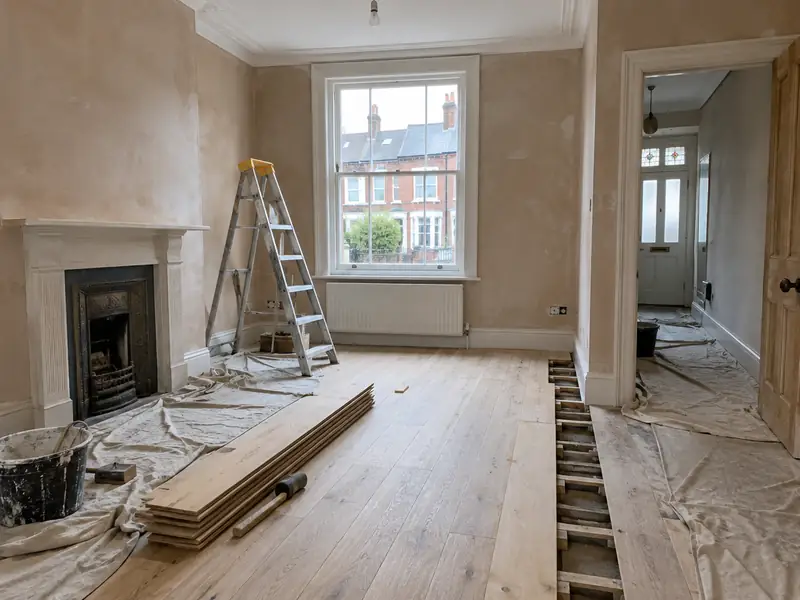
A whole-house renovation is a planned refurbishment of an entire home, typically combining rewiring, heating, plastering, new kitchen and bathroom, flooring and decoration, and sometimes layout changes, carried out in a logical order under one project.
Whatever type of house you own in Littlehampton, we start by looking at how a whole-house renovation would fit it rather than offering a standard package. We cover BN17 and neighbouring places such as Bognor Regis, Worthing and Lancing. One named person looks after you from survey to handover, and nothing is booked until you hold our figure in writing, fixed for the work described.
- Guide price
- £50,000–£134,000 inc VAT
- Time on site
- 8–24 weeks on site, depending on scope
- Postcodes
- BN17
- Planning rules
- England
- Local area
- West Sussex
- Survey
- Free, with a written quote
What should you budget for a whole-house renovation in Littlehampton?
In Littlehampton, guide figures for a whole-house renovation sit at £50,000–£134,000, VAT included. We set them using rates for the South East, currently about 12% above the national guide. The table shows what pushes a project towards either end of the range; your own price is set after a free survey.
| Type of job | What it usually involves | Guide in Littlehampton |
|---|---|---|
| Light refurbishment | Decoration, flooring, minor repairs and perhaps one new kitchen or bathroom. | £17,000–£50,000 |
| Full refurbishment | Rewire, heating, plastering, new kitchen and bathroom, flooring and decoration throughout a 3-bed house. | £50,000–£134,000 |
| Renovation with structural changes | A full refurbishment plus wall removal, layout changes or extra bathrooms. | £112,000–£202,000 |
The main things that change the figure:
- Size of the house and number of rooms being renovated
- Whether rewiring, new heating and full replastering are needed
- Kitchen and bathroom specification
- Structural or layout changes and associated approvals
Scope of the work
- Strip-out of old kitchens, bathrooms, flooring and finishes
- Rewiring and new consumer unit by qualified electricians, with certificates
- Heating and plumbing upgrades by qualified engineers
- Plastering, skimming and repairs to ceilings and walls
- Flooring, internal doors, skirting and joinery
- Decoration and a final clean before handover
Building in Littlehampton
Chichester has Georgian brick streets, Downland villages use flint and brick, and Horsham stone slabs cover some older roofs. Worthing and Bognor Regis have interwar and post-war bungalows and semis, Crawley was planned as a post-war new town, and Wealden villages to the north feature tile-hanging and timber framing.
Bungalows commonly suit loft conversions and extensions; new-town homes often take window, roofline and cladding renewal. Flint and stone properties need lime repointing, and coastal homes may need external decorating more often.
That mix of housing shapes how we approach a whole-house renovation in Littlehampton: the age and construction of your home affect the materials, the method and, in the end, the price.
Do you need permission in Littlehampton?
Because Littlehampton falls under England's rules, the guidance below is the version relevant to you. Before sending a price, we check your property's position with the council.
Internal work such as a new kitchen, bathroom, flooring, plastering or decorating does not need planning permission in England, unless the house is listed, when listed building consent may be needed even for internal changes.
Some internal work is covered by Building Regulations: new electrical circuits and work in bathrooms (Part P), new drainage, structural changes, extractor ventilation and any new window. Notifiable work is certified by a registered installer or by building control.
Rules change and every property is different, so we check the planning history and constraints for your address before we quote.
From survey to handover
A visit to your home
First, someone visits your home in Littlehampton to see the space, take measurements and note anything that could affect the work, such as access or the condition of what is there. There is no charge for this visit.
Quote in writing
The quote arrives in writing, not over the phone. It covers the full scope, the finishes you've chosen, any exclusions and the payment schedule, with a fixed price tied to that specification.
Getting ready
Once you accept, we agree start dates, order materials and deal with any planning, building control or neighbour notices the job needs. You'll know who is coming and when before work begins.
Finish and handover
The job proceeds in the order set out in the programme, with dust and debris kept under control. Finally we tidy away, inspect the work together and pass the finished project over to you with its paperwork.
How we work
Whole-house renovations in Littlehampton: questions
Can I stay at home during the work?
In most cases, yes. Most people can live at home throughout, and we plan the work to keep disruption down by protecting floors, agreeing working hours and keeping access routes clear. Bigger jobs affecting kitchens, bathrooms or heating may mean a short spell with reduced facilities, and we talk this through with you at the survey.
Do I need planning permission to renovate?
Most internal renovation work does not need planning permission, but it depends on what changes, your home's location, whether it is listed or in a conservation area, and which UK nation you are in. Listed buildings usually need consent for internal and external changes. Altering windows, adding dormers or changing the outside appearance in a conservation area may also need permission. We check before quoting.
Who do I deal with during the job?
One point of contact manages your project from survey to handover. They schedule the trades working under our contract, keep you updated on progress, and are the person to call with any question. You don't need to coordinate builders, electricians or decorators separately, because that is part of what we do.
How much does it cost to renovate a whole house?
A full refurbishment of a typical 3-bed house costs £50,000–£134,000, covering rewiring, heating, plastering, a new kitchen and bathroom, flooring and decoration. A light refresh costs much less, while renovations with structural changes cost more. The biggest variables are the condition of the house and the kitchen and bathroom specification. We survey every room and give you a written price for the agreed scope.
In what order should renovation work be done?
A renovation should follow a set order so finished work is never damaged by later trades. It usually runs from roof and structural repairs, through strip-out, first-fix electrics and plumbing, then plastering, second-fix electrics and plumbing, kitchen and bathroom fitting, flooring and finally decoration. Windows are usually fitted before plastering. We plan the programme around this sequence so each trade follows on smoothly.
Nearby towns
Coverage for Littlehampton spans BN17. Close by, Bognor Regis, Worthing and Lancing are covered too, and the rest of our UK-wide area follows the same survey-then-quote process from start to finish.