
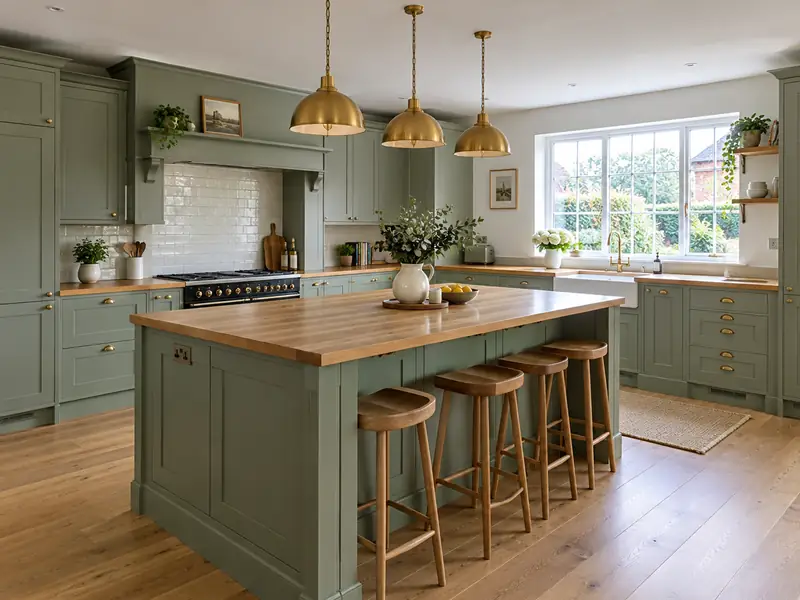
A new kitchen installation replaces your old units, worktops and appliances with a new layout fitted to your room, including the plumbing, electrics, tiling and finishing needed to leave a complete, working kitchen.
Isle of Wight is part of our UK-wide coverage for a new kitchen. Places we cover include Newport, Isle of Wight, Ryde, Cowes and Sandown, and we travel to smaller communities across the area as well. Since your property is in England, the relevant planning and building rules are the ones set there. In the South East, budget around £9,000–£24,500 with VAT; the figure is confirmed after a survey that costs you nothing.
- Guide price
- £9,000–£24,500 inc VAT
- Time on site
- 1–3 weeks on site
- Planning rules
- England
- Price level
- About 12% above the national guide
- Towns listed
- 4
- Survey
- Free, with a written quote
How much does a new kitchen cost in Isle of Wight?
In Isle of Wight, guide figures for a new kitchen sit at £9,000–£24,500, VAT included. We set them using rates for the South East, currently about 12% above the national guide. The table shows what pushes a project towards either end of the range; your own price is set after a free survey.
| Type of job | What it usually involves | Guide in Isle of Wight |
|---|---|---|
| Value kitchen | Standard units and laminate worktops in a small or medium room, keeping the existing layout. | £5,600–£10,000 |
| Mid-range kitchen | Better units, some layout changes, built-in appliances and a choice of worktops. | £10,000–£22,500 |
| Premium kitchen | High-end units, stone worktops, an island and premium appliances in a larger room. | £22,500–£45,000 |
Your price depends mostly on:
- Length of units and the size of the room
- Moving the sink, hob or other services to a new position
- Appliances, including built-in and premium models
- Tiling, flooring and any wall removal or replastering
What do you get?
- Measured survey and layout planning for your room
- Removal and disposal of the old kitchen
- Plumbing for sink, dishwasher and washing machine
- Electrics and new circuits by qualified electricians, with certificates
- Units, worktops and appliances fitted, levelled and adjusted
- Making good, extractor ducting and a final clean
Housing across Isle of Wight
The island has Victorian seaside villas and terraces in Ryde, Ventnor, Shanklin and Cowes, older cottages in island sandstone and limestone, and thatched roofs in some villages. Post-war bungalows, chalets and newer estates are common around Newport and the larger towns.
Victorian villas often need sash-style windows, render repairs and roof work. Bungalows suit loft conversions and extensions, while coastal properties commonly need roofline, fencing and external decorating renewed more often.
Salt and wind exposure is high on most coasts, and parts of the south, such as the Undercliff near Ventnor, are known for ground movement.
Planning and building rules in Isle of Wight
Planning law differs across the UK. For a home in Isle of Wight, it is the England rules below that count, and we check them with the council ahead of any quote.
Internal work such as a new kitchen, bathroom, flooring, plastering or decorating does not need planning permission in England, unless the house is listed, when listed building consent may be needed even for internal changes.
Some internal work is covered by Building Regulations: new electrical circuits and work in bathrooms (Part P), new drainage, structural changes, extractor ventilation and any new window. Notifiable work is certified by a registered installer or by building control.
Rules change and every property is different, so we check the planning history and constraints for your address before we quote.
The four stages
We look at the job
It starts with a survey at the property, free of charge. We check condition, access and services, ask how you want the finished result to look, and answer any questions you have about a new kitchen.
Your fixed price
Next you receive a written quote with a fixed price for the agreed specification. It lists what is included, what is not, and how payments are staged, so you can compare it properly.
Getting ready
We handle the paperwork side: checking whether planning permission or building control approval is needed, submitting applications where they are, and scheduling the trades and materials around your dates.
Build and hand over
On site, the agreed plan is followed and any change is put in writing first. At completion we do a final clean, go through the snagging list with you and leave you with the relevant documents.
What you can expect from us
Questions about a new kitchen in Isle of Wight
Do you cover Newport, Isle of Wight, Ryde and Cowes?
Yes. As well as Isle of Wight, we cover Newport, Isle of Wight, Ryde and Cowes and the rest of Isle of Wight. Our coverage is UK-wide, so the process is the same wherever you are: a free site survey, a quote in writing that fixes the price for the agreed scope, and one point of contact while the work is planned and carried out.
Do I need a new extractor fan?
A kitchen needs effective extraction to remove steam, cooking smells and grease, and building regulations set minimum rates for new or altered kitchens. A ducted extractor that vents outside is the most effective, while recirculating hoods filter the air and return it to the room. We check whether a duct can reach an outside wall and recommend a hood that suits your hob and room size.
How much does a new kitchen cost?
A mid-range kitchen of around 5–7 linear metres of units costs £9,000–£24,500 supplied and fitted. Value kitchens in smaller rooms cost less, and premium kitchens with stone worktops, an island and high-end appliances cost more. Moving the sink or hob, new electrics and replastering also affect the total. As a guide, allow roughly £1,000–£2,800 per linear metre of units plus fixed fitting costs. We confirm a fixed price after the survey.
Can I stay at home during the work?
In most cases, yes. Most people can live at home throughout, and we plan the work to keep disruption down by protecting floors, agreeing working hours and keeping access routes clear. Bigger jobs affecting kitchens, bathrooms or heating may mean a short spell with reduced facilities, and we talk this through with you at the survey.
How long will I be without a kitchen?
You are usually without a working kitchen for one to two weeks, from strip-out until the sink and hob are reconnected. If stone worktops are being made to template, we can fit a temporary worktop so you can use the sink while you wait. Many people set up a microwave, kettle and fridge in another room. We plan the order of work to keep this period as short as possible.
Towns in Isle of Wight
Looking for a new kitchen somewhere in Isle of Wight? Start with the towns below; each links to a page with pricing for your region and coverage details.