
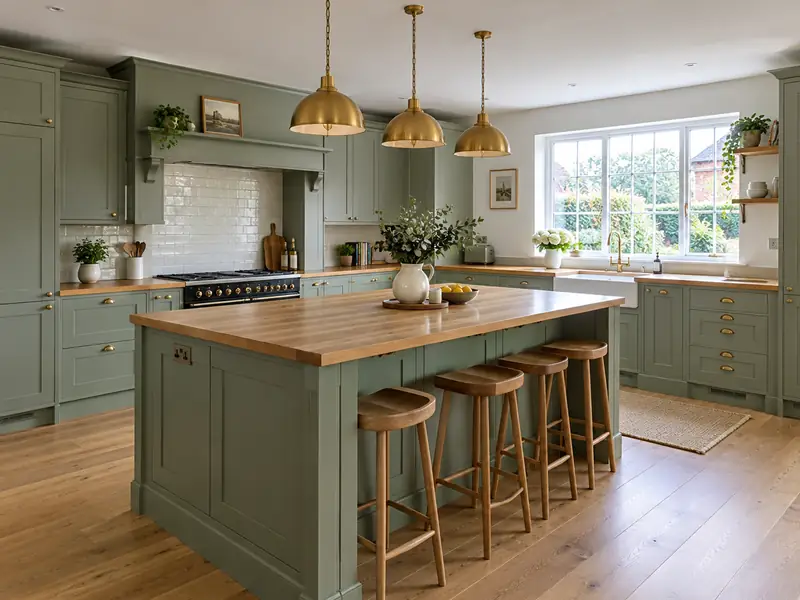
A new kitchen installation replaces your old units, worktops and appliances with a new layout fitted to your room, including the plumbing, electrics, tiling and finishing needed to leave a complete, working kitchen.
Anyone planning a new kitchen in Newark-on-Trent wants three things: a clear price, a realistic timetable and a tidy job. We publish a guide of £7,700–£21,000 including VAT for the East Midlands up front, explain that work normally takes 1–3 weeks on site, and confirm both in writing after a free survey of your property.
- Guide price
- £7,700–£21,000 inc VAT
- Time on site
- 1–3 weeks on site
- Postcodes
- NG24
- Planning rules
- England
- Local area
- Nottinghamshire
- Survey
- Free, with a written quote
How much does a new kitchen cost in Newark-on-Trent?
No two jobs cost exactly the same, but the ranges below give a fair picture of a new kitchen in Newark-on-Trent. Pricing for the East Midlands runs about 4% below the national guide, and the overall guide is £7,700–£21,000 with VAT included. We'll confirm your figure after surveying the property for free.
| Type of job | What it usually involves | Guide in Newark-on-Trent |
|---|---|---|
| Value kitchen | Standard units and laminate worktops in a small or medium room, keeping the existing layout. | £4,800–£8,600 |
| Mid-range kitchen | Better units, some layout changes, built-in appliances and a choice of worktops. | £8,600–£19,000 |
| Premium kitchen | High-end units, stone worktops, an island and premium appliances in a larger room. | £19,000–£38,500 |
Your price depends mostly on:
- Length of units and the size of the room
- Moving the sink, hob or other services to a new position
- Appliances, including built-in and premium models
- Tiling, flooring and any wall removal or replastering
What’s included?
- Measured survey and layout planning for your room
- Removal and disposal of the old kitchen
- Plumbing for sink, dishwasher and washing machine
- Units, worktops and appliances fitted, levelled and adjusted
- Splashbacks or wall tiling to your chosen design
- Making good, extractor ducting and a final clean
Homes in Nottinghamshire
Nottingham has large areas of Victorian red-brick terraces, with Edwardian villas in Mapperley and Sherwood and big interwar council estates. Mansfield, Ashfield and Worksop have brick terraces and post-war housing built for mining communities, while Newark and Southwell keep Georgian centres. New estates continue to appear around Nottingham and the larger towns.
Terraces commonly suit loft rooms, rear extensions and repointing. Interwar semis take side extensions and garage conversions, and older buildings in Newark or Southwell may need conservation-area window choices.
So when we survey a Newark-on-Trent property for a new kitchen, the first step is working out how it was built and what has been changed since.
Planning and building rules in Newark-on-Trent
As Newark-on-Trent is in England, read the following with that system of planning and building control in mind. We check what applies to your house with the council before you receive a quote.
Internal work such as a new kitchen, bathroom, flooring, plastering or decorating does not need planning permission in England, unless the house is listed, when listed building consent may be needed even for internal changes.
Some internal work is covered by Building Regulations: new electrical circuits and work in bathrooms (Part P), new drainage, structural changes, extractor ventilation and any new window. Notifiable work is certified by a registered installer or by building control.
Rules change and every property is different, so we check the planning history and constraints for your address before we quote.
The four stages
A visit to your home
We arrange a free site survey on a date convenient to you. We measure up, look at the existing structure and access, and discuss your plans for a new kitchen so the price reflects your home.
Your fixed price
We turn the survey notes into a written quote. The price is fixed for the specification we agree, and the document sets out materials, scope and payment stages in plain language.
Booking the work
We handle the paperwork side: checking whether planning permission or building control approval is needed, submitting applications where they are, and scheduling the trades and materials around your dates.
On site to finish
The job proceeds in the order set out in the programme, with dust and debris kept under control. Finally we tidy away, inspect the work together and pass the finished project over to you with its paperwork.
How we work
Common questions
How long does it take to fit a kitchen?
Fitting a kitchen typically takes one to three weeks on site, depending on its size and how much the layout changes. Strip-out, first-fix plumbing and electrics, and any plastering come first, then units, worktops, appliances and tiling. Stone worktops are templated once the base units are in and usually fitted a week or two later. We give you a day-by-day plan before we start.
How long will I be without a kitchen?
You are usually without a working kitchen for one to two weeks, from strip-out until the sink and hob are reconnected. If stone worktops are being made to template, we can fit a temporary worktop so you can use the sink while you wait. Many people set up a microwave, kettle and fridge in another room. We plan the order of work to keep this period as short as possible.
How long will a new kitchen take?
On a typical home, allow 1–3 weeks on site. Larger projects, older buildings and extra work found once things are opened up can extend that, while simpler jobs may be shorter. Your quote includes an estimate of time on site, and your point of contact keeps you updated on the programme as the work progresses.
Can I stay at home during the work?
In most cases, yes. Most people can live at home throughout, and we plan the work to keep disruption down by protecting floors, agreeing working hours and keeping access routes clear. Bigger jobs affecting kitchens, bathrooms or heating may mean a short spell with reduced facilities, and we talk this through with you at the survey.
Do I need a new extractor fan?
A kitchen needs effective extraction to remove steam, cooking smells and grease, and building regulations set minimum rates for new or altered kitchens. A ducted extractor that vents outside is the most effective, while recirculating hoods filter the air and return it to the room. We check whether a duct can reach an outside wall and recommend a hood that suits your hob and room size.
Nearby towns
Homes across NG24 in Newark-on-Trent are within our coverage, as are those in Grantham, Arnold and Nottingham. If you are just outside these areas, ask anyway, because we work right across the UK.