
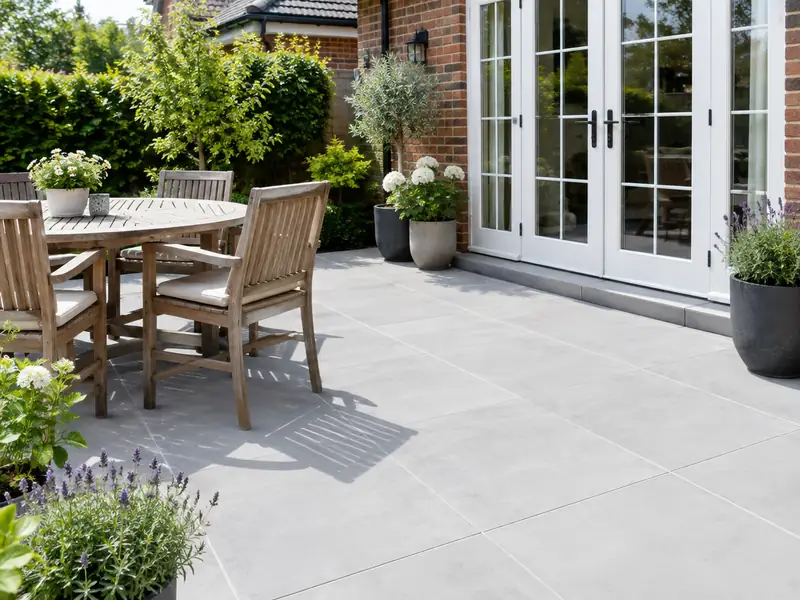
A patio is a paved outdoor area next to the house or in the garden, laid in porcelain, natural stone or concrete slabs on a compacted sub-base and mortar bed, with falls that direct rainwater away from the house.
Homes across Bristol vary a great deal, so we price a new patio only after seeing the property. Our coverage takes in Bishopsworth and the surrounding districts. As a guide, expect £2,600–£5,600 including VAT in the South West; the final figure depends on size, materials and access. Any permissions are checked against the rules for England before we quote.
- Guide price
- £2,600–£5,600 inc VAT
- Time on site
- 3–7 days on site
- Planning rules
- England
- Price level
- About 2% above the national guide
- Towns listed
- 1
- Survey
- Free, with a written quote
How much does a new patio cost in Bristol?
The table below shows guide prices for a new patio in Bristol. They are based on rates in the South West, which run about 2% above the national guide, giving an overall range of £2,600–£5,600. All figures include VAT and are firmed up after a free site survey.
| Type of job | What it usually involves | Guide in Bristol |
|---|---|---|
| Small patio or path | Around 10m² of concrete slabs or a garden path. | £1,000–£2,600 |
| Typical 20m² patio | Sandstone or porcelain on a full sub-base with jointing and edging. | £2,600–£5,600 |
| Large or multi-level patio | Bigger areas, steps, retaining walls or premium stone. | £5,600–£12,000 |
What moves the price up or down:
- Patio area and the amount of excavation
- Slab material, size and laying pattern
- Drainage needed to keep water away from the house
- Access for materials and removing spoil
What do you get?
- Survey of levels, damp-proof course, drainage and access
- Excavation and removal of turf, soil or old paving
- Slabs laid on a full mortar bed with falls away from the house
- Primer on porcelain slabs for a strong bond
- Jointing with mortar or a brush-in compound
- Site cleared, waste removed and paving cleaned
Homes in Bristol
Bristol has a strong mix: Georgian terraces and villas in Clifton and Kingsdown, rows of Victorian and Edwardian terraces across Bishopston, Totterdown and Easton, and interwar council estates on the edges. Grey-brown Pennant sandstone is a common walling stone, often with Bath stone dressings, alongside brick, render and newer apartments near the harbour.
Terraced streets often suit loft rooms and side-return extensions, plus stone repointing in lime mortar. Hillside houses can need retaining work for patios and driveways, while interwar homes commonly take rear extensions and new windows.
Exposed, west-facing slopes can catch heavy driving rain, so render, pointing and window seals on those elevations take more weather than sheltered ones.
Planning and building rules in Bristol
As Bristol is in England, read the following with that system of planning and building control in mind. We check what applies to your house with the council before you receive a quote.
A ground-level patio in a back garden does not usually need planning permission in England. Raised decks or platforms more than 30 cm high do.
Building Regulations do not normally apply to patios, but levels must stay below the damp-proof course and drain away from the house.
Rules change and every property is different, so we check the planning history and constraints for your address before we quote.
How does the job run?
We look at the job
We begin by looking at the job in person. During the free survey we discuss options, materials and budget for a new patio, and photograph or measure anything the quote needs to reflect.
Quote in writing
We put everything into a written, fixed-price quote: the specification, what's excluded, staged payments and the expected time on site. Take whatever time you need to decide; there's no pressure to commit.
Plan and prepare
Next comes planning the work itself. We set a start date that suits you, line up the right trades, and make sure any approvals for a new patio are in place before the first day on site.
Finish and handover
The job proceeds in the order set out in the programme, with dust and debris kept under control. Finally we tidy away, inspect the work together and pass the finished project over to you with its paperwork.
How we work
Questions about a new patio in Bristol
Is the price fixed?
Yes, for the specification we agree. Your written quote sets out exactly what is included at a fixed price. It only changes if you ask for something different, or if a problem the survey could not reasonably reveal later needs extra work. In either case we explain the change and confirm it in writing before going ahead.
Can I stay at home during the work?
In most cases, yes. Most people can live at home throughout, and we plan the work to keep disruption down by protecting floors, agreeing working hours and keeping access routes clear. Bigger jobs affecting kitchens, bathrooms or heating may mean a short spell with reduced facilities, and we talk this through with you at the survey.
Does a patio need planning permission?
Most patios do not need planning permission, but it depends on the size, height and location, your home's position, whether it is listed or in a conservation area, and which UK nation you are in. Raised patios or decking more than a small height above the ground may need permission because of overlooking. We check the position for your garden before quoting.
How much does a new patio cost?
A typical 20m² patio in sandstone or porcelain costs £2,600–£5,600, including excavation, sub-base, laying and jointing. As a guide, allow roughly £100–£220 per square metre plus fixed costs for set-up and waste. Concrete slabs cost less, while slate, granite and large-format porcelain cost more. Steps, walls and drainage add to the total. We confirm a fixed price after the survey.
Is porcelain or sandstone better for a patio?
Porcelain is dense, stain-resistant and stays looking clean with little care, making it a good choice if you want a modern, low-maintenance patio. Indian sandstone has natural colour variation and a softer, traditional look, and costs a little less, but it can stain and weather over time and benefits from sealing. Both make durable patios when properly laid. We bring samples to the survey.
Towns in Bristol
Below is our list of Bristol towns for a new patio. If yours isn't shown, we may still cover it, so it is worth asking us directly.