
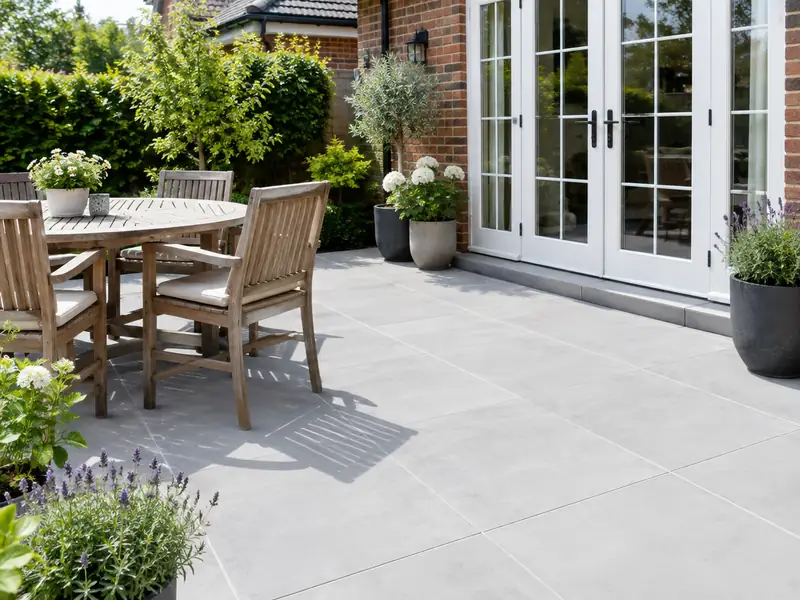
A patio is a paved outdoor area next to the house or in the garden, laid in porcelain, natural stone or concrete slabs on a compacted sub-base and mortar bed, with falls that direct rainwater away from the house.
Cost is usually the first question about a new patio, so here is the guide for Scotland: £2,400–£5,300 including VAT. We cover the whole of Fife, with Dunfermline, Kirkcaldy, Glenrothes and St Andrews among the main centres. Because each UK nation sets its own rules, we check the requirements in Scotland for your property, then put a firm price on paper following a free survey.
- Guide price
- £2,400–£5,300 inc VAT
- Time on site
- 3–7 days on site
- Planning rules
- Scotland
- Price level
- About 4% below the national guide
- Towns listed
- 4
- Survey
- Free, with a written quote
How much does a new patio cost in Fife?
The costs listed here are typical for a new patio around Fife and include VAT. They reflect labour and material costs in Scotland, about 4% below the national guide, giving a range of £2,400–£5,300. Exact pricing depends on your home, so we only fix it once a free site survey is done.
| Type of job | What it usually involves | Guide in Fife |
|---|---|---|
| Small patio or path | Around 10m² of concrete slabs or a garden path. | £950–£2,400 |
| Typical 20m² patio | Sandstone or porcelain on a full sub-base with jointing and edging. | £2,400–£5,300 |
| Large or multi-level patio | Bigger areas, steps, retaining walls or premium stone. | £5,300–£11,500 |
The main things that change the figure:
- Patio area and the amount of excavation
- Slab material, size and laying pattern
- Ground levels, slopes, steps and retaining walls
- Access for materials and removing spoil
Scope of the work
- Excavation and removal of turf, soil or old paving
- Compacted MOT Type 1 sub-base
- Slabs laid on a full mortar bed with falls away from the house
- Jointing with mortar or a brush-in compound
- Edging and neat cuts around drains and walls
- Site cleared, waste removed and paving cleaned
Homes in Fife
Fife's East Neuk fishing villages are known for pantiled roofs and crow-stepped gables, and St Andrews has historic stone streets. Kirkcaldy and Dunfermline have Victorian sandstone housing and interwar estates, Glenrothes was built as a post-war new town, and former mining towns in central Fife have rows of cottages and post-war council housing.
Pantiled and stone homes need careful roof repairs and lime work. Post-war and new-town houses commonly take re-rendering, window replacement and extensions, while bungalows suit loft conversions.
The coast faces cold easterly winds and salt from the North Sea, and frost is common inland through the winter.
Do you need permission in Fife?
Fife is in Scotland, so the planning and building rules set out below are the ones that apply. We confirm the details with the council before we quote.
A ground-level patio does not usually need planning permission in Scotland; raised decking is limited in height under permitted development.
A building warrant is not normally needed for a patio.
Rules change and every property is different, so we check the planning history and constraints for your address before we quote.
How does the job run?
Survey and measure
First, someone visits your home in Fife to see the space, take measurements and note anything that could affect the work, such as access or the condition of what is there. There is no charge for this visit.
Price and scope agreed
We turn the survey notes into a written quote. The price is fixed for the specification we agree, and the document sets out materials, scope and payment stages in plain language.
Booking the work
Once you accept, we agree start dates, order materials and deal with any planning, building control or neighbour notices the job needs. You'll know who is coming and when before work begins.
Finish and handover
Our trades complete a new patio while your point of contact keeps you updated. When everything is finished, we clear the site, take away waste and go through the result with you before handover.
How we work
Frequently asked questions
How do I clean and look after my patio?
Most patios just need regular sweeping and an occasional wash with water and a mild patio cleaner. Porcelain is the easiest to keep clean. Natural stone benefits from a sealant to reduce staining and from prompt cleaning of spills like oil or wine. Re-point any joints that crack or wash out. Avoid high-pressure jet washing close to joints, which can damage them.
Is porcelain or sandstone better for a patio?
Porcelain is dense, stain-resistant and stays looking clean with little care, making it a good choice if you want a modern, low-maintenance patio. Indian sandstone has natural colour variation and a softer, traditional look, and costs a little less, but it can stain and weather over time and benefits from sealing. Both make durable patios when properly laid. We bring samples to the survey.
How long will a new patio take?
On a typical home, allow 3–7 days on site. Larger projects, older buildings and extra work found once things are opened up can extend that, while simpler jobs may be shorter. Your quote includes an estimate of time on site, and your point of contact keeps you updated on the programme as the work progresses.
Do you cover Dunfermline, Kirkcaldy and Glenrothes?
Yes. As well as Fife, we cover Dunfermline, Kirkcaldy and Glenrothes and the rest of Fife. Our coverage is UK-wide, so the process is the same wherever you are: a free site survey, a quote in writing that fixes the price for the agreed scope, and one point of contact while the work is planned and carried out.
How long does it take to lay a patio?
Laying a typical 20m² patio takes around three to five days, from excavation and sub-base to laying, jointing and cleaning. Larger or multi-level patios with steps and walls take longer. The mortar bed needs time to set, so light foot traffic is usually fine after a day or two and furniture can go on after about a week. We confirm timings with your quote.
Towns in Fife
Find your town below. Every place listed in Fife is covered for a new patio, with the same survey, written quote and fixed-price process.