
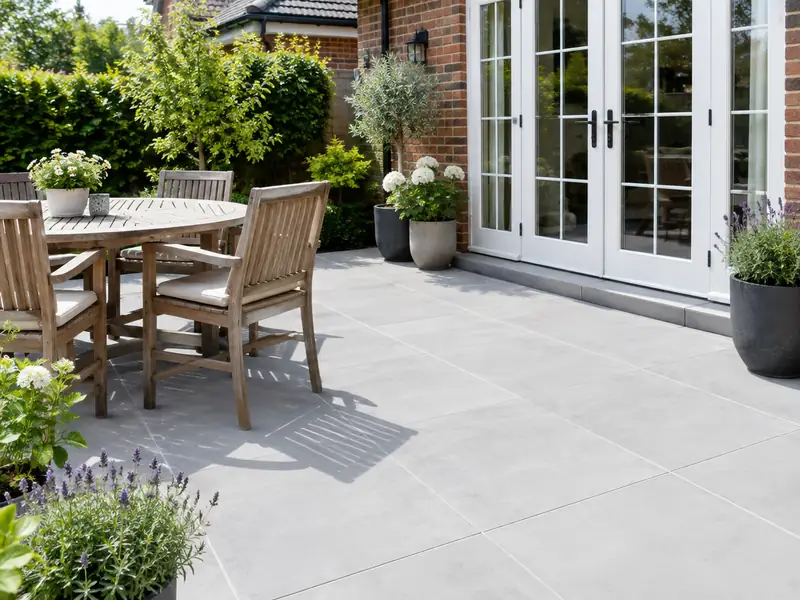
A patio is a paved outdoor area next to the house or in the garden, laid in porcelain, natural stone or concrete slabs on a compacted sub-base and mortar bed, with falls that direct rainwater away from the house.
Southsea sits within our coverage for a new patio, as do neighbouring Portsmouth, Gosport and Ryde. Before giving a price we want to see the property: the condition of what's there now, the access, and anything that might need extra work. The guide range for the South East is £2,800–£6,200 including VAT, and your written quote will spell out exactly what that covers.
- Guide price
- £2,800–£6,200 inc VAT
- Time on site
- 3–7 days on site
- Postcodes
- PO1, PO2, PO4, PO5 and PO12
- Planning rules
- England
- Local area
- Portsmouth
- Survey
- Free, with a written quote
How much does a new patio cost in Southsea?
Every figure below is a guide for a new patio in Southsea, inclusive of VAT. Regional pricing for the South East works out about 12% above the national guide, and the overall span is £2,800–£6,200. The survey costs you nothing, and after it we commit to a firm price for your specification in writing.
| Type of job | What it usually involves | Guide in Southsea |
|---|---|---|
| Small patio or path | Around 10m² of concrete slabs or a garden path. | £1,100–£2,800 |
| Typical 20m² patio | Sandstone or porcelain on a full sub-base with jointing and edging. | £2,800–£6,200 |
| Large or multi-level patio | Bigger areas, steps, retaining walls or premium stone. | £6,200–£13,500 |
The main things that change the figure:
- Patio area and the amount of excavation
- Slab material, size and laying pattern
- Ground levels, slopes, steps and retaining walls
- Drainage needed to keep water away from the house
What do you get?
- Survey of levels, damp-proof course, drainage and access
- Excavation and removal of turf, soil or old paving
- Compacted MOT Type 1 sub-base
- Primer on porcelain slabs for a strong bond
- Jointing with mortar or a brush-in compound
- Edging and neat cuts around drains and walls
Local housing and a new patio
Southampton and Portsmouth have dense Victorian terraces, with plenty of post-war rebuilding after wartime bombing. Winchester keeps Georgian and medieval streets, Basingstoke expanded rapidly with 1960s and 1970s estates, and New Forest villages feature cob, thatch and brick. Brick and flint is common on the chalk downs, and new estates ring most towns.
Terraces suit loft rooms and side-return extensions; post-war and expanded-town homes often need window, roofline and cladding renewal. Cottages in the Forest may call for lime repairs and planning-sensitive windows.
So when we survey a Southsea property for a new patio, the first step is working out how it was built and what has been changed since.
Do you need permission in Southsea?
Planning law differs across the UK. For a home in Southsea, it is the England rules below that count, and we check them with the council ahead of any quote.
A ground-level patio in a back garden does not usually need planning permission in England. Raised decks or platforms more than 30 cm high do.
Building Regulations do not normally apply to patios, but levels must stay below the damp-proof course and drain away from the house.
Rules change and every property is different, so we check the planning history and constraints for your address before we quote.
What happens after you get in touch?
Survey and measure
A free survey comes first. It gives us what we need to price a new patio properly, including dimensions, existing materials and access for deliveries, and gives you the chance to ask anything you like.
Price and scope agreed
After the survey we send a quote for a new patio that fixes the price for the scope we've agreed. If you want to change materials or scope, we revise it in writing before anything is booked.
Booking the work
Next comes planning the work itself. We set a start date that suits you, line up the right trades, and make sure any approvals for a new patio are in place before the first day on site.
On site to finish
During the work we protect the areas around it and tidy up at the end of each day. Once complete, we check the finish, remove our materials and hand over paperwork such as building control sign-off where it applies.
Working with SK Home Improvements
Questions about a new patio in Southsea
How do you make sure water drains away from the house?
A patio needs a gentle fall, usually a little over 1 in 80, so rainwater runs away from the house towards the garden, a drain or a soakaway. The surface should also sit well below the damp-proof course. If the patio meets a door threshold, a channel drain may be needed. We set levels with string lines and check falls as we lay each section.
How long will a new patio take?
On a typical home, allow 3–7 days on site. Larger projects, older buildings and extra work found once things are opened up can extend that, while simpler jobs may be shorter. Your quote includes an estimate of time on site, and your point of contact keeps you updated on the programme as the work progresses.
How long does it take to lay a patio?
Laying a typical 20m² patio takes around three to five days, from excavation and sub-base to laying, jointing and cleaning. Larger or multi-level patios with steps and walls take longer. The mortar bed needs time to set, so light foot traffic is usually fine after a day or two and furniture can go on after about a week. We confirm timings with your quote.
What happens at the survey?
We visit your home at a time that suits you, look at the area involved, take measurements and check access, condition and any services that might be affected. We talk through what you want from a new patio, explain the options and answer questions. There is no charge and no obligation; afterwards we send a written quote.
How do I clean and look after my patio?
Most patios just need regular sweeping and an occasional wash with water and a mild patio cleaner. Porcelain is the easiest to keep clean. Natural stone benefits from a sealant to reduce staining and from prompt cleaning of spills like oil or wine. Re-point any joints that crack or wash out. Avoid high-pressure jet washing close to joints, which can damage them.
Nearby towns
We cover every part of Southsea, including PO1, PO2, PO4 and PO5, and nearby Portsmouth, Gosport and Ryde. Wherever you are within that patch, the survey is free and the quote comes to you in writing.