
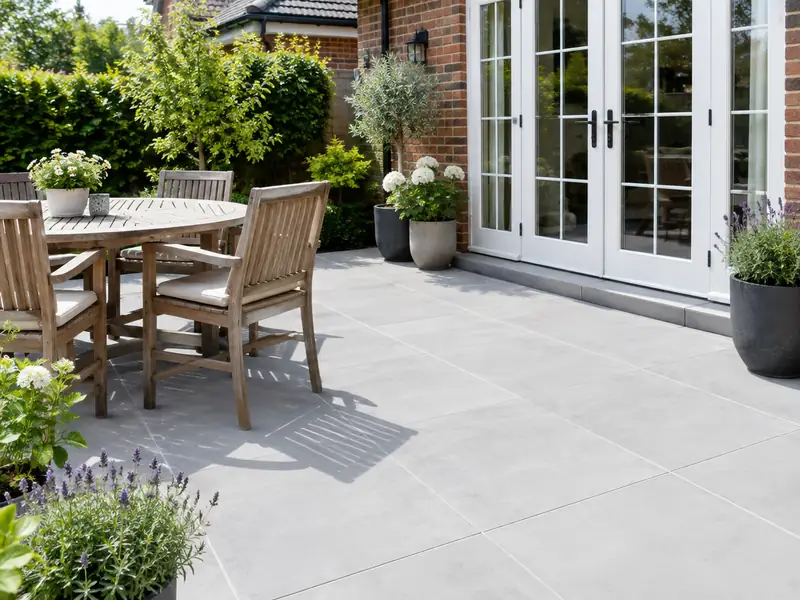
A patio is a paved outdoor area next to the house or in the garden, laid in porcelain, natural stone or concrete slabs on a compacted sub-base and mortar bed, with falls that direct rainwater away from the house.
Our guide for a new patio in Scotland comes to £2,400–£5,300 with VAT added, and that range applies across Highlands and Islands, including Inverness, Isle of Lewis, Fort William and Nairn. Your own price depends on the size of the job, the specification and how easy it is to work on the site. We survey for free, check any consents needed under the rules in Scotland, and then put the price in writing.
- Guide price
- £2,400–£5,300 inc VAT
- Time on site
- 3–7 days on site
- Planning rules
- Scotland
- Price level
- About 4% below the national guide
- Towns listed
- 4
- Survey
- Free, with a written quote
How much does a new patio cost in Highlands and Islands?
Use the table to gauge the cost of a new patio in Highlands and Islands before we visit. Figures include VAT and are scaled for Scotland, coming out about 4% below the national guide, which gives £2,400–£5,300 overall. After a free survey, you receive a fixed written price.
| Type of job | What it usually involves | Guide in Highlands and Islands |
|---|---|---|
| Small patio or path | Around 10m² of concrete slabs or a garden path. | £950–£2,400 |
| Typical 20m² patio | Sandstone or porcelain on a full sub-base with jointing and edging. | £2,400–£5,300 |
| Large or multi-level patio | Bigger areas, steps, retaining walls or premium stone. | £5,300–£11,500 |
What moves the price up or down:
- Slab material, size and laying pattern
- Ground levels, slopes, steps and retaining walls
- Drainage needed to keep water away from the house
- Access for materials and removing spoil
What’s included?
- Survey of levels, damp-proof course, drainage and access
- Excavation and removal of turf, soil or old paving
- Compacted MOT Type 1 sub-base
- Primer on porcelain slabs for a strong bond
- Jointing with mortar or a brush-in compound
- Edging and neat cuts around drains and walls
Housing across Highlands and Islands
Inverness has Victorian villas and terraces and large modern estates, while rural Highland homes range from harled stone cottages and croft houses to modern timber-frame kit houses, which are common across the region. Orkney uses local flagstone, and island and coastal communities mix traditional stone homes with newer bungalows.
Croft houses and stone cottages often need lime harling, re-roofing and window renewal. Bungalows commonly take extensions and loft rooms, and remote projects need careful planning for materials and access.
Exposure to wind, rain and snow can be severe, especially on the west coast and islands, and remote sites need allowance for ferries and weather delays.
Planning and building rules in Highlands and Islands
Highlands and Islands is in Scotland, so the planning and building rules set out below are the ones that apply. We confirm the details with the council before we quote.
A ground-level patio does not usually need planning permission in Scotland; raised decking is limited in height under permitted development.
A building warrant is not normally needed for a patio.
Rules change and every property is different, so we check the planning history and constraints for your address before we quote.
From survey to handover
Free site survey
It starts with a survey at the property, free of charge. We check condition, access and services, ask how you want the finished result to look, and answer any questions you have about a new patio.
Quote in writing
You get the price in writing, itemised so you can see where the money goes. As long as the specification stays the same, that is the price you pay for a new patio.
Plan and prepare
With the quote agreed, we book the work in and handle preparation: permissions where needed, building control notifications, material orders and access arrangements for your Highlands and Islands property.
Finish and handover
Work goes ahead as scheduled and you deal with one contact throughout. When the last trade leaves, we clear and clean the site, talk you through what has been done and pass on any certificates and care instructions.
How we work
Questions about a new patio in Highlands and Islands
How do I clean and look after my patio?
Most patios just need regular sweeping and an occasional wash with water and a mild patio cleaner. Porcelain is the easiest to keep clean. Natural stone benefits from a sealant to reduce staining and from prompt cleaning of spills like oil or wine. Re-point any joints that crack or wash out. Avoid high-pressure jet washing close to joints, which can damage them.
How long does it take to lay a patio?
Laying a typical 20m² patio takes around three to five days, from excavation and sub-base to laying, jointing and cleaning. Larger or multi-level patios with steps and walls take longer. The mortar bed needs time to set, so light foot traffic is usually fine after a day or two and furniture can go on after about a week. We confirm timings with your quote.
How long will a new patio take?
On a typical home, allow 3–7 days on site. Larger projects, older buildings and extra work found once things are opened up can extend that, while simpler jobs may be shorter. Your quote includes an estimate of time on site, and your point of contact keeps you updated on the programme as the work progresses.
What should I do before the work starts?
Before work starts, clear garden furniture, pots and ornaments from the area and agree where materials will be delivered and stored. We need a route for wheelbarrows and, on larger jobs, a small digger, so let us know about side gates, narrow passages or access through the house. Tell us about any known drains, cables or pipes in the area.
Do I need planning permission in Highlands and Islands?
It depends on the work, the size of the project, your property type and whether the building is listed or in a conservation area. Highlands and Islands is in Scotland, so Scotland's rules apply. Many smaller jobs need no planning application, but some still need building control approval. We check what applies to your address before quoting.
Towns in Highlands and Islands
Find your town below. Every place listed in Highlands and Islands is covered for a new patio, with the same survey, written quote and fixed-price process.