
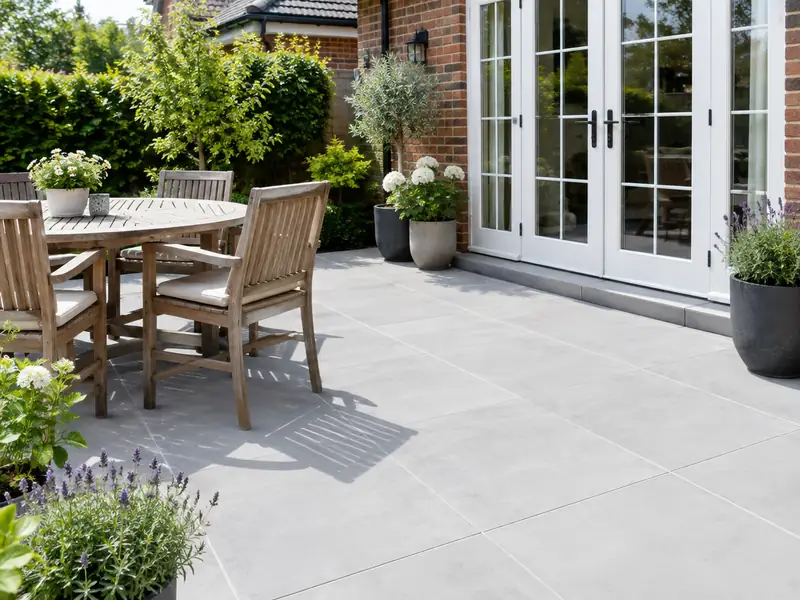
A patio is a paved outdoor area next to the house or in the garden, laid in porcelain, natural stone or concrete slabs on a compacted sub-base and mortar bed, with falls that direct rainwater away from the house.
Homeowners in Banbury usually consider a new patio for one of a few reasons: something has worn out, the house no longer suits the way they live, or they are getting it ready to sell. We visit, agree a specification and put a fixed price in writing. Most jobs like this take 3–7 days on site, and we work across Oxfordshire, including Bicester, Daventry and Leamington Spa.
- Guide price
- £2,800–£6,200 inc VAT
- Time on site
- 3–7 days on site
- Postcodes
- OX16
- Planning rules
- England
- Local area
- Oxfordshire
- Survey
- Free, with a written quote
Patios and paving prices in Banbury
Below is a breakdown of typical costs for a new patio in Banbury. Because rates in the South East are about 12% above the national guide, the overall guide comes to £2,800–£6,200, including VAT. Size, materials and access move the figure, and a free-of-charge survey settles it.
| Type of job | What it usually involves | Guide in Banbury |
|---|---|---|
| Small patio or path | Around 10m² of concrete slabs or a garden path. | £1,100–£2,800 |
| Typical 20m² patio | Sandstone or porcelain on a full sub-base with jointing and edging. | £2,800–£6,200 |
| Large or multi-level patio | Bigger areas, steps, retaining walls or premium stone. | £6,200–£13,500 |
Your price depends mostly on:
- Slab material, size and laying pattern
- Ground levels, slopes, steps and retaining walls
- Drainage needed to keep water away from the house
- Access for materials and removing spoil
Scope of the work
- Survey of levels, damp-proof course, drainage and access
- Excavation and removal of turf, soil or old paving
- Compacted MOT Type 1 sub-base
- Slabs laid on a full mortar bed with falls away from the house
- Primer on porcelain slabs for a strong bond
- Jointing with mortar or a brush-in compound
Building in Banbury
West Oxfordshire's Cotswold villages are built of honey-coloured limestone, while Banbury and the north use orange ironstone. Oxford has Victorian terraces in Jericho and East Oxford and Gothic brick villas in North Oxford. Didcot, Bicester and Witney have grown with large new estates around older market-town centres.
Low ground around Oxford and Abingdon floods from the Thames and its tributaries; the Cotswold uplands are more exposed to wind and frost.
Building traditions across Oxfordshire also raise conservation and planning questions, so we check those for a new patio in Banbury at the survey stage.
Permissions for a new patio in Banbury
Because Banbury falls under England's rules, the guidance below is the version relevant to you. Before sending a price, we check your property's position with the council.
A ground-level patio in a back garden does not usually need planning permission in England. Raised decks or platforms more than 30 cm high do.
Building Regulations do not normally apply to patios, but levels must stay below the damp-proof course and drain away from the house.
Rules change and every property is different, so we check the planning history and constraints for your address before we quote.
What happens after you get in touch?
A visit to your home
We begin by looking at the job in person. During the free survey we discuss options, materials and budget for a new patio, and photograph or measure anything the quote needs to reflect.
Your fixed price
We put everything into a written, fixed-price quote: the specification, what's excluded, staged payments and the expected time on site. Take whatever time you need to decide; there's no pressure to commit.
Dates and permissions
Once you accept, we agree start dates, order materials and deal with any planning, building control or neighbour notices the job needs. You'll know who is coming and when before work begins.
On site to finish
During the work we protect the areas around it and tidy up at the end of each day. Once complete, we check the finish, remove our materials and hand over paperwork such as building control sign-off where it applies.
What you can expect from us
Frequently asked questions
Is porcelain or sandstone better for a patio?
Porcelain is dense, stain-resistant and stays looking clean with little care, making it a good choice if you want a modern, low-maintenance patio. Indian sandstone has natural colour variation and a softer, traditional look, and costs a little less, but it can stain and weather over time and benefits from sealing. Both make durable patios when properly laid. We bring samples to the survey.
How long does it take to lay a patio?
Laying a typical 20m² patio takes around three to five days, from excavation and sub-base to laying, jointing and cleaning. Larger or multi-level patios with steps and walls take longer. The mortar bed needs time to set, so light foot traffic is usually fine after a day or two and furniture can go on after about a week. We confirm timings with your quote.
How long will a new patio take?
On a typical home, allow 3–7 days on site. Larger projects, older buildings and extra work found once things are opened up can extend that, while simpler jobs may be shorter. Your quote includes an estimate of time on site, and your point of contact keeps you updated on the programme as the work progresses.
How much does a new patio cost?
A typical 20m² patio in sandstone or porcelain costs £2,800–£6,200, including excavation, sub-base, laying and jointing. As a guide, allow roughly £100–£220 per square metre plus fixed costs for set-up and waste. Concrete slabs cost less, while slate, granite and large-format porcelain cost more. Steps, walls and drainage add to the total. We confirm a fixed price after the survey.
Do I need planning permission in Banbury?
It depends on the work, the size of the project, your property type and whether the building is listed or in a conservation area. Banbury is in England, so England's rules apply. Many smaller jobs need no planning application, but some still need building control approval. We check what applies to your address before quoting.
Near Banbury
Live in Banbury? Our coverage takes in the OX16 postcode areas and reaches out to Bicester, Daventry and Leamington Spa, so homes on the outskirts and in the next town along are included.