
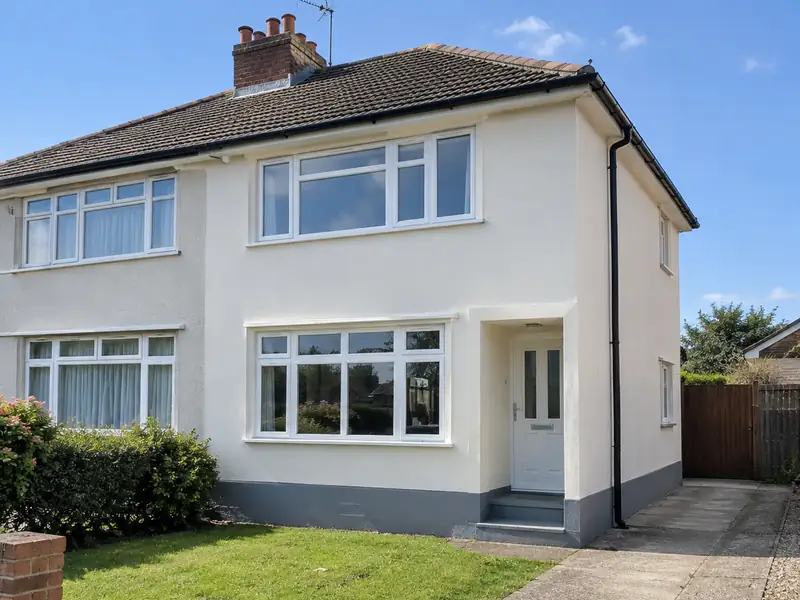
External rendering is applying a protective, weather-resistant coating to the outside walls of a house, using sand and cement, monocouche or thin-coat silicone render, to give a smooth or textured finish that protects the masonry and improves appearance.
Homeowners in Basildon usually consider external rendering for one of a few reasons: something has worn out, the house no longer suits the way they live, or they are getting it ready to sell. We visit, agree a specification and put a fixed price in writing. Most jobs like this take 1–3 weeks on site, depending on weather, and we work across Essex, including Pitsea, Stanford-le-Hope and Wickford.
- Guide price
- £7,400–£17,000 inc VAT
- Time on site
- 1–3 weeks on site, depending on weather
- Postcodes
- SS13, SS14, SS15 and SS16
- Planning rules
- England
- Local area
- Essex
- Survey
- Free, with a written quote
How much does external rendering cost in Basildon?
The costs listed here are typical for external rendering around Basildon and include VAT. They reflect labour and material costs in the East of England, about 5% above the national guide, giving a range of £7,400–£17,000. Exact pricing depends on your home, so we only fix it once a free site survey is done.
| Type of job | What it usually involves | Guide in Basildon |
|---|---|---|
| Front elevation or small terrace | One elevation or a small terraced house, including scaffolding and preparation. | £3,200–£7,400 |
| Typical semi-detached | All rendered walls of a 3-bed semi in monocouche or silicone, with scaffolding. | £7,400–£17,000 |
| Detached or full strip and re-render | Larger houses, or homes needing old render removed and walls repaired first. | £16,000–£31,500 |
The main things that change the figure:
- Wall area to be rendered and the height of the house
- Render system: sand and cement, monocouche or silicone
- Scaffolding, access and protection of neighbouring property
- Detailing around windows, bays, sills and pipes
What does the job include in Basildon?
- Survey of walls, existing render, cracks and damp-proof course
- Scaffolding erected and removed, with neighbours' access agreed
- Windows, doors and surfaces masked and protected
- Beads at corners, edges and above the damp-proof course
- Finish coat in your chosen colour and texture
- Making good around pipes, vents and fixings, and a site clean-up
Local housing and external rendering
Essex ranges from timber-framed and weatherboarded cottages in the north, some with decorative pargeting, to Victorian terraces in Colchester, Chelmsford and Southend. Basildon and Harlow were built as post-war new towns, much of the south-east has interwar suburbs and bungalows, and large new estates continue to appear around Chelmsford and Braintree.
Essex is one of the driest counties in England, and London Clay in the south shrinks in dry spells, so trees and foundation depth matter.
In Basildon, as elsewhere in Essex, we take the building's age and construction into account before recommending anything, because both can change what is involved in external rendering.
Do you need permission in Basildon?
Homes in Basildon come under the regulations for England, summarised below. We don't rely on general rules alone: we confirm the position for your address with the council before a quote goes out.
In England, re-rendering or cladding a house is often allowed without planning permission, but stone, render, timber, plastic or tile cladding is not permitted development in conservation areas, and listed buildings need consent.
If you render or re-clad more than 25% of an external wall, Building Regulations usually require the wall’s insulation to be improved where that is practical, and building control should be notified.
Rules change and every property is different, so we check the planning history and constraints for your address before we quote.
What happens after you get in touch?
A visit to your home
Book a visit and we'll come to you. The survey covers measurements, the state of what's there now and any obvious constraints, so the price that follows is based on your actual home, not an average.
Quote in writing
We turn the survey notes into a written quote. The price is fixed for the specification we agree, and the document sets out materials, scope and payment stages in plain language.
Plan and prepare
We handle the paperwork side: checking whether planning permission or building control approval is needed, submitting applications where they are, and scheduling the trades and materials around your dates.
Finish and handover
The job proceeds in the order set out in the programme, with dust and debris kept under control. Finally we tidy away, inspect the work together and pass the finished project over to you with its paperwork.
How we work
Questions about external rendering in Basildon
What time of year should rendering be done?
Render needs mild, dry conditions to cure properly, so spring to early autumn is ideal. Most render systems should not be applied when frost is likely, in heavy rain or in strong direct sun, which can dry it too quickly and cause cracking. We plan the programme around the forecast and may pause work if the weather turns, which protects the finish.
Can I stay at home during the work?
In most cases, yes. Most people can live at home throughout, and we plan the work to keep disruption down by protecting floors, agreeing working hours and keeping access routes clear. Bigger jobs affecting kitchens, bathrooms or heating may mean a short spell with reduced facilities, and we talk this through with you at the survey.
How much does it cost to render a house?
Rendering a typical 3-bed semi costs £7,400–£17,000, including scaffolding and preparation. As a guide, allow around £60–£120 per square metre of wall plus fixed costs for scaffolding and set-up. Sand and cement is the lowest-cost system, while silicone thin-coat costs more but needs no painting. Removing old render or pebbledash first adds noticeably to the price. We confirm a fixed figure after the survey.
How long will external rendering take?
On a typical home, allow 1–3 weeks on site, depending on weather. Larger projects, older buildings and extra work found once things are opened up can extend that, while simpler jobs may be shorter. Your quote includes an estimate of time on site, and your point of contact keeps you updated on the programme as the work progresses.
Which render system should I choose?
The right render depends on your walls and how much upkeep you want. Sand and cement is the lowest-cost option but needs repainting every few years. Monocouche is coloured through, so it needs no painting, and suits block and brick walls. Silicone thin-coat is flexible, water-repellent and stays cleaner, but costs more. Lime render suits older solid walls. We recommend a system after inspecting your walls.
Also covering areas around Basildon
If your address falls within SS13, SS14, SS15 and SS16, we cover it. The same goes for neighbouring Pitsea, Stanford-le-Hope and Wickford, which we include alongside Basildon when arranging surveys and quotes.