
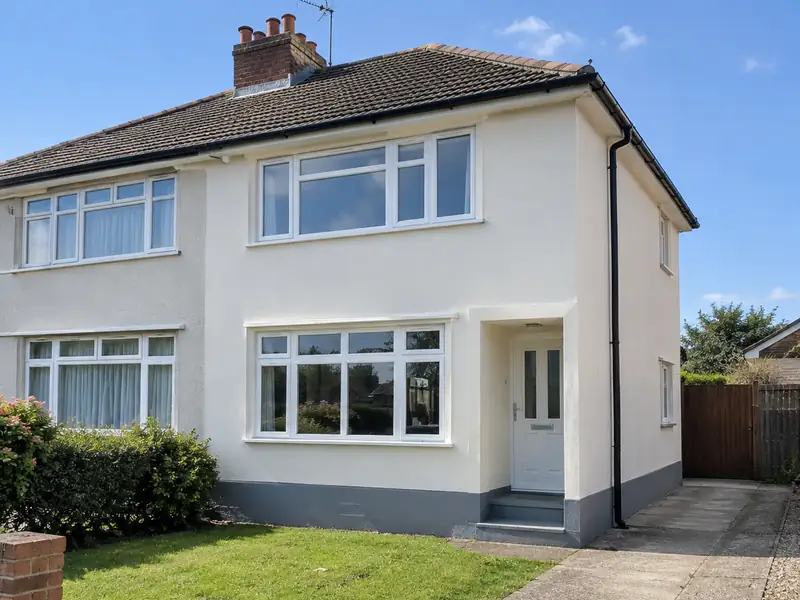
External rendering is applying a protective, weather-resistant coating to the outside walls of a house, using sand and cement, monocouche or thin-coat silicone render, to give a smooth or textured finish that protects the masonry and improves appearance.
Planning external rendering for a home in St Andrews means making a handful of decisions about materials, layout, finish and timing. We help you work through them at a free survey, then confirm in writing what it will cost for the options you pick. Most projects of this type need 1–3 weeks on site, depending on weather, and we cover every KY16 address as well as the rest of Fife.
- Guide price
- £6,700–£15,500 inc VAT
- Time on site
- 1–3 weeks on site, depending on weather
- Postcodes
- KY16
- Planning rules
- Scotland
- Local area
- Fife
- Survey
- Free, with a written quote
What should you budget for external rendering in St Andrews?
Here is how the guide price for external rendering breaks down in St Andrews. We start from national figures and adjust for Scotland, which comes out about 4% below the national guide. The resulting range, VAT included, is £6,700–£15,500, and a survey, at no cost to you, firms it up.
| Type of job | What it usually involves | Guide in St Andrews |
|---|---|---|
| Front elevation or small terrace | One elevation or a small terraced house, including scaffolding and preparation. | £2,900–£6,700 |
| Typical semi-detached | All rendered walls of a 3-bed semi in monocouche or silicone, with scaffolding. | £6,700–£15,500 |
| Detached or full strip and re-render | Larger houses, or homes needing old render removed and walls repaired first. | £14,500–£29,000 |
Expect these to shape the final quote:
- Wall area to be rendered and the height of the house
- Render system: sand and cement, monocouche or silicone
- Scaffolding, access and protection of neighbouring property
- Detailing around windows, bays, sills and pipes
What does the job include in St Andrews?
- Survey of walls, existing render, cracks and damp-proof course
- Scaffolding erected and removed, with neighbours' access agreed
- Windows, doors and surfaces masked and protected
- Beads at corners, edges and above the damp-proof course
- Mesh reinforcement and base coats to suit the chosen system
- Finish coat in your chosen colour and texture
What are homes like around St Andrews?
Fife's East Neuk fishing villages are known for pantiled roofs and crow-stepped gables, and St Andrews has historic stone streets. Kirkcaldy and Dunfermline have Victorian sandstone housing and interwar estates, Glenrothes was built as a post-war new town, and former mining towns in central Fife have rows of cottages and post-war council housing.
Pantiled and stone homes need careful roof repairs and lime work. Post-war and new-town houses commonly take re-rendering, window replacement and extensions, while bungalows suit loft conversions.
Whatever era your St Andrews home dates from, we plan external rendering around how it is actually built rather than a one-size-fits-all specification.
Planning and building rules in St Andrews
For anyone in St Andrews, the relevant framework is Scotland's. The summary below is general, so we always contact the council about your address before putting a price in writing.
In Scotland, changing the external finish of a house in a conservation area or on a listed building needs consent; elsewhere, like-for-like re-rendering is usually treated as repair.
Large-scale re-cladding or external insulation can need a building warrant; like-for-like render repairs normally do not.
Rules change and every property is different, so we check the planning history and constraints for your address before we quote.
The four stages
Free site survey
Book a visit and we'll come to you. The survey covers measurements, the state of what's there now and any obvious constraints, so the price that follows is based on your actual home, not an average.
Written quote
After the survey we send a quote for external rendering that fixes the price for the scope we've agreed. If you want to change materials or scope, we revise it in writing before anything is booked.
Dates and permissions
Next comes planning the work itself. We set a start date that suits you, line up the right trades, and make sure any approvals for external rendering are in place before the first day on site.
The work itself
During the work we protect the areas around it and tidy up at the end of each day. Once complete, we check the finish, remove our materials and hand over paperwork such as building control sign-off where it applies.
Working with SK Home Improvements
External rendering in St Andrews: questions
Do you cover Dundee, Carnoustie and Glenrothes?
Yes. As well as St Andrews, we cover Dundee, Carnoustie and Glenrothes and the rest of Fife. Our coverage is UK-wide, so the process is the same wherever you are: a free site survey, a quote in writing that fixes the price for the agreed scope, and one point of contact while the work is planned and carried out.
How do I look after silicone or monocouche render?
Through-coloured render needs little upkeep. Check it once a year for cracks or damage, especially around windows and pipes, and keep gutters clear so water does not run down the walls. If green algae appears on shaded walls, a specialist render cleaner applied with a soft brush or low-pressure wash removes it. Avoid high-pressure jet washing, which can damage the surface.
How long will external rendering take?
On a typical home, allow 1–3 weeks on site, depending on weather. Larger projects, older buildings and extra work found once things are opened up can extend that, while simpler jobs may be shorter. Your quote includes an estimate of time on site, and your point of contact keeps you updated on the programme as the work progresses.
Which render system should I choose?
The right render depends on your walls and how much upkeep you want. Sand and cement is the lowest-cost option but needs repainting every few years. Monocouche is coloured through, so it needs no painting, and suits block and brick walls. Silicone thin-coat is flexible, water-repellent and stays cleaner, but costs more. Lime render suits older solid walls. We recommend a system after inspecting your walls.
How long does rendering take?
Rendering a typical semi-detached house takes around one to three weeks. Scaffolding goes up first, then removal of old render, repairs, beads and mesh. Base coats need time to cure before the finish coat. Weather has a big effect, because render should not be applied in rain, frost or strong heat. We give you an expected programme with the quote.
Nearby towns
Live in St Andrews? Our coverage takes in the KY16 postcode areas and reaches out to Dundee, Carnoustie and Glenrothes, so homes on the outskirts and in the next town along are included.