
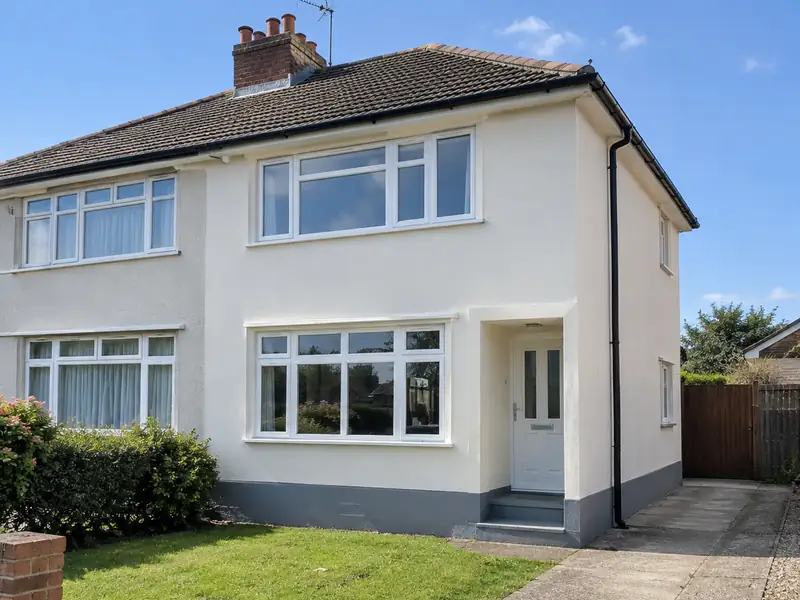
External rendering is applying a protective, weather-resistant coating to the outside walls of a house, using sand and cement, monocouche or thin-coat silicone render, to give a smooth or textured finish that protects the masonry and improves appearance.
We take on external rendering throughout Fort William and the surrounding PH33 postcodes, as well as in Oban, Inverness and Crieff. The guide range for this work in Scotland is £6,700–£15,500 including VAT; where your project falls depends on its size, the materials you pick and how easy the site is to reach. A free survey turns that range into a fixed figure.
- Guide price
- £6,700–£15,500 inc VAT
- Time on site
- 1–3 weeks on site, depending on weather
- Postcodes
- PH33
- Planning rules
- Scotland
- Local area
- Highland
- Survey
- Free, with a written quote
What should you budget for external rendering in Fort William?
Every figure below is a guide for external rendering in Fort William, inclusive of VAT. Regional pricing for Scotland works out about 4% below the national guide, and the overall span is £6,700–£15,500. The survey costs you nothing, and after it we commit to a firm price for your specification in writing.
| Type of job | What it usually involves | Guide in Fort William |
|---|---|---|
| Front elevation or small terrace | One elevation or a small terraced house, including scaffolding and preparation. | £2,900–£6,700 |
| Typical semi-detached | All rendered walls of a 3-bed semi in monocouche or silicone, with scaffolding. | £6,700–£15,500 |
| Detached or full strip and re-render | Larger houses, or homes needing old render removed and walls repaired first. | £14,500–£29,000 |
What moves the price up or down:
- Wall area to be rendered and the height of the house
- Render system: sand and cement, monocouche or silicone
- Removing old render or pebbledash and repairing the walls
- Scaffolding, access and protection of neighbouring property
What does the job include in Fort William?
- Survey of walls, existing render, cracks and damp-proof course
- Windows, doors and surfaces masked and protected
- Beads at corners, edges and above the damp-proof course
- Mesh reinforcement and base coats to suit the chosen system
- Finish coat in your chosen colour and texture
- Making good around pipes, vents and fixings, and a site clean-up
Building in Fort William
Inverness has Victorian villas and terraces and large modern estates, while rural Highland homes range from harled stone cottages and croft houses to modern timber-frame kit houses, which are common across the region. Orkney uses local flagstone, and island and coastal communities mix traditional stone homes with newer bungalows.
Exposure to wind, rain and snow can be severe, especially on the west coast and islands, and remote sites need allowance for ferries and weather delays.
That variety is why a guide price for external rendering in Fort William is only a starting point; the survey shows what your particular property needs.
Do you need permission in Fort William?
The notes below cover Scotland, which is where Fort William sits. Rules change and every property is different, so we speak to the council before pricing your job.
In Scotland, changing the external finish of a house in a conservation area or on a listed building needs consent; elsewhere, like-for-like re-rendering is usually treated as repair.
Large-scale re-cladding or external insulation can need a building warrant; like-for-like render repairs normally do not.
Rules change and every property is different, so we check the planning history and constraints for your address before we quote.
The four stages
We look at the job
A free survey comes first. It gives us what we need to price external rendering properly, including dimensions, existing materials and access for deliveries, and gives you the chance to ask anything you like.
Quote in writing
Next you receive a written quote with a fixed price for the agreed specification. It lists what is included, what is not, and how payments are staged, so you can compare it properly.
Dates and permissions
Preparation matters as much as the build. We agree access, parking and working hours with you, order materials in good time, and confirm any permissions so the job isn't held up once it starts.
Build and hand over
Our trades complete external rendering while your point of contact keeps you updated. When everything is finished, we clear the site, take away waste and go through the result with you before handover.
What you can expect from us
Frequently asked questions
How much does it cost to render a house?
Rendering a typical 3-bed semi costs £6,700–£15,500, including scaffolding and preparation. As a guide, allow around £60–£120 per square metre of wall plus fixed costs for scaffolding and set-up. Sand and cement is the lowest-cost system, while silicone thin-coat costs more but needs no painting. Removing old render or pebbledash first adds noticeably to the price. We confirm a fixed figure after the survey.
How long does rendering take?
Rendering a typical semi-detached house takes around one to three weeks. Scaffolding goes up first, then removal of old render, repairs, beads and mesh. Base coats need time to cure before the finish coat. Weather has a big effect, because render should not be applied in rain, frost or strong heat. We give you an expected programme with the quote.
How much will external rendering cost in Fort William?
As a guide, expect to pay £6,700–£15,500 including VAT for external rendering in Fort William. That range is adjusted for Scotland, which runs about 4% below the national guide. Where your project lands depends on size, materials, access and the condition of what is already there. We confirm a fixed price in writing after a free survey of your home.
Can you combine external rendering with other work?
Yes. Because we manage several trades under one contract, we can plan external rendering alongside other work on your Fort William home, such as new windows with rendering, or a kitchen refit with an extension. Combining jobs can reduce repeat set-up such as scaffolding, skips and access, and every element is listed and priced in the same written quote.
Can you render over pebbledash or old render?
Rendering over existing pebbledash or render is sometimes possible if it is firmly bonded, but if it sounds hollow, is cracked or is coming away, it must be removed first. Covering failing render simply hides the problem until the new coat fails too. We tap-test the walls and explain whether removal is needed. Removal adds time and cost but gives a sound base.
Nearby towns
Whether you're in the centre of Fort William or on its outskirts, PH33 addresses are covered. We extend the same service, and the same fixed-price approach, to Oban, Inverness and Crieff.