
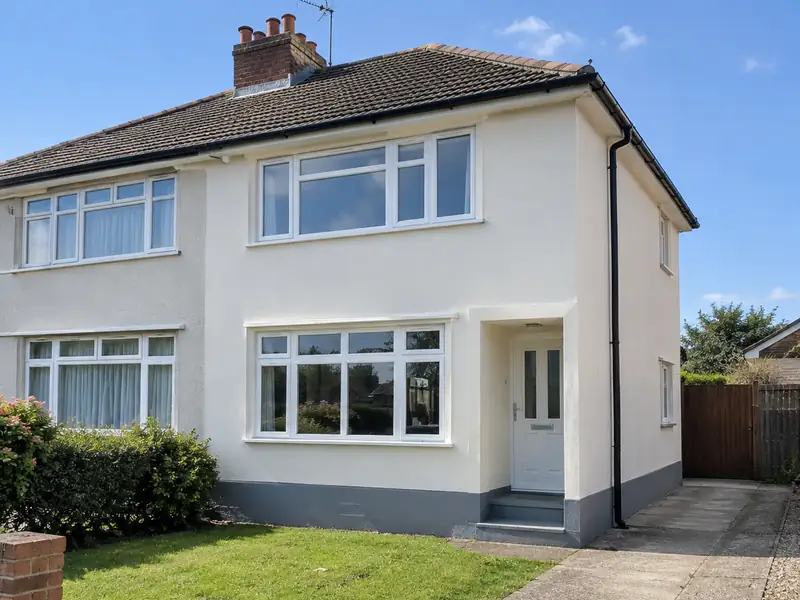
External rendering is applying a protective, weather-resistant coating to the outside walls of a house, using sand and cement, monocouche or thin-coat silicone render, to give a smooth or textured finish that protects the masonry and improves appearance.
Whatever type of house you own in Ryde, we start by looking at how external rendering would fit it rather than offering a standard package. We cover PO33 and PO34 and neighbouring places such as Gosport, Southsea and Sandown. One named person looks after you from survey to handover, and nothing is booked until you hold our figure in writing, fixed for the work described.
- Guide price
- £7,800–£18,000 inc VAT
- Time on site
- 1–3 weeks on site, depending on weather
- Postcodes
- PO33 and PO34
- Planning rules
- England
- Local area
- Isle of Wight
- Survey
- Free, with a written quote
How much does external rendering cost in Ryde?
To help you plan, we show what external rendering typically costs in Ryde instead of holding figures back for a sales call. The range is £7,800–£18,000 with VAT, using rates in the South East that are about 12% above the national guide. A free survey then fixes your actual price.
| Type of job | What it usually involves | Guide in Ryde |
|---|---|---|
| Front elevation or small terrace | One elevation or a small terraced house, including scaffolding and preparation. | £3,400–£7,800 |
| Typical semi-detached | All rendered walls of a 3-bed semi in monocouche or silicone, with scaffolding. | £7,800–£18,000 |
| Detached or full strip and re-render | Larger houses, or homes needing old render removed and walls repaired first. | £17,000–£33,500 |
The main things that change the figure:
- Wall area to be rendered and the height of the house
- Removing old render or pebbledash and repairing the walls
- Scaffolding, access and protection of neighbouring property
- Detailing around windows, bays, sills and pipes
What’s included?
- Scaffolding erected and removed, with neighbours' access agreed
- Removal of loose or failed render and pebbledash where needed
- Windows, doors and surfaces masked and protected
- Mesh reinforcement and base coats to suit the chosen system
- Finish coat in your chosen colour and texture
- Making good around pipes, vents and fixings, and a site clean-up
What are homes like around Ryde?
The island has Victorian seaside villas and terraces in Ryde, Ventnor, Shanklin and Cowes, older cottages in island sandstone and limestone, and thatched roofs in some villages. Post-war bungalows, chalets and newer estates are common around Newport and the larger towns.
Victorian villas often need sash-style windows, render repairs and roof work. Bungalows suit loft conversions and extensions, while coastal properties commonly need roofline, fencing and external decorating renewed more often.
Knowing the typical building types in Isle of Wight helps, but a survey of your own home in Ryde is what decides the right approach to external rendering.
Planning and building rules in Ryde
Because Ryde falls under England's rules, the guidance below is the version relevant to you. Before sending a price, we check your property's position with the council.
In England, re-rendering or cladding a house is often allowed without planning permission, but stone, render, timber, plastic or tile cladding is not permitted development in conservation areas, and listed buildings need consent.
If you render or re-clad more than 25% of an external wall, Building Regulations usually require the wall’s insulation to be improved where that is practical, and building control should be notified.
Rules change and every property is different, so we check the planning history and constraints for your address before we quote.
From survey to handover
A visit to your home
We arrange a free site survey on a date convenient to you. We measure up, look at the existing structure and access, and discuss your plans for external rendering so the price reflects your home.
Price and scope agreed
The quote arrives in writing, not over the phone. It covers the full scope, the finishes you've chosen, any exclusions and the payment schedule, with a fixed price tied to that specification.
Plan and prepare
Before anyone starts, we confirm the programme in writing, check whether consents are required and arrange deliveries. If a skip or scaffolding on the road needs a permit, we apply for it.
The work itself
During the work we protect the areas around it and tidy up at the end of each day. Once complete, we check the finish, remove our materials and hand over paperwork such as building control sign-off where it applies.
What you can expect from us
Frequently asked questions
How do I look after silicone or monocouche render?
Through-coloured render needs little upkeep. Check it once a year for cracks or damage, especially around windows and pipes, and keep gutters clear so water does not run down the walls. If green algae appears on shaded walls, a specialist render cleaner applied with a soft brush or low-pressure wash removes it. Avoid high-pressure jet washing, which can damage the surface.
How much will external rendering cost in Ryde?
As a guide, expect to pay £7,800–£18,000 including VAT for external rendering in Ryde. That range is adjusted for the South East, which runs about 12% above the national guide. Where your project lands depends on size, materials, access and the condition of what is already there. We confirm a fixed price in writing after a free survey of your home.
Which render system should I choose?
The right render depends on your walls and how much upkeep you want. Sand and cement is the lowest-cost option but needs repainting every few years. Monocouche is coloured through, so it needs no painting, and suits block and brick walls. Silicone thin-coat is flexible, water-repellent and stays cleaner, but costs more. Lime render suits older solid walls. We recommend a system after inspecting your walls.
What time of year should rendering be done?
Render needs mild, dry conditions to cure properly, so spring to early autumn is ideal. Most render systems should not be applied when frost is likely, in heavy rain or in strong direct sun, which can dry it too quickly and cause cracking. We plan the programme around the forecast and may pause work if the weather turns, which protects the finish.
Can I stay at home during the work?
In most cases, yes. Most people can live at home throughout, and we plan the work to keep disruption down by protecting floors, agreeing working hours and keeping access routes clear. Bigger jobs affecting kitchens, bathrooms or heating may mean a short spell with reduced facilities, and we talk this through with you at the survey.
Also covering areas around Ryde
We welcome enquiries from all PO33 and PO34 postcodes in Ryde, plus Gosport, Southsea and Sandown. Each one gets the same survey at no charge and a written price fixed for the work described.