
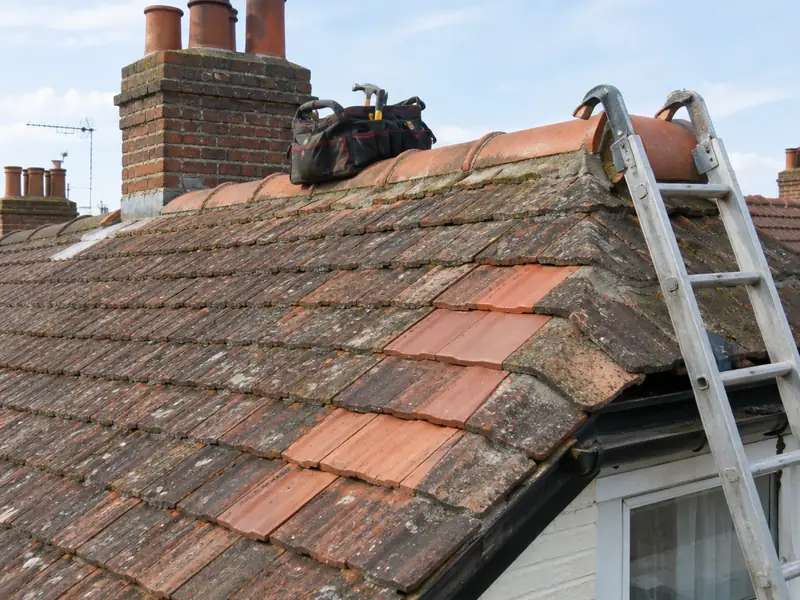
Roof repairs fix specific faults in a pitched or flat roof, such as slipped or cracked tiles, loose ridges, failed flashing, leaking valleys or chimney defects, to stop water getting in without replacing the whole roof.
From a first conversation about roof repairs to the day the site is cleared, homeowners in Dumbarton deal with us directly. We come out to measure up at no cost, explain the choices in plain terms and send a written quote. For context, comparable work in Scotland usually falls within £300–£1,450 including VAT, and it is available across G82.
- Guide price
- £300–£1,450 inc VAT
- Time on site
- Half a day to 3 days for most repairs
- Postcodes
- G82
- Planning rules
- Scotland
- Local area
- West Dunbartonshire
- Survey
- Free, with a written quote
What should you budget for roof repairs in Dumbarton?
What should you budget for roof repairs in Dumbarton? Use the figures below as a starting point. Prices in Scotland sit about 4% below the national guide, so the range here is £300–£1,450 including VAT. Your fixed price comes in writing once we've surveyed the property, at no charge.
| Type of job | What it usually involves | Guide in Dumbarton |
|---|---|---|
| Minor repair | Replacing a handful of slipped or broken tiles from ladders or a roof ladder. | £200–£500 |
| Ridge, flashing or valley repair | Rebedding a ridge run, renewing flashing or relining a short valley. | £400–£1,150 |
| Larger repair with scaffolding | Several faults, chimney work or repairs on high roofs needing scaffolding. | £950–£2,900 |
What moves the price up or down:
- Number and type of faults to repair
- Roof height and steepness
- Matching tiles, slates or lead to the existing roof
- Hidden damage to battens, felt or timbers found during repair
What’s included?
- Inspection to trace the source of leaks or damage
- Photos of the problem areas and a clear written explanation
- Replacement of slipped, cracked or missing tiles and slates
- Ridge, hip and verge rebedding or dry-fix conversion
- Lead flashing, valley and chimney junction repairs
- Temporary weatherproofing where a full repair must wait
Local housing and roof repairs
Clydebank was heavily rebuilt after wartime bombing and has tenements and post-war estates, while Dumbarton has sandstone tenements and Victorian housing. Bearsden and Milngavie are known for Victorian villas and interwar bungalows, and Kirkintilloch mixes older terraces with post-war semis and newer developments.
Bungalows commonly suit loft conversions with dormers, and villas often take kitchen extensions and landscaping. Tenement flats may need window replacement, and harled homes often need re-rendering.
These patterns matter for roof repairs: older walls, roofs and floors in Dumbarton can need different materials or extra preparation compared with newer homes.
Do you need permission in Dumbarton?
Planning law differs across the UK. For a home in Dumbarton, it is the Scotland rules below that count, and we check them with the council ahead of any quote.
In Scotland, like-for-like re-roofing does not usually need planning permission, except on listed buildings or in conservation areas.
Like-for-like re-covering does not usually need a building warrant, but structural changes or new roof windows can. Bats are protected across the UK; if they roost under roof tiles, soffits or fascias, work stops and a licensed ecologist advises before it restarts.
Rules change and every property is different, so we check the planning history and constraints for your address before we quote.
The four stages
Survey and measure
We begin by looking at the job in person. During the free survey we discuss options, materials and budget for roof repairs, and photograph or measure anything the quote needs to reflect.
Written quote
You get the price in writing, itemised so you can see where the money goes. As long as the specification stays the same, that is the price you pay for roof repairs.
Booking the work
Once you accept, we agree start dates, order materials and deal with any planning, building control or neighbour notices the job needs. You'll know who is coming and when before work begins.
Build and hand over
The job proceeds in the order set out in the programme, with dust and debris kept under control. Finally we tidy away, inspect the work together and pass the finished project over to you with its paperwork.
How we work
Frequently asked questions
What is dry-fix ridge and is it better than mortar?
Dry-fix ridge systems use screws, clips and weather seals instead of mortar to hold ridge and hip tiles in place. They avoid the cracking and loosening that mortar suffers over time, need less upkeep and are now common on new roofs. Mortar-bedded ridges suit some period or conservation-area roofs. We recommend the method that suits your roof and its location.
How much does a roof repair cost?
A typical roof repair, such as replacing slipped tiles, rebedding a ridge or renewing flashing, costs £300–£1,450. Small repairs reachable by ladder sit at the lower end, while jobs needing scaffolding or several repairs cost more. Matching old tiles or slates and hidden damage to battens can also affect the price. We explain what we find and confirm a fixed price before starting.
Can you do an emergency roof repair?
After storm damage, a temporary repair such as sheeting or refixing loose tiles can stop water getting in until a permanent repair can be made. We aim to attend as quickly as possible, but availability depends on weather and demand, especially after widespread storms. In the meantime, catch drips in containers, move valuables and switch off lights near any wet ceiling.
Is the price fixed?
Yes, for the specification we agree. Your written quote sets out exactly what is included at a fixed price. It only changes if you ask for something different, or if a problem the survey could not reasonably reveal later needs extra work. In either case we explain the change and confirm it in writing before going ahead.
Do you cover Vale of Leven, Erskine and Clydebank?
Yes. As well as Dumbarton, we cover Vale of Leven, Erskine and Clydebank and the rest of Dunbartonshire. Our coverage is UK-wide, so the process is the same wherever you are: a free site survey, a quote in writing that fixes the price for the agreed scope, and one point of contact while the work is planned and carried out.
Near Dumbarton
From G82 to the edges of Dumbarton and on into Vale of Leven, Erskine and Clydebank, we can arrange a site visit and a written quote for your project, planned around dates that work for you.