
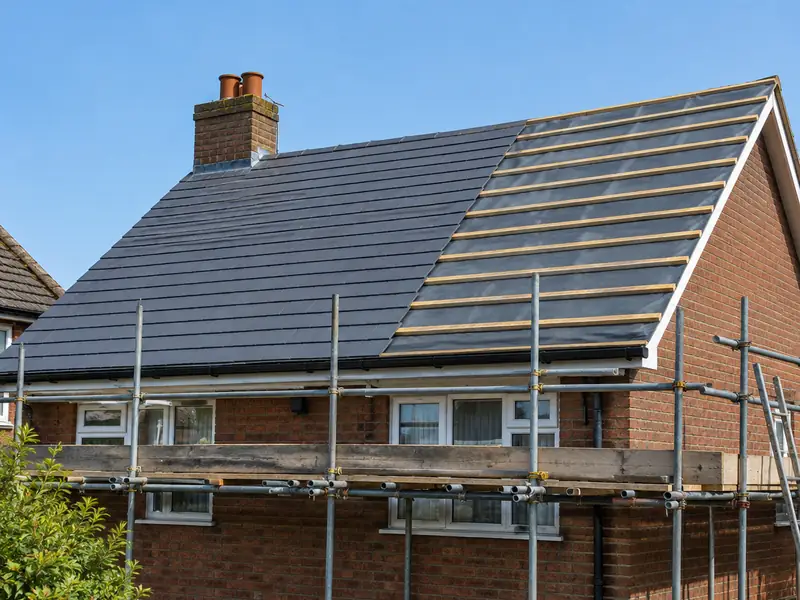
A roof replacement, or re-roof, strips the old tiles or slates, battens and felt from a pitched roof and replaces them with a new breathable membrane, battens and covering, repairing timbers and renewing ridges, valleys and flashings at the same time.
From a first conversation about a new roof to the day the site is cleared, homeowners in Luton deal with us directly. We come out to measure up at no cost, explain the choices in plain terms and send a written quote. For context, comparable work in the East of England usually falls within £7,400–£16,000 including VAT, and it is available across LU1, LU2, LU3 and LU4.
- Guide price
- £7,400–£16,000 inc VAT
- Time on site
- 1–2 weeks on site, plus scaffolding time
- Postcodes
- LU1, LU2, LU3 and LU4
- Planning rules
- England
- Local area
- Bedfordshire
- Survey
- Free, with a written quote
Roof replacement prices in Luton
Every figure below is a guide for a new roof in Luton, inclusive of VAT. Regional pricing for the East of England works out about 5% above the national guide, and the overall span is £7,400–£16,000. The survey costs you nothing, and after it we commit to a firm price for your specification in writing.
| Type of job | What it usually involves | Guide in Luton |
|---|---|---|
| Terraced house or bungalow | A smaller pitched roof re-covered in concrete or clay tiles, including scaffolding. | £5,200–£10,500 |
| Typical semi-detached | A 3-bed semi re-roofed in concrete or clay tiles with new membrane, battens and leadwork. | £7,400–£16,000 |
| Detached or natural slate | Larger or more complex roofs, or any roof finished in natural slate. | £12,500–£26,000 |
The main things that change the figure:
- Roof area, pitch and the number of hips, valleys and dormers
- Covering material: concrete tile, clay tile or natural slate
- Condition of rafters, fascias and other timbers
- Chimneys, leadwork and roof windows to rework
Scope of the work
- Survey of the covering, timbers, chimneys and loft ventilation
- Scaffolding with edge protection, erected and removed
- Stripping old tiles or slates, battens and felt in stages
- Breathable membrane and new treated battens
- New tiles or slates, or sound originals refitted where suitable
- Waste removal by skip and a clean site on completion
Local housing and a new roof
Bedfordshire has a long brick-making history, and brick dominates: Victorian terraces in Bedford and Luton, interwar semis, large post-war estates around Luton and Dunstable, and newer developments near Bedford and Biggleswade. Villages in the north of the county keep limestone cottages, with timber framing and thatch scattered across older settlements.
Terraced houses here often benefit from rear extensions, loft rooms and repointing. Interwar and post-war semis commonly suit kitchen extensions, porches and garage conversions, while older village properties may call for lime plastering and sympathetic window replacements.
That mix of housing shapes how we approach a new roof in Luton: the age and construction of your home affect the materials, the method and, in the end, the price.
Do you need permission in Luton?
Homes in Luton come under the regulations for England, summarised below. We don't rely on general rules alone: we confirm the position for your address with the council before a quote goes out.
Re-roofing a house with similar materials does not usually need planning permission in England. Listed buildings and conservation areas may need consent if the covering changes.
Replacing more than a quarter of a roof’s covering counts as renovation under Building Regulations, so the work is notified and the roof insulation may need upgrading. Bats are protected across the UK; if they roost under roof tiles, soffits or fascias, work stops and a licensed ecologist advises before it restarts.
Rules change and every property is different, so we check the planning history and constraints for your address before we quote.
How does the job run?
Survey and measure
A free survey comes first. It gives us what we need to price a new roof properly, including dimensions, existing materials and access for deliveries, and gives you the chance to ask anything you like.
Your fixed price
Next you receive a written quote with a fixed price for the agreed specification. It lists what is included, what is not, and how payments are staged, so you can compare it properly.
Booking the work
Before anyone starts, we confirm the programme in writing, check whether consents are required and arrange deliveries. If a skip or scaffolding on the road needs a permit, we apply for it.
The work itself
Our trades complete a new roof while your point of contact keeps you updated. When everything is finished, we clear the site, take away waste and go through the result with you before handover.
Why homeowners choose us
Frequently asked questions
Can I stay at home during the work?
In most cases, yes. Most people can live at home throughout, and we plan the work to keep disruption down by protecting floors, agreeing working hours and keeping access routes clear. Bigger jobs affecting kitchens, bathrooms or heating may mean a short spell with reduced facilities, and we talk this through with you at the survey.
How long will a new roof last?
A well-installed roof lasts for decades. Concrete tiles typically last around 50 years or more, clay tiles longer, and natural slate can last a century with proper upkeep. Lifespan depends on the quality of materials, fixings, ventilation and leadwork, and on how exposed the roof is. Keeping gutters clear and fixing slipped tiles quickly helps it reach its full life.
Can my old tiles or slates be reused?
Old tiles or slates can sometimes be reused if they are sound, which can help keep the look of a period house. Many older concrete tiles and some slates are porous, cracked or have failing fixing nibs, so they would not last. Reclaimed slates or tiles can make up shortfalls. We check a sample during the survey and explain the cost difference.
Is the price fixed?
Yes, for the specification we agree. Your written quote sets out exactly what is included at a fixed price. It only changes if you ask for something different, or if a problem the survey could not reasonably reveal later needs extra work. In either case we explain the change and confirm it in writing before going ahead.
What happens if it rains during the work?
We strip the roof in sections and only remove as much covering as we can replace or protect the same day. New breathable membrane goes on straight after stripping, which keeps most rain out, and we sheet exposed areas at the end of each day and before forecast showers. If heavy rain or high winds are forecast, we pause work. The house is never left open.
Near Luton
From LU1, LU2, LU3 and LU4 to the edges of Luton and on into Dunstable, Harpenden and Hitchin, we can arrange a site visit and a written quote for your project, planned around dates that work for you.