
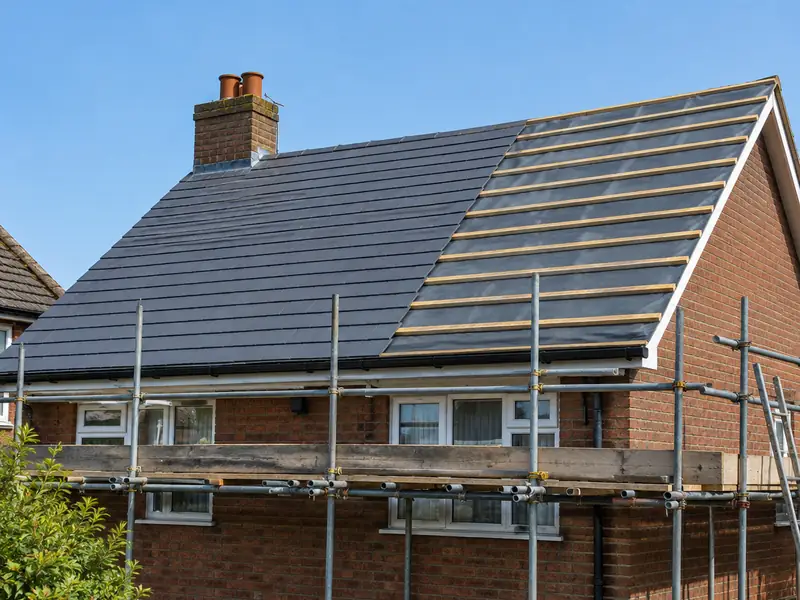
A roof replacement, or re-roof, strips the old tiles or slates, battens and felt from a pitched roof and replaces them with a new breathable membrane, battens and covering, repairing timbers and renewing ridges, valleys and flashings at the same time.
For a homeowner in Larne, planning a new roof tends to begin with two questions: what will it cost, and how disruptive will it be? Our guide range is £6,000–£13,000 including VAT, and a typical job runs to 1–2 weeks on site, plus scaffolding time. Both numbers firm up once we have seen the property, measured up and agreed exactly what is included.
- Guide price
- £6,000–£13,000 inc VAT
- Time on site
- 1–2 weeks on site, plus scaffolding time
- Postcodes
- BT40
- Planning rules
- Northern Ireland
- Local area
- County Antrim
- Survey
- Free, with a written quote
Roof replacement prices in Larne
What will a new roof cost in Larne? Our guide range is £6,000–£13,000 including VAT. That figure is adjusted for Northern Ireland, about 14% below the national guide, and is intended for planning a budget. A firm written price for your chosen specification follows a free survey at your home.
| Type of job | What it usually involves | Guide in Larne |
|---|---|---|
| Terraced house or bungalow | A smaller pitched roof re-covered in concrete or clay tiles, including scaffolding. | £4,300–£8,600 |
| Typical semi-detached | A 3-bed semi re-roofed in concrete or clay tiles with new membrane, battens and leadwork. | £6,000–£13,000 |
| Detached or natural slate | Larger or more complex roofs, or any roof finished in natural slate. | £10,500–£21,500 |
Expect these to shape the final quote:
- Covering material: concrete tile, clay tile or natural slate
- Condition of rafters, fascias and other timbers
- Chimneys, leadwork and roof windows to rework
- Scaffolding, access and the height of the house
What does the job include in Larne?
- Survey of the covering, timbers, chimneys and loft ventilation
- Repairs or replacement of damaged rafters and fascia boards
- Breathable membrane and new treated battens
- New tiles or slates, or sound originals refitted where suitable
- Ridges, hips and verges dry-fixed or bedded, with new leadwork
- Waste removal by skip and a clean site on completion
What are homes like around Larne?
Belfast has long rows of red-brick Victorian terraces, Edwardian villas in the north and south of the city and large post-war estates, while towns such as Ballymena, Antrim, Larne and Carrickfergus mix terraces, semis and newer developments. Dark basalt appears in older rural buildings, and pebbledash or roughcast is a very common finish.
The north coast and glens are exposed to strong winds, salt and frequent rain, which affects render, roofline and outdoor work.
If your house in Larne fits one of these patterns, it helps us anticipate what a new roof will involve, though we always confirm the details on site.
Do you need permission in Larne?
Homes in Larne come under the regulations for Northern Ireland, summarised below. We don't rely on general rules alone: we confirm the position for your address with the council before a quote goes out.
In Northern Ireland, re-roofing with similar materials does not usually need planning permission outside listed buildings and conservation areas.
Significant re-roofing should be checked with building control under the Building Regulations (Northern Ireland). Bats are protected across the UK; if they roost under roof tiles, soffits or fascias, work stops and a licensed ecologist advises before it restarts.
Rules change and every property is different, so we check the planning history and constraints for your address before we quote.
What happens after you get in touch?
We look at the job
We begin by looking at the job in person. During the free survey we discuss options, materials and budget for a new roof, and photograph or measure anything the quote needs to reflect.
Written quote
The quote arrives in writing, not over the phone. It covers the full scope, the finishes you've chosen, any exclusions and the payment schedule, with a fixed price tied to that specification.
Dates and permissions
Preparation matters as much as the build. We agree access, parking and working hours with you, order materials in good time, and confirm any permissions so the job isn't held up once it starts.
On site to finish
The job proceeds in the order set out in the programme, with dust and debris kept under control. Finally we tidy away, inspect the work together and pass the finished project over to you with its paperwork.
Why homeowners choose us
Common questions
Can I stay at home during the work?
In most cases, yes. Most people can live at home throughout, and we plan the work to keep disruption down by protecting floors, agreeing working hours and keeping access routes clear. Bigger jobs affecting kitchens, bathrooms or heating may mean a short spell with reduced facilities, and we talk this through with you at the survey.
How long will a new roof last?
A well-installed roof lasts for decades. Concrete tiles typically last around 50 years or more, clay tiles longer, and natural slate can last a century with proper upkeep. Lifespan depends on the quality of materials, fixings, ventilation and leadwork, and on how exposed the roof is. Keeping gutters clear and fixing slipped tiles quickly helps it reach its full life.
What happens if it rains during the work?
We strip the roof in sections and only remove as much covering as we can replace or protect the same day. New breathable membrane goes on straight after stripping, which keeps most rain out, and we sheet exposed areas at the end of each day and before forecast showers. If heavy rain or high winds are forecast, we pause work. The house is never left open.
Is the price fixed?
Yes, for the specification we agree. Your written quote sets out exactly what is included at a fixed price. It only changes if you ask for something different, or if a problem the survey could not reasonably reveal later needs extra work. In either case we explain the change and confirm it in writing before going ahead.
Can my old tiles or slates be reused?
Old tiles or slates can sometimes be reused if they are sound, which can help keep the look of a period house. Many older concrete tiles and some slates are porous, cracked or have failing fixing nibs, so they would not last. Reclaimed slates or tiles can make up shortfalls. We check a sample during the survey and explain the cost difference.
Nearby towns
Our coverage in Larne includes BT40. We also travel to Carrickfergus, Newtownabbey and Bangor, County Down, so neighbouring addresses are looked after on exactly the same terms as those in town.